
SMB Witness Service Design and Implementation in Samba 4.20
Delve into SMB Witness Service implementation in Samba 4.20, exploring rpcd_witness functionality, cluster node monitoring, and Windows client interactions within ctdb clusters.

What Can Storage Do for AI? - Optimizing NVMe Storage for Large Language Models
Explore how NVMe flash storage enables AI model deployment at scale, from data center training to edge device inference, with focus on optimization techniques and performance improvements.
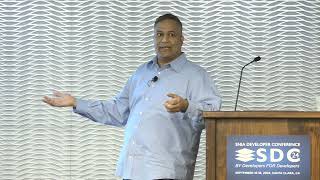
Cloud Storage Considerations for RAG in AI Applications
Explore cloud object storage implementation in RAG systems, covering LLM-OS concepts, domain-specific data handling, and practical applications for building AI-powered solutions with vector databases.

Memory Optimizations in Machine Learning
Discover essential memory optimization techniques for machine learning, from data quantization to model pruning, and learn efficient strategies for minimizing resource consumption across different hardware setups.

Storage Device Quality Control and Supply Chain Management Using Deep Machine Learning Models
Discover how machine learning models predict storage component failures and optimize supply chain management through dual predictive approaches, achieving 90-95% accuracy in real-world deployments.

CXL Technology for AI and ML Workloads - Memory Expansion and Performance Optimization
Explore how CXL technology revolutionizes AI/ML workloads through memory expansion, pooling, and sharing. Master performance optimization techniques for large language models and learn practical implementation strategies.
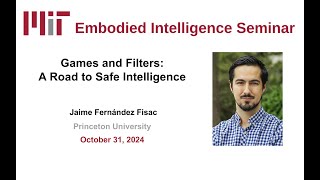
Games and Filters: A Road to Safe Intelligence
Explore game-theoretic approaches and safety principles in AI systems, from robotic control to human-AI interactions, focusing on developing reliable safety guarantees for autonomous systems.
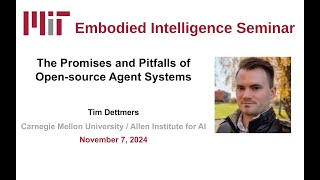
The Promises and Pitfalls of Open-source Agent Systems
Explore the potential and challenges of open-source AI agent systems, examining their performance compared to closed-source alternatives and key issues in evaluation and generalization.
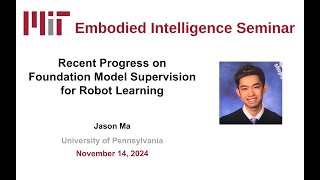
Recent Progress on Foundation Model Supervision for Robot Learning
Discover how foundation models from non-robot domains can revolutionize robot learning, enabling automated task acquisition without extensive data collection or manual controller design.
Domain Adaptation - 20 Years of Theory Chasing Practice
Explore the evolving relationship between theoretical frameworks and practical applications in domain adaptation learning, examining key insights, challenges, and the widening theory-practice gap.
Domain Adaptation and Related Areas in Machine Learning
Dive into domain adaptation concepts and related machine learning areas with Carnegie Mellon expert Zachary Lipton, exploring theoretical frameworks and practical applications.
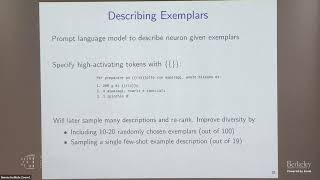
Scalably Understanding AI with AI - Using AI Systems for Model Behavior Analysis
Explore advanced techniques for analyzing AI systems, from behavior elicitation to neuron description, focusing on using AI tools to understand and improve AI model behaviors and representations.
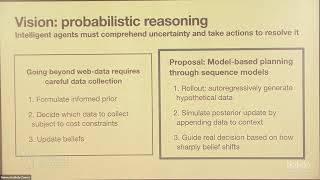
Adaptive Data Collection via Autoregressive Generation in News Recommendation Systems
Discover how autoregressive models can enhance adaptive data collection and decision-making through Thompson sampling, with applications in news recommendation systems and cold-start problems.
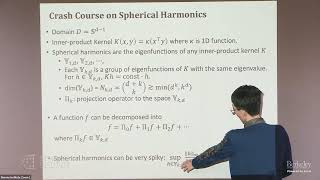
Toward Understanding the Extrapolation of Nonlinear Models to Unseen Domains
Explore advanced concepts in domain adaptation and model extrapolation, focusing on nonlinear models' behavior in unseen domains through theoretical and practical analysis.
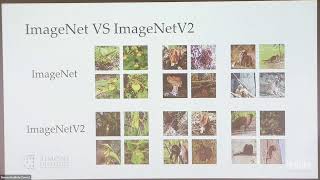
Language-Guided Domain Adaptation
Explore cutting-edge techniques in domain adaptation and language-guided methods with UC Berkeley expert Trevor Darrrell, focusing on advanced machine learning applications and methodologies.
Open-Source and Science in the Era of Foundation Models
Explore the critical role of open-source models in AI development, focusing on API access, open weights, and community-driven innovation for advancing foundation model research.
Causally Motivated Robustness to Shortcut Learning in Machine Learning
Delve into techniques for building robust machine learning models that maintain performance under distribution shifts, with a focus on preventing shortcut learning through causal regularization methods.
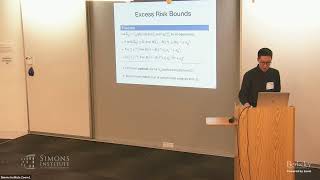
Pseudo-Labeling for Covariate Shift Adaptation in Machine Learning
Explore advanced covariate shift adaptation techniques using pseudo-labeling methods for regression tasks, focusing on kernel ridge regression and bias-variance optimization for target distributions.
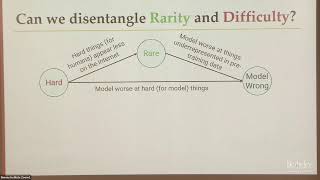
The Evolution of Domain Transfer in the Era of Pre-trained Language Models
Explore the complex relationship between pre-trained language models and domain transfer, examining how pre-training affects model understanding and pattern recognition across different contexts.
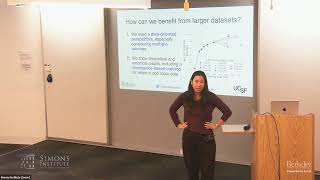
The Data Addition Dilemma: Navigating Distribution Shifts in Machine Learning
Explore the complexities of combining data sources in machine learning, examining when adding more data helps or hurts model performance and fairness across different distributions.
Distribution Shift in Ecological Data - Generalization vs. Specialization
Explore the balance between general and specific computer vision approaches for ecological challenges, focusing on data shifts, adaptation methods, and real-world applications.