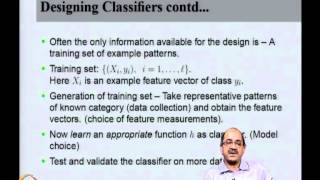
Pattern Recognition
Comprehensive exploration of statistical pattern recognition, covering Bayes classifiers, density estimation, linear discriminants, neural networks, SVMs, and advanced learning techniques.
Pattern Recognition
This course provides a fairly comprehensive view of the fundamentals of pattern classification and regression. Topics covered in the lectures include an overview of pattern classification and regression; Bayesian decision making and Bayes classifier
Decision Trees and Ensemble Methods
Explore decision trees, ensemble methods, and advanced techniques like random forests and boosting algorithms for improved machine learning model performance.
NeuroTree - A Differentiable Tree Operator for Tabular Data
Explore NeuroTree, a differentiable tree operator for tabular data, addressing traditional tree limitations through simultaneous node learning and built-in ensemble techniques.

Machine Learning
Comprehensive 7-day exploration of key machine learning algorithms, from regression techniques to clustering methods, enhancing data science skills through live interactive sessions.
Curating a COVID-19 Data Repository and Forecasting County-Level Death Counts in the United States
Explore COVID-19 data curation and forecasting techniques for county-level death counts in the US, including ensemble methods and prediction intervals for informed decision-making.

Machine Learning and Data Science for Medicine - A Vision, Some Progress and Opportunities
Explore machine learning and data science applications in medicine, focusing on AutoPrognosis - an automated system for creating tailored, interpretable, and accurate prognostic models for various diseases.
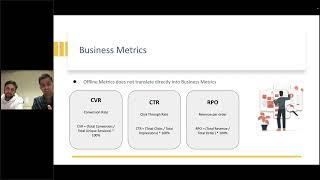
Building Robust and Scalable Recommendation Engines for Online Food Delivery
Unlock the power of recommendation engines for food delivery. Learn data preprocessing, feature engineering, and scalable algorithms to create personalized recommendations using the DHRD dataset.
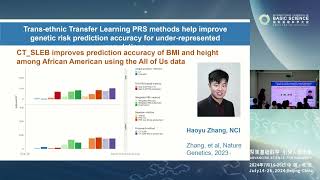
Empowering the Data Science Ecosystem for Whole Genome Sequencing Analysis Using ML Methods and Tools
Explore advanced methods for analyzing whole genome sequencing data using machine learning and ensemble techniques. Learn to leverage biobanks and electronic health records for powerful genetic insights.
Enhancing Machine Learning Applications with Wisdom of the Crowd
Explore ensemble techniques to boost ML model performance, explainability, and usability for complex problems by leveraging multiple specialized models.
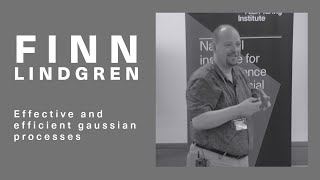
Pragmatically Ambitious Multiscale Global Temperature Reconstruction - Finn Lindgren, Edinburgh
Explore pragmatic approaches to global temperature reconstruction using multiscale models, data sources, and statistical techniques for uncertainty quantification and bias correction.
Bayesian Inference - Lecture 2
Explore Bayesian inference principles, methods, and applications in data assimilation for weather and climate modeling. Gain insights into uncertainty estimation and practical implementation.
Ocean Data Assimilation - Lecture 2
Explore advanced ocean data assimilation techniques, their applications in climate modeling, and methods for integrating diverse oceanic observations to improve forecasting accuracy and understanding of marine systems.
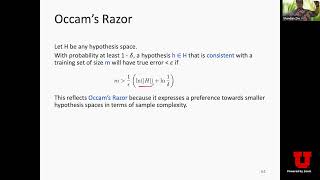
Machine Learning Fundamentals - Lecture 8
Dive into advanced machine learning concepts and techniques through comprehensive coverage of key algorithms, theoretical foundations, and practical applications in data science.

Population-Based Methods for Single- and Multi-Agent Reinforcement Learning - Lecture
Explore population-based methods for reinforcement learning, including MeanQ for single-agent scenarios and XDO for multi-agent adversarial environments. Gain insights into ensemble techniques and game theory applications.
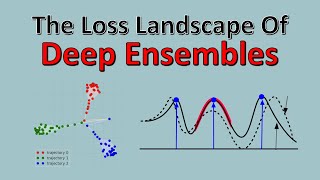
Deep Ensembles: A Loss Landscape Perspective
Explore deep ensembles' effectiveness in neural networks, their superiority over Bayesian models, and how they capture non-convex loss landscapes to improve generalization and robustness in AI.
Prototype of a GPT Based Swarm Intelligence System as Example to Inspire More Advanced Swarm Systems
Explore a prototype GPT-based swarm intelligence system, demonstrating ensemble approaches and inspiring advanced swarm development. Includes code reviews, parallelism, and comparisons to true swarm behavior.
Deep Ensembles: A Loss Landscape Perspective
Explore deep ensemble learning through loss landscapes, examining function similarity, subspace sampling, and prediction space analysis for improved model performance.
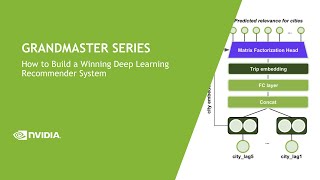
Building a Winning Deep Learning Recommender System - Grandmaster Series Episode 5
Learn how Kaggle Grandmasters built a winning Deep Learning Recommender System for Booking.com, using matrix factorization, ensemble models, and data augmentation techniques. Gain insights into GPU-accelerated recommender systems.
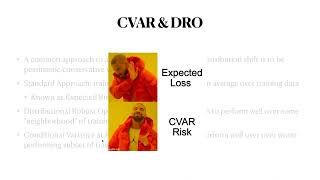
Robustness to Adversarial Inputs and Tail Risk via Boosting - Machine Learning Model Defense Strategies
Explore innovative strategies for robust machine learning models against adversarial inputs and tail risks, focusing on ensemble methods and risk-sensitive decision-making in high-stakes environments.
Patterns of ML Models in Production
Explore ML model deployment patterns for production, covering online serving, offline processing, and scalable frameworks like Ray Serve, with insights from 100+ user interviews.