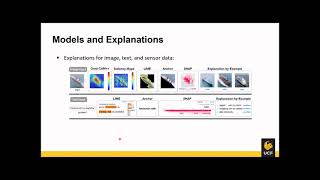
How Can I Explain This to You? An Empirical Study of Deep Neural Net Explanation Methods - Spring 2021
Empirical study comparing deep neural network explanation methods, examining usability, stability, and privacy risks across various visual explanation frameworks.
SHAP and Shapley Values for Interpretable Machine Learning - Kaggle 30 Days of ML Day 18
Explore SHAP and Shapley Values for interpretable machine learning. Learn local interpretation techniques, Python implementation, and visualization methods for explainable AI.
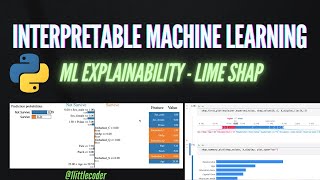
What is Interpretable Machine Learning - ML Explainability - with Python LIME Shap Tutorial
Explore interpretable machine learning with Python, covering LIME and SHAP techniques for explainable AI. Learn why ML explainability matters and how to implement it in your projects.
Understanding SHAP Summary Plot - Interpretable Machine Learning - Day 19
Explore SHAP and Shapley values for interpretable machine learning, focusing on summary plots and dependence plots to enhance model explainability and insights.

Mitigating Bias in Models with SHAP and Fairlearn
Learn techniques to identify and mitigate bias in machine learning models using SHAP and Fairlearn, enhancing fairness and transparency in AI systems.

Interpretability and Out-of-Distribution Generalization in Deep Predictive Models
Explore interpretability and out-of-distribution generalization in deep predictive models, focusing on nuisance-induced spurious correlations and real-time Shapley value estimation techniques.
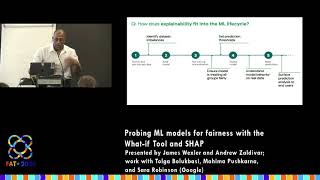
Probing ML Models for Fairness with the What-if Tool and SHAP
Explore ML model fairness using What-if Tool and SHAP. Learn to analyze and visualize model behavior, detect biases, and understand feature importance for responsible AI development.

Data to the Rescue! Predicting and Preventing Accidents at Sea
Predicting and preventing maritime accidents using machine learning, leveraging ship behavior data, weather information, and operational profiles to revolutionize the marine insurance industry.

Data to the Rescue - Predicting and Preventing Accidents at Sea
Revolutionizing marine safety through data science: predicting accidents using ship behavior, location, speed, and weather data. Challenges of introducing ML to traditional industry and explaining models with SHAP.

First Steps to Interpretable Machine Learning
Explore interpretable machine learning using SHAP values to understand model predictions and feature importance, based on a real data science project with practical insights.
Retail Media Science: From Measurement to Optimization
Explore retail media fundamentals, budget optimization techniques, and advanced marketing modeling approaches for effective measurement and optimization in the retail media landscape.

How to Interpret and Explain Black Box Models
Explore popular model explanation techniques for machine learning interpretability, including LIME, SHAP, and visual analytics. Gain insights into making complex models more understandable and explainable.