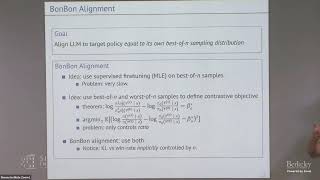
On Spurious Associations and Large Language Model Alignment
Delve into the complex relationship between LLM alignment goals and their unintended effects, exploring how targeted improvements may create unexpected output changes.
Transfer Learning via Local Convergence Rates of the Nonparametric Least Squares Estimator
Explore nonparametric least squares estimator's local convergence properties and their implications for transfer learning under covariate shift, focusing on weighted uniform norm optimization.
User-Level and Federated Local Differential Privacy in Statistical Inference
Explore fundamental statistical inference challenges in distributed data systems with differential privacy constraints across servers and users, focusing on privacy-preserving information transmission.

Label Noise and Machine Learning: Why Ignorance is Bliss
Explore theoretical frameworks for handling multi-class label noise in machine learning, focusing on relative signal strength and empirical risk minimization principles.

How Transformers Learn Causal Structure with Gradient Descent
Delve into the mathematical foundations of how transformer models learn and encode causal relationships through self-attention mechanisms and gradient-based training algorithms.
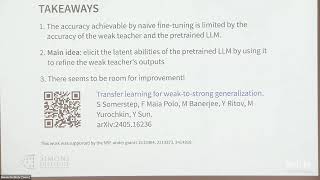
Transfer Learning for Weak-to-Strong Generalization in Language Model Alignment
Explore how to effectively transfer latent knowledge from weak to strong language models, focusing on alignment techniques and practical applications in LLM development.
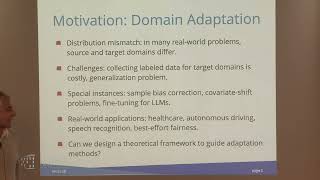
A Discrepancy-Based Theory of Domain Adaptation
Delve into domain adaptation theory through discrepancy concepts, exploring sample reweighting techniques and algorithmic applications for robust machine learning solutions.
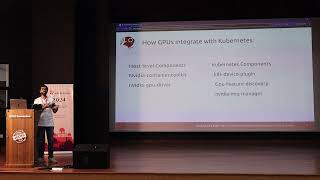
ML Workloads on Kubernetes with Kubeflow - Why and How
Discover how to effectively deploy and manage machine learning workloads on Kubernetes using Kubeflow, exploring key benefits and practical implementation strategies.

Exploiting Compositional Structure in Deep Learning - Theory and Applications
Delve into high-dimensional function modeling and deep learning applications for heart digital twins, exploring theoretical frameworks and practical implementations in medical risk prediction.
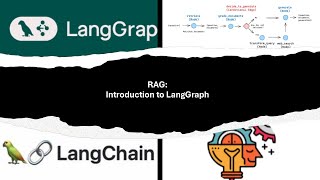
Creating Intelligent Agents with LangGraph and LangChain
Master LangGraph's framework to build intelligent agents with LLMs, enabling dynamic workflows and automated decision-making through stateful orchestration and information source interactions.

Face Mesh Detection and Texture Mapping with ML5.js
Master facial landmark detection and texture mapping using ml5.js FaceMesh model - track 468 face points, create triangular meshes, and apply UV coordinate mapping for advanced face tracking applications.

VIME - Visual Interactive Model Explorer for Identifying Capabilities and Limitations of Machine Learning
Explore an interactive visual tool for analyzing machine learning model capabilities and limitations through a systematic exploration interface.
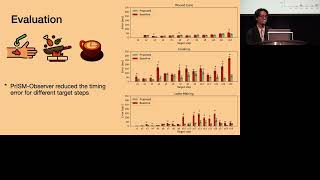
PrISM-Observer - Intervention Agent for Everyday Procedures Using Smartwatch Sensing
Discover how smartwatch-based intervention agents can assist users in completing daily tasks through advanced sensing and procedural guidance in this cutting-edge research presentation.
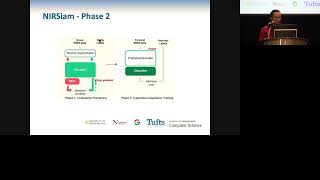
Empower Real-World BCIs with NIRS-X - An Adaptive Learning Framework for Unlabeled Brain Signals
Discover how NIRS-X adaptive learning framework enhances brain-computer interfaces by leveraging unlabeled brain signals for improved real-world applications and user interaction.
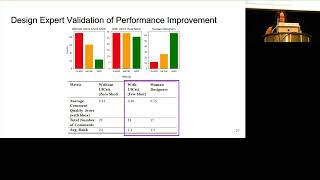
Enhancing Automated Design Evaluation with a UI Critique Dataset
Explore automated UI design evaluation techniques through a comprehensive analysis of the UICrit dataset and its applications in enhancing interface assessment methods.

Exploring Text-to-Shape Display for Generative Shape-Changing Behaviors with LLMs
Explore groundbreaking research on text-to-shape display technology and how large language models enable innovative shape-changing behaviors in user interface development.
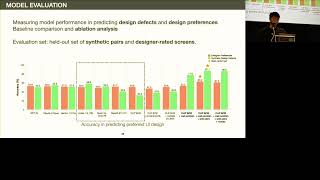
UIClip - A Data-driven Model for Assessing User Interface Design
Discover how data-driven models can revolutionize UI design assessment through innovative approaches to automated evaluation and quality measurement of user interfaces.

General AI Safety - The Development of Beneficial Artificial Intelligence
Delve into Stuart Russell's expert analysis of artificial general intelligence (AGI), exploring its potential implications, risks, and the crucial need for developing provably beneficial AI systems.

Building RAG Applications from Scratch with NVIDIA NIM Microservices
Dive into building scalable RAG applications using NVIDIA NIM microservices, covering text embedding, reranking, and chatbot integration for high-performance AI deployment.
Enhancing AI with Real-Time Data - Unlocking Contextual Insights
Discover how real-time data integration enhances AI systems, improves contextual understanding, and revolutionizes business workflows through advanced RAG techniques and cutting-edge implementation strategies.
Engineering the Future of Generative AI Platforms on Kubernetes
Discover key principles for building scalable generative AI platforms using Kubernetes, covering platform evolution, deployment strategies, risk management, and community-driven development approaches.