
Stanford Seminar 2022 - Transformer Circuits, Induction Heads, In-Context Learning
Explore reverse engineering of transformer language models, focusing on induction head circuits and their role in in-context learning. Gain insights into neural network interpretability and AI safety.
In-Context Learning: How to Stop Worrying and Love Applied Information Retrieval - Lecture 1
Explore in-context learning in LLMs and its impact on applied information retrieval, focusing on practical applications and overcoming challenges.
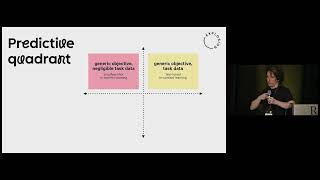
How Many Labelled Examples Do You Need for a BERT-sized Model to Beat GPT4 on Predictive Tasks?
Explore the effectiveness of in-context learning vs. labelled data for predictive tasks, comparing BERT-sized models to GPT-4 in text categorization and entity recognition.
Towards Understanding Modern Alchemy - Transformers as a Computational Model
Explore in-context learning of formal languages, comparing Transformers to other models and examining specialized "n-gram heads" for improved performance in language modeling.
Adaptive In-Context Learning with Large Language Models for Bundle Generation - Recommendation Systems
Explore adaptive in-context learning techniques for bundle generation using large language models in recommendation systems.
The Dynamics of Memorization and Generalization in Deep Learning
Explore the complex interplay between memorization and generalization in deep learning models, examining strategies to mitigate unwanted memorization and the impact of pruning techniques on learning outcomes.
Two Stories in Mechanistic Interpretation of Natural and Artificial Neural Computation
Explore two stories in mechanistic interpretation of neural computation, covering in-context learning in Transformers and insights into linear regression tasks using linear attention models.
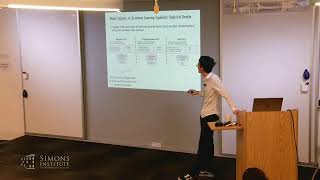
Toward Understanding In-Context Learning
Dive into the mechanisms of in-context learning in large language models, exploring theoretical explanations and simplified data distributions with Stanford's Tengyu Ma.
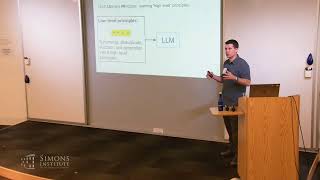
In-Context Principle Learning from Mistakes
Explore Uri Alon's insights on in-context principle learning from mistakes, focusing on emerging generalization settings in AI and machine learning.
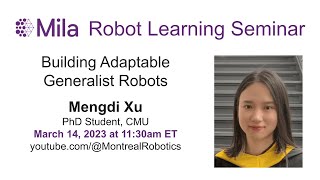
Building Adaptable Generalist Robots
Explore cutting-edge approaches for building adaptable generalist robots, focusing on in-context learning, unsupervised reinforcement learning, and leveraging foundation models for improved generalization and task versatility.
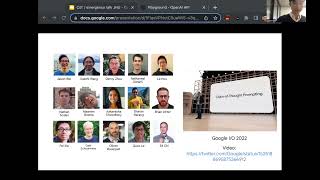
Emergence and Reasoning in Large Language Models
Explore emergence and reasoning in large language models with Google researcher Jason Wei, delving into self-supervised statistical models and their implications.
In-Context Learning Over Graphs for Large Language Models - PRODIGY Method
Explore PRODIGY, Stanford's innovative approach to graph machine learning that enables in-context learning for classification tasks on unseen graphs, advancing LLM reasoning capabilities.

Beyond Mamba AI: Vector Fields and Fluid Dynamics in Transformer Models - Session 6
Explore the intersection of fluid dynamics and AI transformers, examining mathematical frameworks and theoretical physics concepts to enhance understanding of advanced neural network architectures.
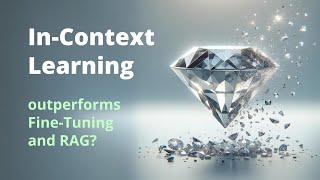
In-Context Learning - Comparing Extreme Context Length with Fine-Tuning and RAG
Explore groundbreaking research on in-context learning with extended context models, comparing performance against fine-tuning and RAG methods while examining scaling impacts and demonstration effectiveness.
Understanding DSPy - Programming AI Pipelines for Language Models
Explore DSPy's innovative approach to AI pipeline programming, from its ColBERT v2 origins to practical applications in modular pipeline generation and self-improving language programs.
Unsupervised In-Context Learning Plus: From Few-Shot to Many-Shot Learning in Large Language Models
Explore advanced In-Context Learning techniques for Large Language Models, from few-shot to many-shot approaches, focusing on unsupervised learning and autonomous capabilities with 1M token context.
DSPy for In-Context Learning and RAG Classification - Code Explained
Explore state-of-the-art extreme multi-label classification using DSPy's Infer-Retrieve-Rank program, combining frozen retrieval with in-context learning for optimal results.

ChatGPT Prompt Engineering with In-Context Learning - 7 Examples
Master prompt engineering techniques through 7 practical examples, from zero-shot prompting to reverse Turing tests, while exploring innovation theory and strategic AI applications.
ChatGPT Prompt Engineering with In-Context Learning Using OpenAI API
Master prompt engineering techniques for ChatGPT with hands-on practice using In-Context Learning and OpenAI API integration in Python through a practical COLAB environment.
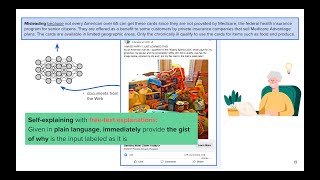
Uncertainty, Prompting, and Chain-of-Thoughts in Large Language Models - Part 2
Dive into advanced AI concepts including temperature scaling, Bayesian calibration, prompt-based finetuning, and chain-of-thought techniques for more reliable and explainable language models.
Fine-tuning ChatGPT with In-Context Learning - Chain of Thought, AMA, and ReAct Reasoning
Master advanced in-context learning techniques like Chain-of-Thought and ReAct to optimize ChatGPT's performance without expensive fine-tuning, based on latest research insights and practical applications.