Interactive Autonomy - A Human-Centered Approach for Safe Interactions
Explore interactive autonomy for safe human-robot collaboration, focusing on algorithms that influence human behavior and efficient active learning methods to model human preferences.
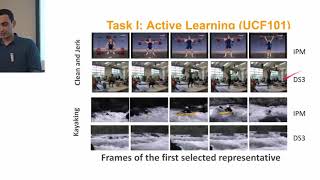
Iterative Projection and Matching: Finding Structure-Preserving Representatives and Applications
Explore iterative projection and matching for finding structure-preserving representatives, with applications in active learning, GANs, image processing, and video summarization.
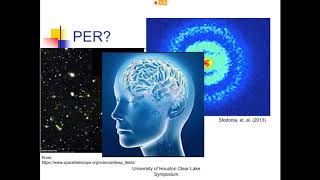
Strategies for Conceptual Change
Explore strategies to address misconceptions in physics education, focusing on identifying and correcting students' preconceived notions through guided inquiry and active learning techniques.
Active Learning for Absolute Binding Free Energy Calculations in Drug Discovery
Explore innovative active learning techniques for absolute binding free energy calculations, enhancing drug discovery processes and efficiency.
Educar a Favor de la Vida - Alternativas a la Educación Tradicional
Alternativas educativas que fomentan el desarrollo integral y el papel activo del estudiante. Reflexión sobre pedagogías activas y el acompañamiento hacia una vida más libre y digna.
Cum Putem Contribui Fiecare în Educație
Ana-Maria Rusu prezintă modalități prin care fiecare poate contribui la educația generațiilor viitoare, bazându-se pe experiența sa ca profesor și pe abordări didactice inovatoare pentru implicarea tuturor actorilor în dezvoltarea copiilor.
Bridging the Data Gap Between LLMs and Children - Understanding Higher-Level Intelligence
Explores the disparity in data requirements between AI models and human learning, examining potential explanations and presenting new insights on multimodal input and evaluation methods.
Lab-in-the-Loop De Novo Antibody Design - What Are We Missing From Machine Learning?
Explore lab-in-the-loop de novo antibody design, focusing on computational aspects. Discover generative modeling, computational oracles, and active learning in molecular systems research.

Turning the Light of Truth - Data Science as a Practice of Resistance
Exploring data science's dual role in oppression and resistance, highlighting its potential for uncovering truth and addressing societal inequalities through real-world examples and critical analysis.
Bits and Atoms - Exploring the Intersection of Machine Learning and Microscopy
Explore the intersection of machine learning and microscopy, focusing on AI models for active learning in materials discovery, automated experiments, and physics discovery through advanced microscopy techniques.
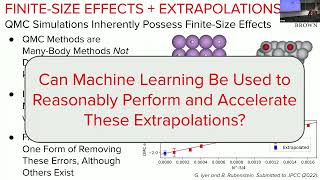
Extending the Reach of Quantum Monte Carlo Methods via Machine Learning
Explore how machine learning enhances quantum Monte Carlo methods for electronic structure modeling, improving force calculations and scaling to larger systems in molecular simulations.
Modelling Physical Phenomena in Alloys and Polymers with Quantum Mechanical Accuracy
Explore data-driven interatomic potentials and Hyperactive Learning for modeling alloys and polymers with quantum accuracy. Gain insights into precipitate formation and chemical ordering.
MFBind - A Multi-Fidelity Approach for Evaluating Drugs in Generative Modeling
Explore MFBind, a multi-fidelity approach integrating docking and binding free energy simulations for improved drug discovery generative modeling. Learn its advantages over current methods.
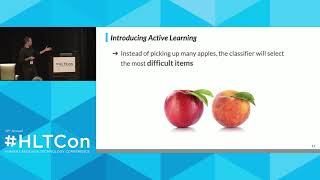
Custom Models in No Time - How Active Learning Is Changing AI
Active learning techniques to reduce annotation time and cost for machine learning models, improving efficiency in creating custom AI solutions for tasks like named entity recognition.
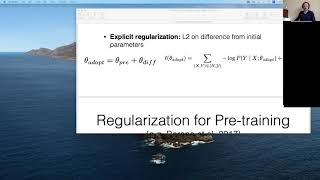
CMU Neural Nets for NLP 2020 - Multitask and Multilingual Learning
Explore multitask and multilingual learning in NLP, covering methods, objectives, and challenges. Gain insights into cross-lingual transfer, data balancing, and zero-shot approaches.

CMU Multilingual NLP: Active Learning
Explore active learning in NLP, covering token and sequence-level techniques, uncertainty measures, and human effort considerations for efficient data annotation.
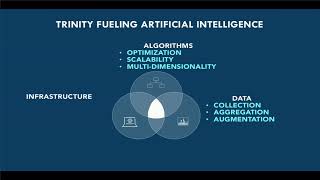
The AI Trinity - Data + Algorithms + Infrastructure
Explore the AI trinity: data, algorithms, and infrastructure. Learn about named entity recognition, active learning, crowdsourcing, data augmentation, and neural rendering models.
End-to-End Learning and Auto-Differentiation - Forces, Uncertainties, Etc.
Explore deep learning and auto-differentiation in molecular simulations, covering surrogate functions, sampling distributions, and time-propagation of differential equations for scientific problem-solving.
Machine Learning Gradients in Molecular Simulations
Explore ML gradients in molecular simulations, including surrogate functions, active learning, and differentiable programming for enhanced scientific modeling and optimization.
Exploring Molecular Space and Active Learning in Drug Discovery
Explore molecular space and active learning techniques for drug discovery with AI pioneer Yoshua Bengio's insights from the 2024 ML Summer School at Mila.
Active Learning for Students and Educators: Computational Adventures
Experiment with Wolfram's Computational Adventures curriculum, exploring coding through cryptography, music, and poetry while completing a Computational Art Adventure.