Research Seminar - Identifiability and Inference in Cell Biology
Explores mathematical modeling in cell biology, focusing on identifiability and inference. Discusses challenges in developing realistic models for interpreting quantitative data and showcases applications in biological mechanisms.
Stanford Seminar - Universal Intelligent Systems by 2030 - Carl Hewitt and John Perry
Explore the future of Universal Intelligent Systems, encompassing all manufactured devices and sensed activities. Learn about information integration, security, and the challenges of developing these systems by 2030.
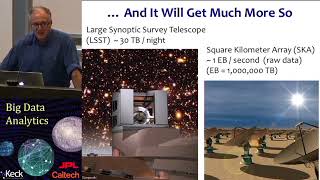
Big Data Analytics
Comprehensive exploration of big data analytics, covering programming, databases, statistics, machine learning, visualization, and cloud computing for practical applications.
Information and Model Misspecification - Classical Statistics vs. Info-Metrics
Explore info-metrics framework for handling model misspecification, contrasting classical methods with innovative approaches using entropy and empirical likelihood in power law distributions.
Leaner, Greener and Faster PyTorch Inference with Quantization
Explore PyTorch quantization techniques to optimize neural networks, reducing size and improving speed without sacrificing accuracy. Learn implementation strategies and real-world applications.
Models, Inference and Algorithms - Lightning Talks
Explore cutting-edge research in models, inference, and algorithms through lightning talks by five postdoctoral researchers at the Broad Institute of MIT and Harvard.
Lessons Learned from Scaling Large Language Models in Production
Discover strategies for scaling LLMs in production, covering performance profiling, GPU optimization, and guardrail interactions with real-world examples.
Automatic ML Model Containerization: Best Practices and Tools
Explore best practices for containerizing ML models for production inference. Learn about secure, multi-tenant image builds, avoiding lock-in, and tools like chassis.ml and Open Model Interface for seamless integration.
The State of vLLM - Advancements in LLM Inference and Serving
Explore the latest advancements in vLLM, the open-source LLM inference engine. Gain insights into its growing adoption, new features, performance improvements, and future roadmap for efficient LLM deployment.
NVIDIA DeepStream Development with Microsoft Azure - AI Show Episode 51
Explore NVIDIA DeepStream development with Azure for creating intelligent video applications using optimized AI models. Learn about SDK features and see demos of Graph Composer and DeepStream development.
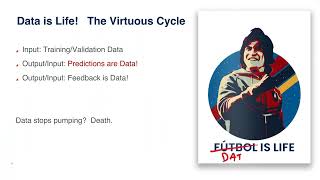
Cloud Directions, MLOps and Production Data Science
Explore cloud directions, MLOps, and production data science with Prof. Hellerstein. Learn key challenges, lifecycle management, and innovative solutions for scaling data-intensive applications in the cloud.
Inside TensorFlow - TensorFlow Lite
Explore TensorFlow Lite for deploying ML models on mobile and IoT devices. Learn about its architecture, conversion process, and optimization techniques for efficient on-device inference.

Inside TensorFlow - tf.Keras
Dive deeper into tf.Keras with creator Francois Chollet, exploring advanced topics like masking, dynamic layers, callbacks, and building successful models for enhanced deep learning capabilities.
How Roblox Scaled Machine Learning by Leveraging Ray for Efficient Batch Inference
Discover how Roblox leverages Ray to scale machine learning infrastructure, focusing on multimodal language models integration, batch inference optimization, and practical implementation strategies.
MLOps MLFlow: Serving LLMs with MLflow - Phi-3-mini-4k-instruct Local Deployment in Spanish
Aprende a crear y servir modelos LLM con MLflow, utilizando Phi-3-mini-4k-instruct en local. Explora la serialización, el seguimiento y la inferencia en español.
AirLLM: Inferencia de LLM de 70 Billones de Parámetros en GPU de 4GB - Español
Aprende a realizar inferencia con un LLM de 70 billones de parámetros en una GPU doméstica de 4GB usando AirLLM. Explora técnicas avanzadas de machine learning y optimización de recursos.
MLOps with MLflow: Fine-Tuning LLMs, Tracking Experiments, and Logging Models
Aprende a utilizar MLflow para registrar y gestionar el proceso de ajuste fino de modelos de lenguaje, facilitando el seguimiento de experimentos y la inferencia.
Visual Studio Code AI Toolkit Introduction - Data Science and Machine Learning
Explora el Visual Studio Code AI Toolkit con ejemplos prácticos en Python y C# para inferencia en CPU usando el modelo Phi 3 4K Instruct cuantizado.
MLOps: Saving and Loading Microsoft Phi3 Mini 128k in GGUF Format with MLflow
Aprende a guardar y cargar el modelo Phi3 128k en formato GGUF int8 usando MLflow para inferencia en diferentes entornos.
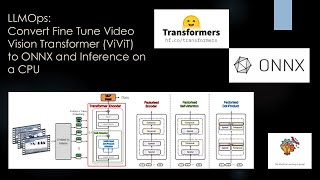
LLMOps: Converting Video Classifier (ViViT) to ONNX for CPU Inference
Convierte un Video Vision Transformer a formato ONNX y realiza inferencia en CPU, optimizando el rendimiento del modelo de clasificación de videos.
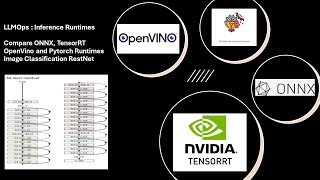
LLMOps: Comparación de Openvino, ONNX, TensorRT y Pytorch para Inferencia
Compara el rendimiento de inferencia de modelos convertidos a ONNX, OpenVino y TensorRT frente a PyTorch nativo en GPU y CPU.