Probabilistic Inference Using Contraction of Tensor Networks
Explore probabilistic inference using tensor networks with TensorInference.jl. Learn exact methods for complex models, optimizing contraction sequences, and leveraging GPU technology for enhanced performance.
Out-of-Distribution Generalization as Reasoning - Are Large Language Models Competitive?
Explore the concept of out-of-distribution generalization in LLMs through the lens of robust logic and PAC learning. Gain insights into how humans and AI systems can make principled predictions beyond their training data.
When Do Dependencies in Your Data Help? - Emerging Generalization Settings
Explore how dependencies in data can overcome computational barriers in learning graphical models, using the Glauber dynamics process as a natural data generation method.
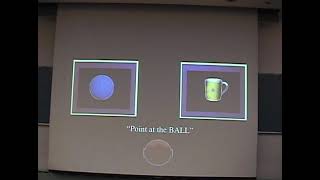
A Synthesis of Logical Reasoning and Word Learning Abilities in Children and Adults - 2007
Explore the connection between word learning and logical reasoning in young children, challenging prevailing views on language acquisition and cognitive development.
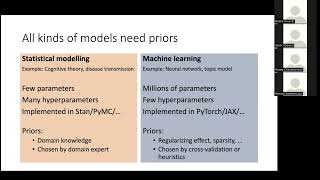
Better Priors for Everyone - Choosing Prior Distributions in Bayesian Modeling
Explore techniques for choosing effective prior distributions in Bayesian modeling, including prior elicitation and automatic selection methods for improved statistical inference.

Probabilistic Inference - Session Preview at POPL 2023
Explore probabilistic inference concepts with expert Alexandra Silva in this POPL 2023 session preview, enhancing accessibility of advanced programming language topics.
Logic and Probabilistic Circuits - Lecture 4
Explore advanced concepts in logic and probabilistic circuits, focusing on their applications in database theory and artificial intelligence.
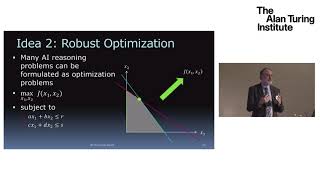
Steps Toward Robust Artificial Intelligence - Thomas G Dietterich, Oregon State University
Explore methods for developing robust AI systems capable of handling known and unknown threats in high-stakes applications, including probabilistic inference, anomaly detection, and causal modeling.
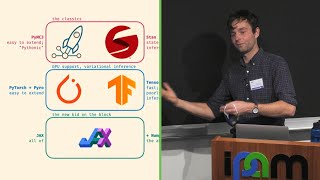
Methods for Scalable Probabilistic Inference - IPAM at UCLA
Explore scalable probabilistic inference methods for astrophysics, focusing on Gaussian Processes for time series analysis and open-source tools to accelerate Bayesian inference with large datasets.
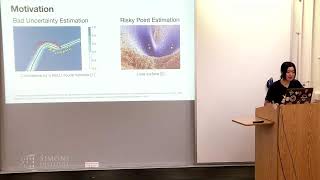
Weighted Model Integration
Explore advanced probabilistic inference in hybrid domains using Weighted Model Integration. Learn about solvers, tractability analysis, and applications in Bayesian deep learning.
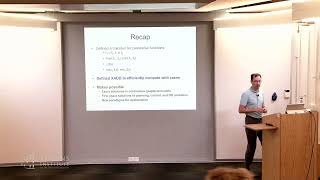
Decision Diagrams for Efficient Inference and Optimization in Expressive Discrete-Continuous Domains
Explore extended algebraic decision diagrams (XADDs) for representing piecewise functions, enabling efficient computations and novel solutions in probabilistic inference, optimization, and decision-making.
Probabilistic Inference in Language Models via Twisted Sequential Monte Carlo
Explore advanced probabilistic inference techniques for language models using Twisted Sequential Monte Carlo, enhancing LLM capabilities and safety measures.

AI & ML in Cyber Security - Why Algorithms Are Dangerous
Explore limitations of machine learning in cybersecurity, dangers of blind algorithm application, and alternative approaches like probabilistic inference for more effective threat detection and analysis.

Probabilistic Scripts for Automating Common-Sense Tasks
Explore probabilistic scripting for automating common-sense tasks, focusing on data cleaning. Learn how to encode domain knowledge and leverage probabilistic programming for efficient problem-solving.
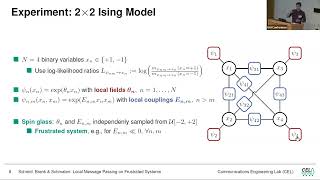
Local Message Passing on Frustrated Systems - UAI Oral Session 6
Explore an alternative message passing algorithm for cyclic graphs, challenging SPA's extrinsic principle and optimizing factor node updates for improved performance on complex networks.

Probabilistic Circuits: Deep Probabilistic Models with Tractable Inference
Explore probabilistic circuits as deep models for efficient reasoning under uncertainty, examining their structural properties and connections to neuro-symbolic AI.
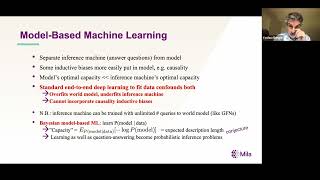
Large Neural Nets for Amortized Probabilistic Inference in Highly Multimodal Distributions
Explore amortized probabilistic inference using large neural networks for complex distributions. Learn about GFlowNets and their potential to improve AI systems with Bayesian and causal understanding.
Probabilistic Inference of the Steady-State Distribution of an Age-Size Structured Population
Explore probabilistic techniques for inferring steady-state distributions of age-size structured populations using single-cell data and stochastic modeling.
Probabilistic Circuits - Lecture on Advanced AI Techniques
Explore probabilistic circuits with YooJung Choi, delving into advanced AI concepts at the intersection of symbolic methods and deep learning.

Tractable Probabilistic Circuits - Seminar Series
Explore probabilistic circuits as advanced neural networks for tractable inference, outperforming VAEs and flow-based models. Learn about their applications in machine learning and neural compression.
Introduction to Probabilistic Models - Probabilistic AI School
Explore probabilistic models, their applications, and fundamental concepts in this comprehensive introduction by Silja Renooij at the Nordic Probabilistic AI School.