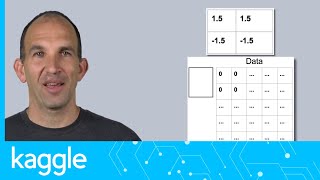
Deep Learning
Explore deep learning fundamentals, computer vision, TensorFlow, Keras, transfer learning, and advanced topics like TPUs in this comprehensive introduction to neural networks.
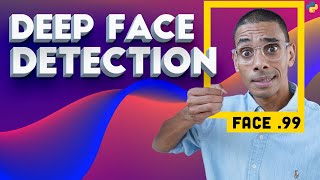
Build a Deep Face Detection Model With Python and Tensorflow - Full Course
Comprehensive guide to building a face detection model using TensorFlow and Python, covering data collection, augmentation, model creation, training, and real-time testing for practical implementation.
Actionable Machine Learning for Tackling Distribution Shift - Huaxiu Yao
Explore techniques for building robust machine learning models that can handle distribution shifts, including subpopulation and domain shifts, and adapt to new test distributions with minimal labeled data.
MedAI - Training Medical Image Segmentation Models with Less Labeled Data - Sarah Hooper
Innovative semi-supervised method for training medical image segmentation models using minimal labeled data, achieving comparable accuracy to fully supervised approaches while significantly reducing labeling requirements.

How Can You Trust Machine Learning?
Explore the pillars of trust in machine learning: clarity, competence, and alignment. Learn about processes and techniques to develop more effective and trustworthy AI systems.
The Task Specification Problem
Exploring challenges in AI task specification, focusing on aligning human communication with machine understanding to improve robustness, transfer, and feature learning in AI systems.
Data Augmentation for Image-Based Reinforcement Learning
Explores data augmentation techniques for image-based reinforcement learning, presenting a model-free algorithm and a self-supervised framework for visual continuous control tasks, achieving state-of-the-art results.
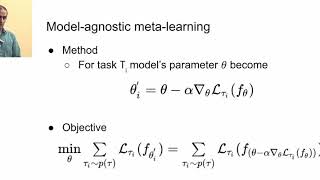
Unsupervised Meta-Learning for Few-Shot Image Classification
Explore unsupervised meta-learning techniques for few-shot image classification, including task construction, augmentation methods, and performance on benchmark datasets.
Understanding Deep Learning Requires Rethinking Generalization
Explore deep learning generalization, examining regularization techniques, randomization tests, and neural network expressivity to challenge conventional understanding and improve model performance.
Synthetic Data Generation and Fine-tuning for OpenAI GPT-4 or Llama 3
Dive into an extensive tutorial on synthetic data generation and fine-tuning techniques for large language models like OpenAI GPT-4o and Llama 3. Learn how to create synthetic questions and answers, implement chain of thought reasoning, and augment data…

Remove Objects from Images Like Magic - Step-by-Step Guide
Learn to remove objects from images using Inpainter, combining semantic segmentation and EdgeConnect. Master installation, single and multiple object removal for photo editing and data augmentation.
Synthetic Data: Generative AI for Enhanced Data Quality in the Era of Foundational Models
Explore synthetic data's transformative potential in AI, focusing on data quality, augmentation, bias, and privacy for foundational language models.
The Power of Noise: Redefining Retrieval for RAG Systems - Session M3.1
Explore innovative approaches to Retrieval Augmented Generation, focusing on noise utilization to enhance RAG systems' performance and redefine retrieval methods.
Exogenous and Endogenous Data Augmentation for Low-Resource Complex Named Entity Recognition - Lecture 1
Explore data augmentation techniques for improving complex named entity recognition in low-resource scenarios, enhancing NLP model performance.

Annotate Images Like a Pro - Python Image Annotation Tool Demo
Master Python-based image annotation with a comprehensive tool for 2D and multi-dimensional images. Learn manual and semi-automatic techniques, export options, and additional features for efficient image analysis and model training.
Unleashing the Power of Convolutional Neural Networks for Profiled Side-Channel Attacks
Explore cutting-edge applications of convolutional neural networks in profiled side-channel attacks, covering design principles, architecture, and data augmentation techniques.
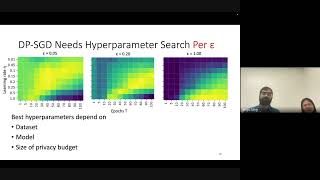
Improving the Privacy-Utility Tradeoff in Differentially Private Machine Learning with Public Data
Explore techniques to enhance privacy-utility balance in differentially private machine learning using public data, focusing on DP-RAFT and DOPE-SGD algorithms for improved model accuracy.
LLaRA: Supercharging Robot Learning Data for Vision-Language Policy
Enhance robotic decision-making using LLMs and VLMs. Learn to formulate actions as conversation pairs and incorporate auxiliary data for improved performance in simulated and real-world tasks.
Affine Spline Insights into Deep Learning - Richard Baraniuk, Rice University
Explore deep learning through affine splines, understanding neural networks as matched filterbanks and partition-based signal distances. Gain insights into data augmentation and future research directions.
AI-Driven Workflows for the Discovery of Novel Superconductors
Explore AI-driven methods for discovering novel superconductors, including data augmentation, ultra-fast machine-learning potentials, and symbolic regression to improve predictive equations for superconducting transition temperatures.
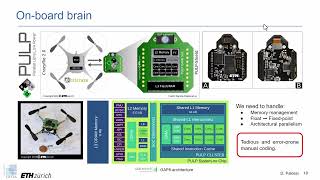
Autonomous Nano-UAVs: An Extreme Edge Computing Case
Exploring autonomous nano-UAVs as extreme edge computing cases, focusing on onboard intelligence, machine learning techniques, and full-stack solutions for navigation and human-robot interaction in resource-constrained environments.