
Basic Electrical Technology
Comprehensive exploration of electrical technology fundamentals, covering circuits, components, analysis methods, transformers, DC machines, three-phase systems, and motors for a solid foundation in electrical engineering.
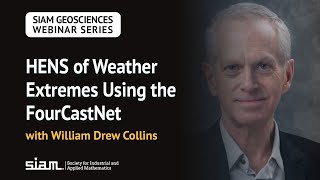
Machine Learning in Extreme Weather Forecasting with William Drew Collins
Explore innovative ML techniques for extreme weather forecasting, leveraging FourCastNet algorithm to generate massive ensembles with high accuracy and efficiency, revolutionizing atmospheric dynamics modeling.
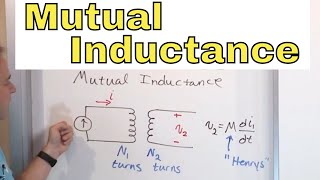
AC Circuit Analysis - Mutual Inductance & Transformers
Explore mutual inductance, self-inductance, and transformers in AC circuits. Learn about step-up and step-down transformer circuits and their practical applications.
Rethinking Architecture Design for Data Heterogeneity in FL - Liangqiong Qu
Explores innovative architecture designs for federated learning in medical AI, focusing on Transformers to address data heterogeneity challenges and improve model performance across diverse healthcare institutions.
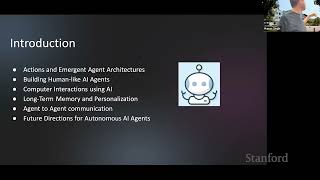
Beyond LLMs - Agents, Emergent Abilities, Intermediate-Guided Reasoning, and BabyLM - Stanford CS25
Exploración de sistemas de IA autónomos, habilidades emergentes de LLMs, razonamiento guiado intermedio y modelos de lenguaje eficientes. Discusión sobre avances técnicos e implicaciones éticas en IA.

Stanford Seminar 2022 - Self Attention and Non-Parametric Transformers
Explore self-attention and Non-Parametric Transformers with PhD students discussing Transformer origins, intuitions, and recent advancements in neural network architecture.

Stanford Seminar 2022 - Transformers in Vision: Tackling Problems in Computer Vision
Explore how transformers revolutionize computer vision with Lucas Beyer, covering innovative applications and advancements in representation learning for visual AI tasks.
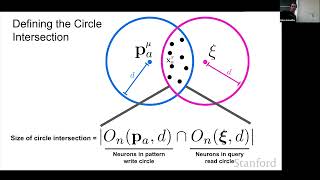
Stanford Seminar - Transformers United: Neuroscience-Inspired Artificial Intelligence
Explore neuroscience-inspired AI with insights on attention mechanisms and sparse distributed memory, bridging the gap between transformers and brain function in this Stanford seminar.
Transformers that Transform Well Enough to Support Near-Shallow Architectures - Stanford CS25 Lecture
Explore precision language models for efficient training and hardware-based control systems. Learn about non-random parameter initializations and applications in resource-limited environments.
Overview of Transformers - Stanford CS25: Lecture 1
Comprehensive introduction to NLP, Transformers, and AI agents, covering history, functionality, recent breakthroughs, applications, and challenges in the field of artificial intelligence.
Fundamentals of Electrical Engineering
This course will also cover Single Phase Transformers, Three Phase Induction Machines and DC Machines. By the end of the course, the students should be able to gather high-quality knowledge of basic Electrical Engineering.
Natural Language Processing
Accelerated introduction to NLP, covering machine learning basics, text preprocessing, vectorization, and advanced neural network architectures like RNNs, LSTMs, and Transformers.
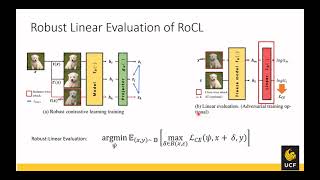
Adversarial Self-Supervised Contrastive Learning
Explore adversarial self-supervised contrastive learning, covering transformers, frameworks, algorithms, evaluations, and experiments in this comprehensive presentation.
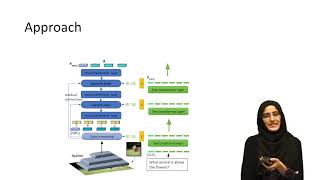
Visual Question Answering: Grounded Systems and Transformer Capsules
Learn about Grounded Visual Question Answering systems, their limitations, and innovative approaches using Transformers with Capsules for improved performance in image-text understanding tasks.

Magnetics in Power Electronics - Modeling Practical Transformers - Lecture 11
Explore practical transformer modeling, including 2-winding and many-winding systems, with circuit models and inductance matrices. Learn about the extended cantilever model for advanced magnetic analysis.

Magnetics in Power Electronics - Lecture 10
Explore magnetic circuit models and practical transformer characteristics, including leakage and magnetizing inductances in power electronics applications.

Three-Phase Systems and High-Order Rectifiers - Lecture 22
Explore three-phase diode bridge rectifiers and higher-order rectifiers, including transformer use for phase-shifted voltage sets in advanced power electronics applications.

Isolated DC/DC Converters - Flyback and Forward Converters - Lecture 13
Explore isolated DC-DC converters using transformers, focusing on flyback and forward converters. Learn principles and applications of these power electronics designs.
Re-thinking Transformers: Searching for Efficient Linear Layers over a Continuous Space
Explore efficient alternatives to dense linear layers in neural networks, examining structured matrices and their compute-optimal scaling laws for improved performance in large language models.

Building Generalist Robotics Policies from Scratch
Build a Generalist Robotics Policy from scratch, reimplementing the "Octo" model step-by-step. Learn to create, train, and evaluate large models for robotics using interaction data and transformer architecture.
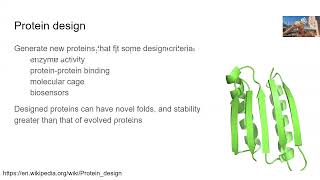
Protein Structure with Transformers - Lecture 9
Explore protein structure prediction using transformer models, uncovering advanced techniques for understanding and analyzing protein folding and interactions.