Towards Unsupervised Biomedical Image Segmentation Using Hyperbolic Representations - Jeffrey Gu
Explore unsupervised biomedical image segmentation using hyperbolic representations. Learn about novel self-supervised hierarchical loss and its applications in medical imaging analysis.

Deep Learning for Computer Vision
The automatic analysis and understanding of images and videos, a field called Computer Vision, occupies significant importance in applications including security, healthcare, entertainment, mobility, etc.
Denoising Diffusion Models for Denoising Diffusion MRI - Tiange Xiang
Explore innovative self-supervised denoising techniques for diffusion MRI using denoising diffusion models. Learn about a three-stage framework integrating statistic-based theory for improved medical imaging quality.
Towards Generalist Imaging Using Multimodal Self-Supervised Learning - Mars Huang
Exploring multimodal self-supervised learning for generalist medical imaging AI, addressing limitations of supervised learning and clinical context integration in automated image analysis.
MedAI - Training Medical Image Segmentation Models with Less Labeled Data - Sarah Hooper
Innovative semi-supervised method for training medical image segmentation models using minimal labeled data, achieving comparable accuracy to fully supervised approaches while significantly reducing labeling requirements.
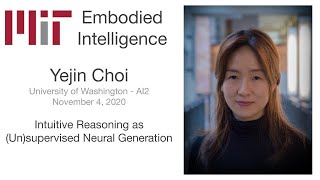
Intuitive Reasoning as Unsupervised Neural Generation
Explore intuitive reasoning in AI through neural generation, covering topics like common sense, language models, and multimodal information with researcher Yejin Choi.
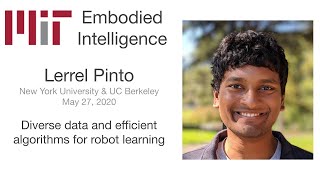
Diverse Data and Efficient Algorithms for Robot Learning
Explore diverse data collection and efficient algorithms for robot learning, focusing on large-scale approaches and reinforcement learning for deformable object manipulation.
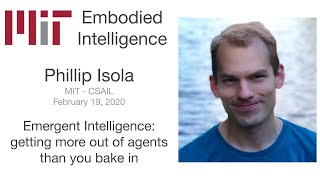
MIT EI Seminar - Phillip Isola - Emergent Intelligence- Getting More Out of Agents Than You Bake In
Explore emergent intelligence in AI through unsupervised learning, generative modeling, and self-assembling agents. Discover surprising outcomes beyond explicit programming in representation, video generation, and creature development.
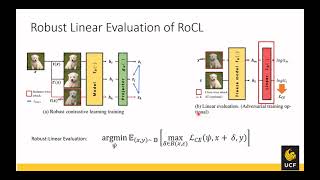
Adversarial Self-Supervised Contrastive Learning
Explore adversarial self-supervised contrastive learning, covering transformers, frameworks, algorithms, evaluations, and experiments in this comprehensive presentation.
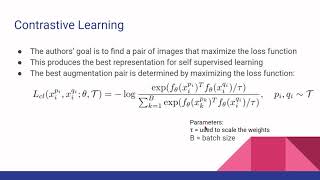
Contrastive Learning with Adversarial Examples - Spring 2021
Explore contrastive learning with adversarial examples, covering unsupervised embedding, self-supervised learning, experiments, and architectural studies in this comprehensive overview.
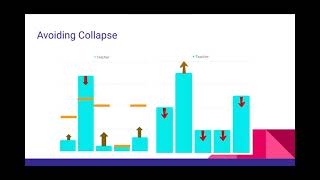
Emerging Properties in Self-Supervised Vision Transformers - Lecture 25
Explore emerging properties in self-supervised vision transformers, covering related topics, model overview, and implementation details for advanced computer vision applications.
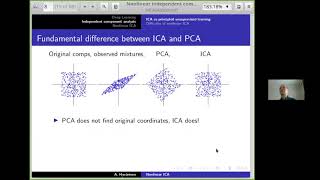
Nonlinear Independent Component Analysis - Aapo Hyvärinen
Explore nonlinear independent component analysis, its applications in AI and unsupervised learning, and recent advancements in deep latent variable models with Aapo Hyvärinen.
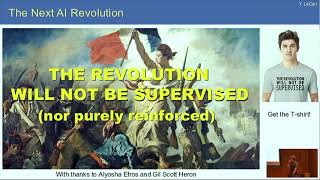
Energy-Based Approaches to Representation Learning - Yann LeCun
Explore energy-based approaches to representation learning with Yann LeCun, covering self-supervised learning, video prediction, and sparse modeling in high-dimensional spaces.
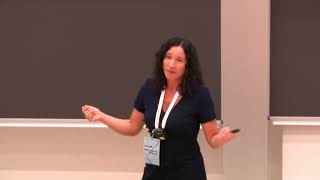
Modeling Reality: Then and Now
Odkryj ewolucję modelowania rzeczywistości w fizyce teoretycznej, od klasycznych metod po nowoczesne sieci neuronowe i modele językowe, prezentowane przez eksperta w dziedzinie.
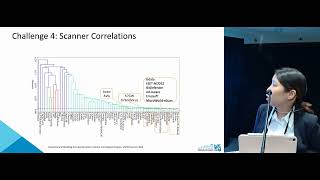
SIRAJ - A Unified Framework for Aggregation of Malicious Entity Detectors
Unified framework for aggregating malicious entity detectors, addressing varying scanner accuracy, label flips, and correlations through self-supervised learning and pretext tasks for improved threat detection.
From Data Crimes to Self-Supervised Reconstruction: Advancing AI-based MRI
Explore AI-based MRI advancements, from data crime prevention to self-supervised reconstruction techniques, with insights from UC Berkeley's EECS expert.
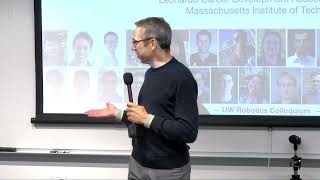
Next-Generation Robot Perception: Hierarchical Representations, Certifiable Algorithms, and Self-Supervised Learning
Exploring next-gen robot perception: hierarchical representations, certifiable algorithms, and self-supervised learning for enhanced spatial understanding and robust estimation in robotics.
Data-Driven Fine Manipulation: Pushing Boundaries in Robotic Precision
Explore data-driven solutions for fine robotic manipulation, enabling low-cost hardware to perform intricate tasks with superhuman precision using imitation and reinforcement learning techniques.
Large Language Molecular Representation and Learning
Explore molecular machine learning's potential in drug discovery, focusing on representation challenges, self-supervised learning, and leveraging pre-trained language models for property prediction.
ProtMD: Incorporating Conformation Flexibility for Drug Binding via Pretraining on MD Simulations
Explore ProtMD, a novel approach incorporating protein flexibility in drug binding predictions using molecular dynamics simulations and self-supervised learning techniques for improved accuracy.

DINOv2: Data Pipeline, Model Training and Results - Meta AI's Visual Feature Learning System
Delve into Meta AI's DINOv2 architecture, exploring its data pipeline, training methodology, and innovative features for robust visual processing without supervision in just 12 minutes.