
Supply Chain Analytics
Learn to optimize supply chains using analytics, forecasting, inventory management, network design, and decision-making under uncertainty. Gain practical skills for strategic planning and operational efficiency.

Sports Analytics
Explore sports analytics through diverse projects, data scraping, and statistical analyses. Learn to predict outcomes, simulate games, and gain insights into various sports using data science techniques.
Patient-Specific COVID-19 Resource Utilization Prediction Using Fusion AI Model - Amara Tariq
Explore AI-driven prediction of COVID-19 resource utilization using fusion modeling, combining patient history and current indicators for efficient healthcare planning and allocation.
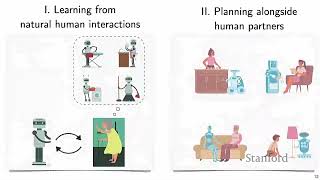
Interactive Imitation Learning: Planning Alongside Humans
Interactive imitation learning for robots: tackling feedback-driven covariate shift and predicting human intent using graph neural networks, with applications in self-driving vehicles.
Towards Robust Radiogenomic Models for Brain Tumor Characterization - MedAI #123
Exploring stability of radiomics features in brain tumor segmentation and impact on predictive models. Investigates how stable, discriminatory features lead to generalizable radiogenomics for tumor characterization.
Diverse Data and Efficient Algorithms for Robot Learning
Explore diverse data collection and efficient algorithms for robot learning, focusing on large-scale approaches and reinforcement learning for deformable object manipulation.

Linear Regression and Linear Models
Learn powerful statistical tools: linear regression and models. Predict continuous values using various data types. Covers least squares, multiple regression, t-tests, ANOVA, and R implementation.

Logistic Regression
Learn to predict discrete outcomes using logistic regression, covering coefficients, maximum likelihood, R-squared, p-values, deviance, and practical implementation in R.

XGBoost
Learn to implement XGBoost for regression and classification, explore its mathematical foundations, and master advanced optimizations in Python.
Using Computation to Drive the Self-Assembly of Complex Structures
Explore computational approaches for driving self-assembly of complex structures, unlocking new possibilities in materials science and nanotechnology.

Harnessing Chaos and Predicting the Unpredictable with Artificial Intelligence
Explore how Reservoir Computing and AI can predict chaotic systems like weather and brain dynamics, pushing beyond traditional forecasting limits and combining knowledge-free and knowledge-based approaches.

Parables from Complex Systems and Their Possible Meanings for Our Lives - Lecture 2
Explore complex systems through parables, examining prediction models, chaos theory, and market dynamics to gain insights applicable to everyday life and decision-making.
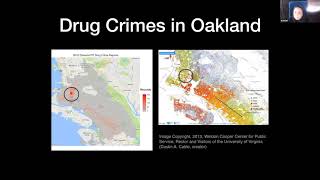
Fairness, Accountability, and Transparency in Predictive Models for Criminal Justice
Explore fairness, accountability, and transparency in predictive modeling for criminal justice, with examples highlighting their importance in real-world applications.

Early Warning Signals for Dynamics on Networks
Explore early warning signals for network dynamics, uncovering predictive indicators and their applications in complex systems analysis.

The Number Mysteries - Marcus du Sautoy
Explore the unexpected applications of mathematics in predicting the future, from prime numbers to football, in this engaging lecture by Marcus du Sautoy.
Decision Trees and Ensemble Methods
Explore decision trees, ensemble methods, and advanced techniques like random forests and boosting algorithms for improved machine learning model performance.
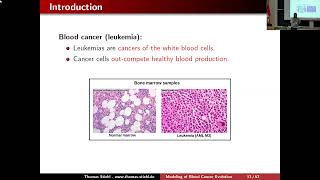
Computational Modeling of Blood Cancer Evolution and Patient Prognosis
Explore a 47-minute lecture on computational modeling techniques for blood cancer evolution and patient prognosis. Delve into cutting-edge research presented by Thomas Stiehl from RWTH Aachen University as part of the Fields Institute's Thematic Program…
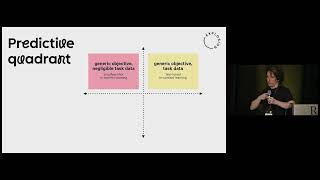
How Many Labelled Examples Do You Need for a BERT-sized Model to Beat GPT4 on Predictive Tasks?
Explore the effectiveness of in-context learning vs. labelled data for predictive tasks, comparing BERT-sized models to GPT-4 in text categorization and entity recognition.
Forecasting Mental Wellness of Students Using Julia
Explore forecasting techniques for student mental wellness using Julia. Learn to analyze academic, social, and environmental factors impacting mental health through data-driven approaches and predictive modeling.
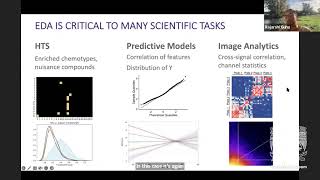
Integration then Interrogation: Exploratory Data Analysis on a Deadline - 2022
Explore strategies for efficient exploratory data analysis, focusing on visualization techniques, predictive modeling, and practical constraints in chemical biology datasets.
Feature Engineering Made Simple
Master feature engineering techniques to streamline your machine learning workflow. Explore systematic approaches using Anovos, an open-source library for efficient data processing and model building.