
Interpretable Machine Learning for Model Oversight and Insight
Explore interpretable machine learning techniques for model oversight and gaining valuable insights with Finale Doshi-Velez in this colloquium on AI applications in biomedicine.
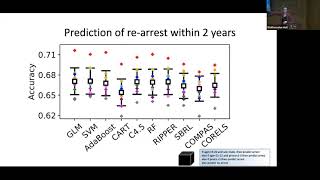
Stop Explaining Black Box Machine Learning Models for High Stakes Decisions and Use Interpretable Models Instead - Cynthia Rudin
Advocating for interpretable machine learning models in high-stakes decisions, highlighting their reliability and transparency compared to black box models with potentially misleading explanations.

Introduction to Interpretable Machine Learning II - Cynthia Rudin
Explore interpretable machine learning with a focus on decision trees, information theory, and analytical bounds. Gain insights into modern approaches and practical applications.

Introduction to Interpretable Machine Learning - Cynthia Rudin
Explore interpretable machine learning with Cynthia Rudin, covering classification, natural language processing, and decision trees. Gain insights into model complexity and information theory applications.
SHAP and Shapley Values for Interpretable Machine Learning - Kaggle 30 Days of ML Day 18
Explore SHAP and Shapley Values for interpretable machine learning. Learn local interpretation techniques, Python implementation, and visualization methods for explainable AI.
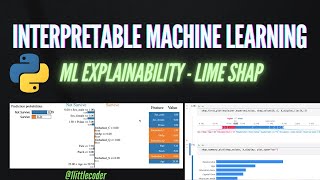
What is Interpretable Machine Learning - ML Explainability - with Python LIME Shap Tutorial
Explore interpretable machine learning with Python, covering LIME and SHAP techniques for explainable AI. Learn why ML explainability matters and how to implement it in your projects.
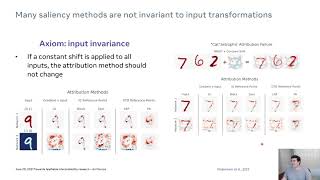
Towards Falsifiable Interpretability Research in Machine Learning - Lecture
Explore techniques for falsifiable interpretability in machine learning, focusing on saliency, individual neurons, and populations. Learn to build stronger hypotheses for more robust research.

Scoring Systems - At the Extreme of Interpretable Machine Learning - Cynthia Rudin - Duke University
Explore interpretable machine learning for high-stakes decisions. Learn about optimal scoring systems, their applications in healthcare and criminal justice, and the importance of transparency in AI models.

Interpretable Machine Learning via Program Synthesis - IPAM at UCLA
Explore interpretable machine learning through program synthesis, focusing on control policies and RNA splice prediction. Learn novel approaches for creating custom, problem-specific model families.
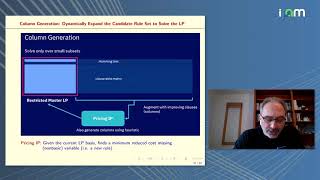
Fair and Interpretable Decision Rules for Binary Classification
Explore fair and interpretable decision rules for binary classification using Boolean rule sets in DNF, with a focus on maximizing accuracy while maintaining group fairness constraints.
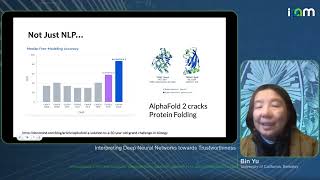
Interpreting Deep Neural Networks Towards Trustworthiness - IPAM at UCLA
Explore techniques for interpreting deep neural networks, including ACD and AWD methods, to enhance trustworthiness in AI applications across scientific domains.
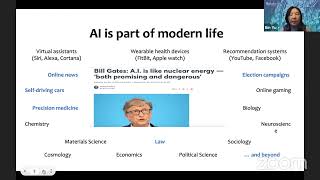
Interpreting Deep Neural Networks Towards Trustworthiness
Explores methods for interpreting complex neural networks, introducing ACD and AWD techniques. Advocates for a quality-controlled data science lifecycle to ensure trustworthy model interpretation.

Interpretable Machine Learning to Model Drug Perturbations in Single Cell Genomics
Explore interpretable machine learning for modeling drug effects on single-cell genomics. Learn about deep autoencoders, manifold identification, and predicting novel perturbations in cellular states.

Interpretable Machine Learning with an Eye for the Physics
Explore hybrid multivariate modeling combining theory-driven preprocessing, data-driven chemometrics, and machine learning to extract meaningful information from complex big data measurements.
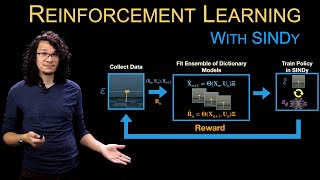
SINDy-RL: Interpretable and Efficient Model-Based Reinforcement Learning
Explores SINDy-RL, a framework combining sparse identification of nonlinear dynamics with reinforcement learning for efficient, interpretable control policies in complex environments.
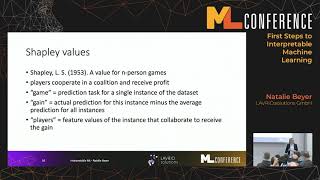
First Steps to Interpretable Machine Learning
Explore interpretable machine learning using SHAP values to understand model predictions and feature importance, based on a real data science project with practical insights.

Responsible Data Management - Ethics and Legal Compliance in Data-Driven Systems
Explore ethical considerations in data-driven systems, focusing on responsible data collection, preparation, and lifecycle management for building fair and interpretable AI solutions.