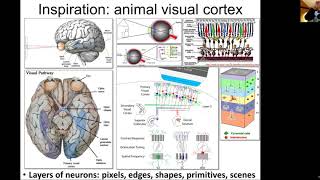
MIT Deep Learning in Life Sciences Spring 2020
Explore deep learning applications in genomics, from neural networks to single-cell analysis. Gain insights into regulatory genomics, epigenomics, and genetics through advanced computational techniques.
Beyond Aesthetics: Do Text-to-Image Models Equally Serve Everyone?
Explore the ethical and social implications of Text-to-Image (T2I) models in this 26-minute conference talk by Nithish Kannen, an AI resident at Google DeepMind. Delve into the cultural disparities these models can inadvertently perpetuate due to their d…

The Privacy Considerations of Production Machine Learning
Explore state-of-the-art research on privacy in machine learning, including estimating and defending against privacy leakage, secure collaboration, and machine unlearning for GDPR compliance.
Machine Learning for Entertainment - Challenges and Opportunities
Explore challenges and solutions in ML for streaming services, including personalization, content understanding, and ads targeting. Learn about balancing metrics, feedback loops, and algorithmic fairness.
5 Techniques to Increase Adoption Rates via Interpretability
Discover 5 techniques to boost ML project adoption through enhanced model interpretability, fostering trust and bridging gaps between end-users and data scientists.
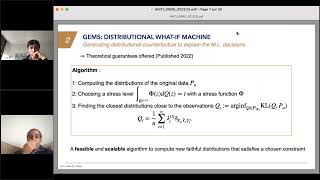
FOCUS TECHNIQUE: ANITI Gems AI - Library for Machine Learning Model Explainability
Découvrez ANITI Gems ai, une librairie innovante pour expliquer les modèles de Machine Learning. Apprenez à interpréter et comprendre les décisions des algorithmes d'IA.
SHAP and Shapley Values for Interpretable Machine Learning - Kaggle 30 Days of ML Day 18
Explore SHAP and Shapley Values for interpretable machine learning. Learn local interpretation techniques, Python implementation, and visualization methods for explainable AI.

Parameter Estimation and Interpretability in Bayesian Mixture Models
Explore posterior contraction in Bayesian mixture modeling, examining parameter estimation and model interpretability under correct and misspecified conditions. Gain insights into tradeoffs between expressiveness and interpretability.

Machine Learning for Scientific Discovery, with Examples in Fluid Mechanics
Explore machine learning for nonlinear dynamical systems modeling, focusing on the SINDy algorithm and its applications in fluid dynamics, with emphasis on interpretable and physics-respecting solutions.
Making AI Truly Open Source - Challenges and Solutions
Explore the complexities of truly open-source AI, examining transparency challenges, data attribution issues, and practical solutions for creating genuinely open AI systems.

Revealing the Unseen: Visualizing Attention in Transformer Models
Dive into the visualization techniques of attention mechanisms in Transformer models, understanding their inner workings and practical applications through expert insights.

AI Operations: Evolution, Challenges and Solutions in Modern IT Infrastructure
Explore the evolution and implementation challenges of AI Ops, from historical Big Data solutions to modern artificial intelligence integration in IT operations management and workflow optimization.

Pairwise Feature Importance and Effective Attention in Self-Attention Networks
Dive into advanced concepts of attention mechanisms, exploring effective attention computation, norm-based analysis, and practical applications in neural networks.
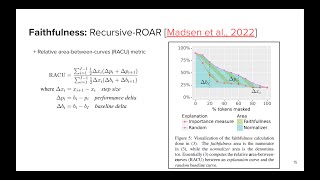
Evaluating Input Attribution Methods in Machine Learning - Plausibility and Comprehensiveness
Explore advanced concepts in gradient-based input attribution, from plausibility assessment to comprehensive evaluation methods like ROAR and Recursive-ROAR techniques.
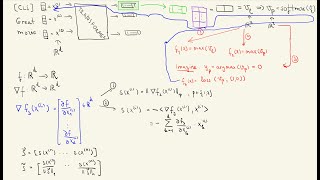
Gradient-Based Input Attribution Methods and Their Applications
Explore gradient-based input attribution methods, from fundamental concepts to practical applications, limitations, and advanced extensions in machine learning model interpretability.
Machine Learning Explainability & Bias Detection with Watson OpenScale
Learn to monitor, explain, and debias machine learning models using Watson OpenScale. Explore performance metrics, interpret predictions, and detect model drift for improved AI transparency and reliability.
Develop Successful Deep Learning Projects with This 10 Steps Formula
Learn a 10-step formula for successful deep learning projects, covering problem definition, data preparation, model selection, training strategies, regularization, augmentation, interpretability, and deployment.

LEMNA - Explaining Deep Learning Based Security Applications
Explore LEMNA, a novel technique for explaining deep learning models in security applications, addressing transparency concerns and improving interpretability for critical decisions.

Interpretability - Now What?
Explore machine learning interpretability methods, focusing on Testing with Concept Activation Vectors (TCAV) and its applications in image prediction and medical diagnosis.
Exploring the Origins and Prevalence of Texture Bias in Convolutional Neural Networks
Explore texture bias in CNNs: origins, prevalence, and implications. Examine dataset influence, training objectives, and model architectures to understand and mitigate this phenomenon in computer vision.

Explainable Structured Machine Learning in Similarity, Graph and Transformer Models
Explores techniques for explaining complex machine learning models, focusing on similarity, graph, and transformer structures. Discusses applications in knowledge evolution, gender bias, and task-solving.