
Federated Hyperparameter Tuning - Challenges, Baselines, and Connections
Explores challenges and solutions for hyperparameter tuning in federated learning, introducing FedEx method to accelerate the process. Connects to weight-sharing in neural architecture search and demonstrates improved accuracy on benchmarks.

Towards Safe and Efficient Learning in the Physical World - Stanford Seminar
Exploring safe Bayesian optimization and model-based deep reinforcement learning for efficient, safe online learning in real-world applications like robotics and laser tuning.

Seamless Transition from Single-core Python to Julia Multi-GPU
Discover how to transform single-core Python code into scalable Julia applications for GPU supercomputers, with focus on automatic verification and parallel computing optimization.

Data-Driven Computational Design of Engineered Material Systems
Explore data-driven methods for designing advanced material systems, integrating machine learning, optimization, and digital twins to accelerate innovation in heterogeneous nano- and microstructural materials.
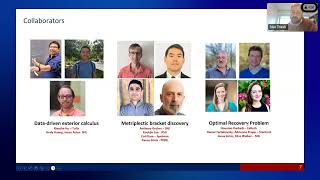
A Data-Driven Finite Element Exterior Calculus
Explore data-driven finite element exterior calculus for developing reduced-order models of multiphysics systems, combining machine learning with traditional finite element methods for robust surrogate modeling.

Machine Learning and Data Science for Medicine - A Vision, Some Progress and Opportunities
Explore machine learning and data science applications in medicine, focusing on AutoPrognosis - an automated system for creating tailored, interpretable, and accurate prognostic models for various diseases.
Robust and Sample-Efficient Simulation-Based Inference
Explore robust and sample-efficient methods for simulation-based inference, addressing model misspecification and computational limitations in scientific and engineering applications.
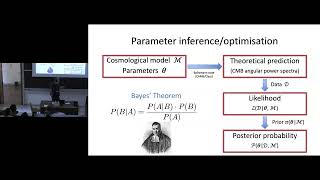
Efficient Cosmological Model Selection with Bayesian Optimization
Explore Bayesian optimization techniques for efficient cosmological model selection, enhancing understanding of the universe's structure and evolution.
Models, Inference and Algorithms: Lightning Talks on Machine Learning and Computational Biology
Discover cutting-edge research presentations on machine learning in healthcare, protein modeling, chemical space exploration, and DNA sequence generation from leading researchers at MIT, Harvard, and Broad Institute.
Hyperparameter Optimization and Algorithm Configuration from a Black-Box Optimization Perspective
Explore dynamic algorithm configuration and hyperparameter optimization approaches, comparing AutoML and black-box optimization methods for efficient, adaptive parameter tuning.
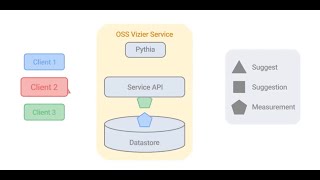
Open Source Vizier: Distributed Infrastructure for Blackbox Optimization and Hyperparameter Tuning
Explore Google's Vizier system for blackbox optimization and hyperparameter tuning, covering its distributed infrastructure, Python implementation, and integration with AutoML ecosystem.

Deep Bayesian Bandits - Exploring in Online Personalized Recommendations
Explore online personalized recommendations using Deep Bayesian Bandits. Learn about UCB, Thompson Sampling, and innovative approaches like bootstrapping and dropout methods for effective exploration strategies.
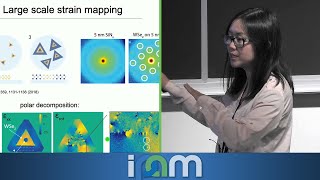
Assisting 4D-STEM Data Processing by Machine Learning and Bayesian Optimization
Explore machine learning and Bayesian optimization techniques for processing 4D-STEM data, enhancing efficiency in materials analysis and electron ptychography reconstruction.
A Deep Generative Model for Molecular Graphs by Niloy Ganguly
Explores a deep generative model for molecular graphs using variational autoencoders, discussing its design, properties, and applications in drug discovery and molecule optimization.
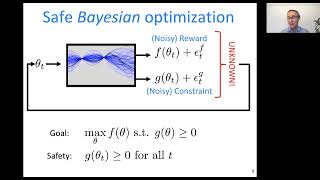
Safe and Efficient Exploration in Reinforcement Learning
Explore safe and efficient reinforcement learning techniques for real-world applications, including Bayesian optimization, confidence bounds, and meta-learning for improved performance and safety.

Hyperparameter Optimization - This Tutorial Is All You Need
Explore various hyperparameter optimization techniques including Grid Search, Random Search, Bayesian Optimization, Hyperopt, and Optuna to fine-tune models and optimize functions effectively.

Hyperparameter Optimization for Reinforcement Learning Using Meta's Ax
Learn to optimize hyperparameters for reinforcement learning using Meta's Ax framework. Explore grid search, random search, and Bayesian optimization techniques to improve machine learning model performance.

Linux Kernel Autotuning for Optimal Performance
Automated solution for optimizing Linux kernel parameters using machine learning, focusing on memory management. Explores design, architecture, and results, proposing future in-kernel ML framework.

Introduction to Machine Learning - Professor Zoubin Ghahramani, Cambridge University
Comprehensive overview of machine learning fundamentals by renowned expert, covering statistical approaches, Bayesian methods, deep learning, and automated data analysis techniques.
Pre-trained Ensembles for Bayesian Optimization of Protein Sequences
Explore pre-trained ensembles for Bayesian optimization of protein sequences, enabling accurate predictions with minimal data and guiding iterative design for novel peptide inhibitors.
Calibration and Generalizability of Probabilistic Models on Low-Data Chemical Datasets
Explore calibration and generalizability of probabilistic models on small chemical datasets. Gain insights into model selection and feature choice for molecular property prediction and design.