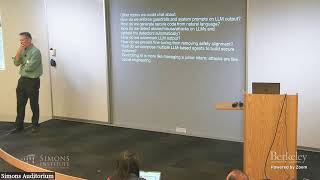
Defense Against Prompt Injection Attacks in LLM-Integrated Applications
Explore effective strategies for securing LLM applications against prompt injection attacks through structured queries and specialized instruction tuning techniques.
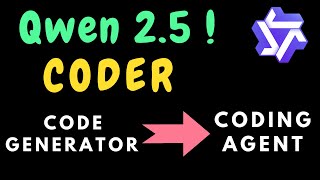
Qwen 2.5 Coder: Building Coding Agents Through Reasoning and Code Generation
Discover how Qwen2.5 Coder combines reasoning with code generation capabilities, exploring its architecture, training methodology, and performance metrics for building advanced coding agents.

Creating Instruction Datasets for LLM Fine-tuning - A Beginner's Guide
Discover comprehensive strategies for creating instruction datasets and fine-tuning LLMs, from basic concepts to advanced techniques for both coders and non-coders in AI model development.
Performance Evaluation of Open-Source Instruction-Tuned Large Language Models
Explore the latest performance benchmarks and evaluation methodologies for open-source instruction-tuned Large Language Models through comprehensive leaderboard comparisons.
WizardCoder 34B: Understanding Complex Fine-Tuning for Code Generation
Delve into the advanced fine-tuning techniques behind WizardCoder-34B, exploring its performance improvements through complex instruction cascading and evolutionary approaches.
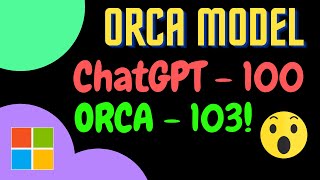
Orca LLM: Bridging the Gap Between ChatGPT and Open Source Models
Explore how Orca LLM achieves ChatGPT-level reasoning capabilities with just 13B parameters through innovative explanation tuning and advanced training strategies.

LLaVA: Large Language and Vision Assistant - Understanding the First Instruction-Following Multimodal Model
Discover how LLaVA pioneered instruction-tuned multimodal AI, combining language and vision capabilities to create a groundbreaking Large Multimodal Model for advanced visual understanding and interaction.
The ALPACA Code: Self-Instruct Fine-Tuning of Large Language Models
Dive into the technical implementation of self-instruct fine-tuning for Large Language Models using ALPACA, covering synthetic dataset generation and parallel task optimization.
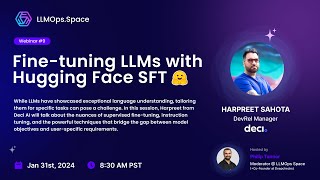
Fine-tuning LLMs with Hugging Face SFT and QLoRA - LLMOps Techniques
Explore advanced LLM fine-tuning techniques, from specialized tuning to instruction enhancement. Learn dataset preparation, model optimization, and leverage powerful libraries for efficient fine-tuning and deployment.
Prompt Engineering Techniques for Microsoft Phi3-mini 128k Instruct
Explore prompt engineering techniques for Microsoft Phi3-mini 128k Instruct, including zero-shot, few-shot, CoT, and RAG approaches.
Why GenAI Needs Careful Training Data Management
Explore the critical role of training data management in GenAI, including harmonization across stages and its impact on model effectiveness and safety in various domains and languages.
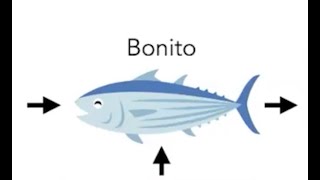
Fine-Tuning Large Language Models Faster Using Bonito for Task-Specific Training Data Generation
Accelerate LLM fine-tuning with Bonito: Generate task-specific training data for faster instruction tuning and improved zero-shot task adaptation on specialized, private datasets.