Enhancing Scientific Computing Through Physics-Informed Neural Networks
Explore physics-informed neural networks (PINNs) as an alternative to traditional scientific computation, addressing challenges in high-dimensional problems and incorporating noisy data in inverse problems.
PECANNs - Physics and Equality Constrained Artificial Neural Networks
Innovative approach to physics-informed neural networks using constrained optimization, addressing hyperparameter challenges and improving accuracy for scientific applications involving multi-dimensional PDEs.
HypoSVI- Earthquake Hypocentre Inversion With Stein Variational Inference and Physics Informed Neural Networks
Explore physics-informed deep learning for environmental sciences, covering PINNs for Eikonal equations, probabilistic inversion for earthquake location, and neural operators for in-ice navigation.
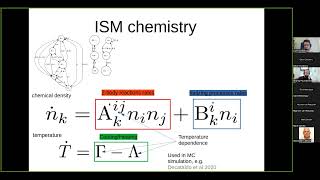
Emulating InterStellar Medium Chemistry with Physics Informed Neural Networks
Exploring Physics Informed Neural Networks to emulate InterStellar Medium chemistry, focusing on Giant Molecular Clouds formation and addressing challenges in astrophysical simulations.
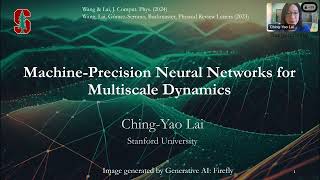
Machine-Precision Neural Networks for Multiscale Dynamics
Discover how multi-stage neural networks can achieve machine-precision accuracy in scientific predictions, addressing spectral bias and improving deep learning applications in multiscale physics problems.
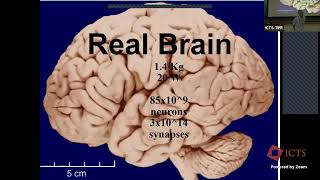
Laboratory for Interdisciplinary Breakthrough Science - Hybrid
Explore machine learning's impact on scientific challenges through an industry-academia consortium, fostering collaboration between TIFR centers and ML experts to tackle significant disciplinary problems.
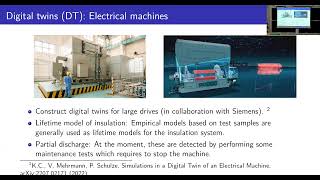
Learning Port Hamiltonian Structures Using PINNs Architecture
Explore innovative techniques for learning Port Hamiltonian structures using Physics-Informed Neural Networks, enhancing understanding of dynamical systems and machine learning applications.
Physics Informed Neural Networks - BC Incorporation
Explore Physics Informed Neural Networks and learn techniques for incorporating boundary conditions in these advanced machine learning models.
Code Walkthrough for PINNs in Burgers Equation
Explore Physics-Informed Neural Networks (PINNs) applied to the Burgers equation through a detailed code walkthrough.
Physics Informed Neural Networks - Introduction
Explore the fundamentals of Physics Informed Neural Networks in this concise introduction.
Foundational AI 3.0: Unveiling the Future of AI Systems
Explore AI's evolution from models to systems, focusing on dynamic environments and Foundational Causal Models. Gain insights into the future of AI in robotics, VR/AR, and healthcare.

WarpPINN: Cine-MR Image Registration with Physics-Informed Neural Networks
Explore WarpPINN, a physics-informed neural network for cardiac image registration. Learn how it quantifies local heart deformations, improving heart failure diagnosis through advanced strain estimation techniques.

Neuromancer: Differentiable Programming Library for Data-driven Modeling and Control
Explore NeuroMANCER, an open-source library for integrating machine learning with scientific computing, solving optimization problems, and creating differentiable models with physics-based constraints.
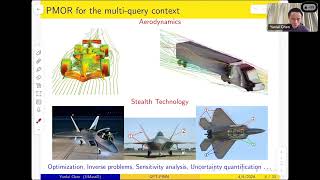
GPT-PINN and TGPT-PINN: Advanced Physics-Informed Neural Networks for Parametric PDEs
Explore GPT-PINN and TGPT-PINN for efficient parametric PDE solutions. Learn meta-learning techniques to reduce training time and network complexity while maintaining accuracy across parameter domains.
PINNs for Inverse Problems in Scientific Computing
Explore Physics-Informed Neural Networks (PINNs) and their application in solving inverse problems in scientific computing and engineering.

Physics-Informed Neural Networks in Medicine
Explore physics-informed neural networks' applications in medicine, focusing on innovative technologies combining data assimilation and machine learning.
NeuroMANCER - Differentiable Programming Library for Data-driven Modeling and Control
Explore NeuroMANCER: an open-source library for integrating machine learning with scientific computing, focusing on parametric optimization, system identification, and optimal control.
PirateNets - Physics-Informed Deep Learning with Residual Adaptive Networks
Explore PirateNets: a novel deep learning architecture for solving PDE-governed problems, offering improved stability and efficiency over traditional physics-informed neural networks.
Kalman-Bucy Informed Neural Networks for System Identification
Combining physics-informed neural networks and Kalman filters to identify parameters in continuous-time systems with noisy measurements, improving model precision for complex systems.
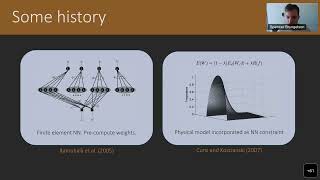
Competitive Physics Informed Networks - Overcoming Limitations in PDE Solutions
Explore competitive physics-informed neural networks for solving PDEs with unprecedented accuracy. Learn about adversarial approaches and zero-sum games to achieve single-precision accuracy in numerical simulations.
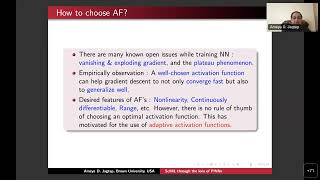
Scientific Machine Learning through the Lens of Physics-Informed Neural Networks
Explore physics-informed neural networks (PINNs) as an alternative to traditional scientific computation, addressing limitations and showcasing applications in solving complex physical problems.