
Complete ML Lifecycle with MLflow - Learn Its Four Components
Explore MLflow's four components to simplify the machine learning lifecycle, from experimentation to production, enhancing reproducibility and accelerating development.
Using Reproducible Experiments to Create Better Machine Learning Models
Enhance ML model efficiency through reproducible experiments. Learn to track hyperparameter, code, and data changes using DVC for grid and random search tuning methods.
Reproducible Machine Learning - How Not to Repeat the Past
Explore techniques for organizing and reproducing deep learning experiments, including standardized logging, versioning, and templated workflows. Enhance collaboration and minimize duplication in ML projects.
MLOps: Databricks MLFlow y Optuna para Ajuste de Hiperparámetros - Español
Optimiza modelos de machine learning con Databricks, MLflow y Optuna. Aprende técnicas de ajuste de hiperparámetros usando XGBoost en un entorno práctico.
MLOps with MLflow: Fine-Tuning LLMs, Tracking Experiments, and Logging Models
Aprende a utilizar MLflow para registrar y gestionar el proceso de ajuste fino de modelos de lenguaje, facilitando el seguimiento de experimentos y la inferencia.
MlOps Mlflow: Trabajar con HuggingFace Transformers en Mlflow - Español
Aprende a integrar HuggingFace Transformers con MLflow para optimizar el desarrollo y despliegue de modelos de lenguaje avanzados.
MLOps MLflow: Deep Learning Frameworks PyTorch and TensorFlow in MLflow - Spanish
Aprende a integrar Tensorflow y Pytorch con MLflow para optimizar tus proyectos de Deep Learning y mejorar el seguimiento de experimentos.
Managing the Complete Machine Learning Lifecycle with MLflow - Introduction to MLflow Tracking
Introduction to MLflow: tracking experiments, packaging projects, deploying models, and managing lifecycle. Learn to record, reproduce, and compare ML runs using MLflow's components and UI.

Databricks for MLOps - Experiment Tracking, Model Packaging, and Deployment
Master MLflow in Databricks: Experiment tracking, model packaging, and deployment for efficient machine learning operations.
Tracking Experiments - Full Stack Deep Learning - March 2019
Learn to track deep learning experiments using Weights & Biases for a text recognizer project, enhancing your model development workflow and results analysis.
Infrastructure and Tooling - Full Stack Deep Learning - March 2019
Explore infrastructure and tooling for deep learning projects, covering GPU machines, experiment tracking, and all-in-one solutions like AWS SageMaker.
A Hitchhiker's Guide to the MLOps Experience
Explore MLOps essentials: data versioning, visualizations, experiment tracking, and model registry. Learn key components and UX tips for streamlining machine learning workflows.
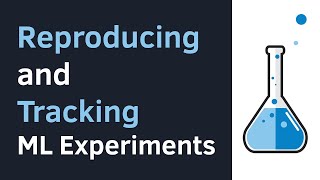
Reproducible Machine Learning and Experiment Tracking Pipeline with Python and DVC
Learn to build reproducible machine learning pipelines using Python and DVC. Track experiments, manage data versions, and compare model metrics for improved ML workflow efficiency.
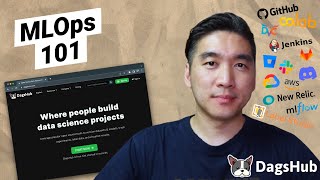
MLOps 101 - A Practical Tutorial on Creating a Machine Learning Project with DagsHub
Step-by-step tutorial on using DagsHub for machine learning projects, covering project creation, environment setup, remote storage configuration, version control, experiment tracking, and hypothesis exploration.
Supercharge Your Training With PyTorch Lightning and Weights & Biases
Learn to enhance ML pipelines using PyTorch Lightning and Weights & Biases. Discover efficient experiment tracking, advanced logging techniques, and how to leverage callbacks for improved model development and visualization.
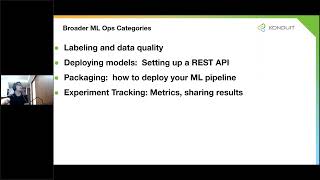
Deploying Optimized Deep Learning Pipelines
Survey of deep learning pipeline optimization techniques, exploring quantization, distillation, and math library selection. Discusses trade-offs for deployment and provides insights for efficient ML implementation.
Simplifying Model Development and Management with MLflow - New Features and Innovations
Explore MLflow's latest features for simplified experiment tracking, improved model portability, schema management, and faster deployment in machine learning lifecycle management.

Data Versioning and Reproducible ML with DVC and MLflow
Learn to enhance ML reproducibility using DVC and MLflow. Explore data versioning, model tracking, and artifact management for efficient ML development and deployment.
Instrumenting Weights & Biases for PII Data Detection - ML Pipeline Tutorial
Instrumenting W&B for PII detection: Learn to track experiments, analyze data, and perform error analysis in ML pipelines. Apply knowledge to a Kaggle competition using W&B Tables and Artifacts.
Building Reproducible ML Processes with an Open Source Stack
Explore open-source tools for reproducible machine learning, covering code, data, and environment management. Includes hands-on demonstration of experiment replication using KubeFlow, Git, Minio, and lakeFS.
MLOps MLFlow: Building Pipelines with MLflow Projects
Build MLflow project pipelines for efficient machine learning workflows. Learn to create and execute data science pipelines using MLflow Projects.