
MIT Computational Biology - Genomes, Networks, Evolution, Health - Fall 2018
Comprehensive exploration of computational biology, covering genomics, networks, evolution, and health applications through advanced algorithms, data analysis, and cutting-edge research topics.
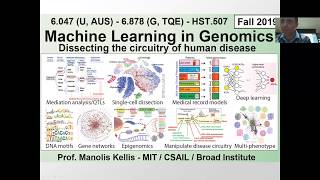
Machine Learning in Genomics - Fall 2019
Comprehensive exploration of computational biology techniques, from dynamic programming to deep learning, applied to genomics, epigenomics, and systems biology. Covers cutting-edge topics like single-cell genomics and genome engineering.

Pattern Recognition and Application
This course covers feature extraction techniques and the representation of patterns in feature space. Measure of similarity between two patterns. Statistical, nonparametric and neural network techniques for pattern recognition have been discussed in this…

Time Series Machine Learning for Deployment in Healthcare
Explore time series machine learning applications in healthcare, focusing on ICU data analysis, explainability tools, and real-time evaluation for improved patient outcomes.
CBW's Machine Learning Workshops May 25-26, 2021
Comprehensive workshop on machine learning in bioinformatics, covering decision trees, neural networks, hidden Markov models, and practical applications using Keras and Scikit-Learn.

Probability
Explore Bayes Theorem, Hidden Markov Models, Shannon Entropy, Naive Bayes classifier, Beta distribution, and Thompson sampling in this friendly introduction to key probability concepts.
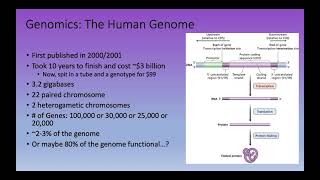
Bioinformatics Course Lectures
Comprehensive bioinformatics lectures covering genomics, sequencing, evolution, statistics, alignment, phylogenetics, assembly, annotation, and genetic variation for aspiring bioinformaticians.
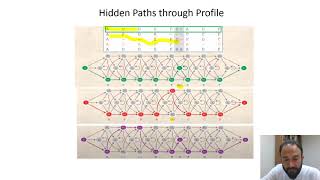
Bioinformatics Lectures
Comprehensive bioinformatics lectures covering algorithms, cancer genomics, phylogenetics, and sequence alignment. Includes practical tutorials and software demonstrations for data analysis in genomics and evolutionary biology.
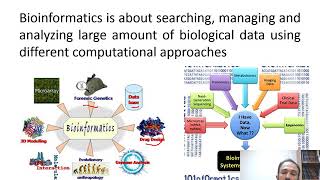
Introduction to Bioinformatics
Explore bioinformatics fundamentals, from genome projects to databases, sequence analysis, algorithms, and phylogenetics. Learn key concepts and practical applications in biological data analysis.
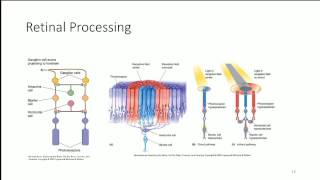
Bio-Inspired Sensing
Explore bio-inspired sensing and its applications in robotics, focusing on how biological systems like the human eye inform edge detection, noise rejection, and data processing in artificial sensors.
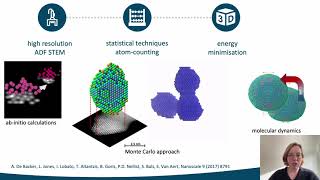
3D Atomic Resolution Through Dose-Efficient Fusion of Image & Analytical Technique
Explore 3D atomic structure analysis of nanomaterials using advanced quantitative TEM techniques, including parameter estimation, deep learning, and fusion of ADF STEM with EDX for heterogeneous materials.
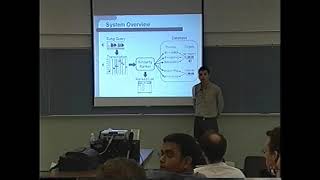
Name That Tune: Finding a Song from a Sung Query
Explore techniques for music retrieval using Query by Humming, including string-alignment algorithms and hidden Markov models. Compare approaches and their effectiveness in finding songs from sung queries.
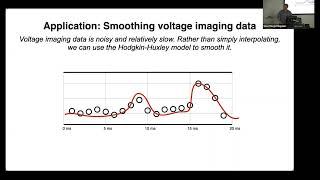
Nuts and Bolts of Modern State Space Models - Part I
Explore state space models for analyzing sequential data, covering foundations, algorithms, and applications using the dynamax library. Learn to uncover latent states in high-dimensional measurements.
Time Series Class - Part 1 - Dr Ioannis Papastathopoulos, University of Edinburgh
Learn fundamental concepts and advanced techniques for analyzing time series data, including ARMA models, state-space models, and neural networks for forecasting and inference.
Time Series Class - Part 1 - Dr. Ioannis Papastathopoulos, University of Edinburgh
Learn fundamental concepts and advanced techniques in time series analysis, including ARMA models, state-space models, and neural networks for forecasting and inference.
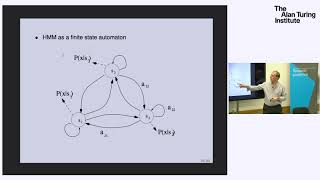
Time Series Class - Part 2 - Professor Chris Williams, University of Edinburgh
Explore time series analysis, from moving average models to advanced state-space techniques and recurrent neural networks. Gain practical skills in parameter estimation, forecasting, and applying models to real-world data.
Data Science Applications - Environment/Ecology
Explore statistical modeling techniques for ecological data, focusing on hidden Markov models, Bayesian inference, and capture-recapture methods. Learn to analyze and interpret complex environmental datasets.

CS480-680 - Hidden Markov Models
Explore Hidden Markov Models, their assumptions, and applications in robot localization. Learn about monitoring tasks, hindsight reasoning, and finding the most likely explanation.
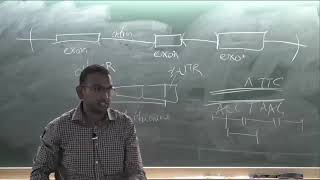
Sequence Alignment - Hidden Markov Models, Category Theory and All That Jazz by Soumyashant Nayak
Explore sequence alignment methods, from traditional algorithms to modern pseudo-alignment techniques, with insights on hidden Markov models and applications in RNA-Seq data analysis and evolutionary genetics.
Time Series Modelling and State Space Models - Professor Chris Williams, University of Edinburgh
Explore time series modeling, including ARMA models, Hidden Markov Models, and Kalman filtering. Learn parameter estimation, inference techniques, and advanced topics in state-space models.
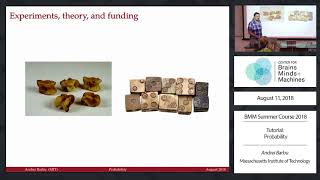
Probability Tutorial
Explore probability concepts, from uncertainty to Bayesian reasoning, with practical applications in graphical models and hidden Markov models.