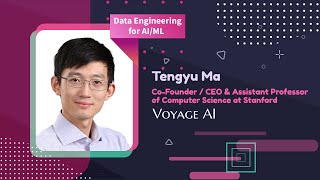
Supercharging Your RAG System: Techniques and Challenges - DE4AI
Explore techniques and challenges in supercharging Retrieval-Augmented Generation (RAG) systems in this 40-minute conference talk by Tengyu Ma, Co-founder & CEO of Voyage AI and Assistant Professor of Computer Science at Stanford University. Gain insight…
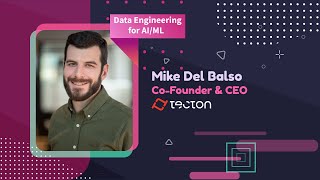
Building Hyper-Personalized LLM Applications with Rich Contextual Data - DE4AI
Explore the concept of Full RAG (Retrieval-Augmented Generation) and its potential to revolutionize user experiences across industries in this 28-minute talk by Mike Del Balso, co-founder of Tecton. Examine four levels of context personalization, from ba…
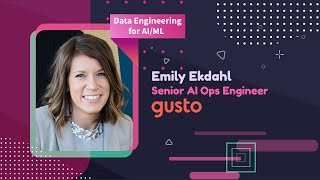
Real-Time Data Streaming Architectures for Generative AI
Explore the evolution of data processing architectures for Generative AI in this 12-minute talk by Emily Ekdahl at the MLOps.community event. Discover how real-time data streaming solutions using Apache Kafka and Apache Flink are revolutionizing the way…
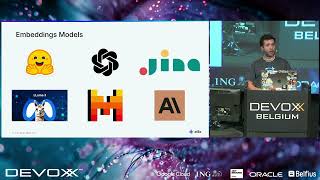
Building an Advanced Agentic RAG System with Langchain, Ollama, and Milvus
Explore the cutting-edge world of Agentic Retrieval-Augmented Generation (RAG) systems in this 31-minute conference talk from Devoxx. Discover how to construct an advanced Agentic RAG system using open-source technologies like Langchain, Ollama, and Milv…
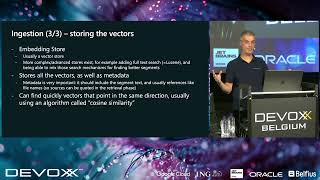
Easy RAG with LangChain4J and Docker - Implementing Retrieval-Augmented Generation
Explore the RAG (retrieval-augmented generation) pattern in this 31-minute conference talk from Devoxx. Learn the fundamental concepts behind RAG and gain hands-on experience setting up a practical RAG infrastructure using Docker. Discover how to configu…
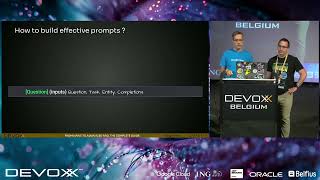
From Naive to Advanced RAG: The Complete Guide - Lecture 1
Embark on a comprehensive deep-dive into Retrieval Augmented Generation (RAG) techniques, from basic implementations to advanced strategies. Learn how to overcome common challenges such as inaccurate or incomplete answers, outdated information, and ineff…
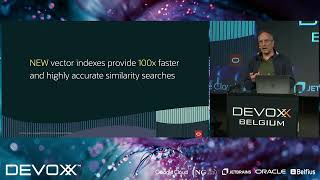
Building Smarter Knowledge Management Systems with AI Technology
Explore the creation of advanced knowledge management systems using AI technology in this 52-minute conference talk from Devoxx. Learn how to leverage Java, Spring Boot, and Spring AI APIs to develop more user-friendly and conversational systems that enc…
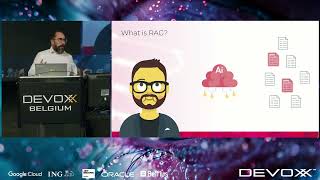
Transforming Banking with Advanced AI: GenAI, RAG, and Multi-Agent Systems
Explore how GenAI, RAG, and Multi-Agent Systems revolutionize banking operations, customer engagement, and knowledge management through real-world applications and case studies.
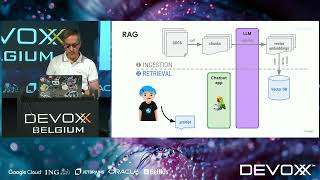
RAG: From Dumb Implementation to Serious Results - Optimizing Retrieval-Augmented Generation
Elevate RAG implementations using LangChain4j. Master advanced chunking, query refinement, metadata filtering, document reranking, data lifecycle management, and evaluation techniques for accurate, relevant results.
Avoid Common LLM Pitfalls - Techniques for Enhancing LLM Outputs
Explore techniques to overcome LLM limitations: response schemas, RAG, function calling, and grounding for improved outputs and real-world applications.
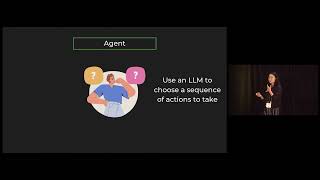
Introduction to LangChain and Retrieval Augmented Generation (RAG)
Explore LangChain's core concepts and build LLM-based applications using Retrieval Augmented Generation for document-based question answering.
Retrieval Augmented Generation with LangChain: ChatGPT for Your Data - Part 2
Explore Retrieval Augmented Generation using LangChain. Learn to build and optimize question-answering systems with vector stores, embedding models, and LLMs for private data applications.
Engineering an LLM Application: Chat with MLOps World
Develop a chatbot using MLOps World content, exploring techniques to transform it from concept to production-ready application.

Retrieval Augmented Generation with LangChain: ChatGPT for Your Data - Part 1
Explore Retrieval Augmented Generation using LangChain to build a question-answering system with private data, leveraging vector stores, embedding models, and LLMs.
Automating Design of Molecules via Retrieval Augmented Generative Language Models - Broad Institute Machine Learning in Drug Discovery Symposium 2023
Explore automated molecule design using retrieval-augmented generative language models in drug discovery, presented by Andrew White from the University of Rochester.
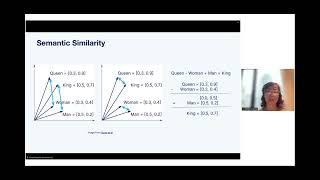
Customizable RAG Workflows with Your Own Data
Build customizable RAG workflows using OSS tools and your own data to optimize GenAI applications for corporate environments. Learn best practices and advanced techniques.

Mitigating RAG Hallucinations with Aporia Guardrails
Explore techniques to reduce hallucinations in Retrieval-Augmented Generation (RAG) systems using Aporia Guardrails, enhancing AI reliability and accuracy.
Function Calling for LLMs: RAG without a Vector Database
Explore function calling for LLMs to access structured data, enhancing RAG capabilities without vector databases. Learn to enrich tables with metadata for improved query performance.
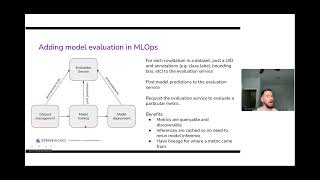
Evaluating LLMs and RAG Pipelines at Scale
Explore techniques for evaluating Large Language Models and RAG pipelines in production, focusing on Valor, an open-source evaluation service for rigorous real-world testing.
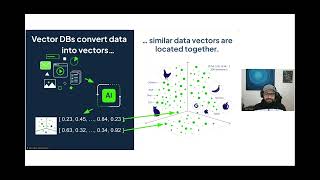
Better Chatbots with Advanced RAG Techniques
Explore advanced RAG techniques for building superior chatbots. Learn hybrid search, query generation, result filtering, re-ranking, and chunking to enhance information retrieval and user interactions.
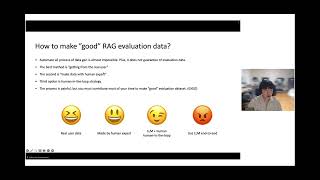
The Best Component for Your RAG System - Optimizing with AutoRAG
Optimize RAG systems automatically with AutoRAG. Boost performance by finding the ideal pipeline for your data and use-case through efficient evaluation of various modules.