Few-Shot Chest X-Ray Diagnosis Using Clinical and Literature Images
Explore innovative few-shot learning methods for chest X-ray diagnosis using clinical and literature images, enhancing radiology image analysis with advanced machine learning techniques.
SILCO: Show a Few Images, Localize the Common Object
Innovative approach to object detection using few support images, combining spatial similarity and feature reweighting for improved localization in challenging scenarios.
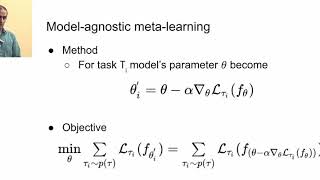
Unsupervised Meta-Learning for Few-Shot Image Classification
Explore unsupervised meta-learning techniques for few-shot image classification, including task construction, augmentation methods, and performance on benchmark datasets.
MetaHKG: Meta Hyperbolic Learning for Few-shot Temporal Reasoning - M1.2
Explore meta hyperbolic learning for few-shot temporal reasoning in knowledge graphs, enhancing reasoning capabilities with limited data.
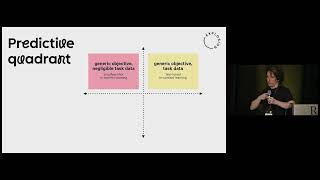
How Many Labelled Examples Do You Need for a BERT-sized Model to Beat GPT4 on Predictive Tasks?
Explore the effectiveness of in-context learning vs. labelled data for predictive tasks, comparing BERT-sized models to GPT-4 in text categorization and entity recognition.
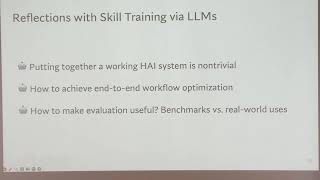
Adaptive Generalization: The Role of Dynamic Evaluation in Low-Resource Settings
Explore adaptive generalization techniques and dynamic evaluation strategies for enhancing AI performance in low-resource environments.
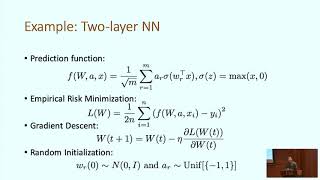
On the Connection Between Neural Networks and Kernels: A Modern Perspective - Simon Du
Explore connections between neural networks and kernels, focusing on over-parameterization, generalization, and neural tangent kernels. Insights on training dynamics and applications to various learning tasks.
Prompt Engineering: Mistral 7B Techniques for Instruction Creation
Explora técnicas avanzadas de ingeniería de prompts como Zero Shot, Few Shot y Chain of Thought utilizando GPT-3.5 Turbo y Mistral 7B para mejorar tus habilidades en machine learning.
Prompt Engineering: Técnicas de Creación de Instrucciones con Microsoft Phi3-mini 128k Instruct
Aprende técnicas avanzadas de prompt engineering con Microsoft Phi3-mini, incluyendo Zero Shot, Few Shot, CoT y RAG. Incluye demostraciones prácticas y acceso a notebooks.
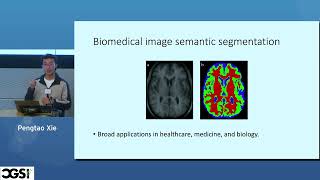
Training Highly Generalizable Biomedical Image Segmentation Models with Very Few Annotations
Learn highly generalizable biomedical image segmentation techniques using minimal annotations, focusing on efficient model training and performance optimization for medical imaging tasks.
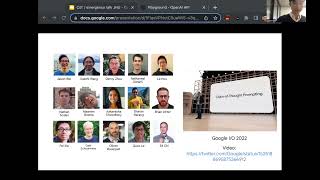
Emergence and Reasoning in Large Language Models
Explore emergence and reasoning in large language models with Google researcher Jason Wei, delving into self-supervised statistical models and their implications.
Prompt Engineering Techniques with Mistral 7B Instruct for Data Science and Machine Learning
Explore prompt engineering techniques using Mistral 7B Instruct, including zero-shot, few-shot, CoT, and RAG. Learn to craft effective prompts for enhanced machine learning outcomes.

Learning on Graphs: From Representation to Minimally Supervised
Explore graph representation learning, from shallow to deep embedding, for heterogeneous data. Discover algorithms for temporal and dynamic graphs, and few-shot learning techniques for minimally supervised scenarios.
Passive Learning of Causal Strategies in Language Models
Exploring passive learning of causal strategies in AI, including generalization from interventional data and the role of natural language explanations in enhancing causal understanding.

The Akida Neural Processor - Low Power CNN Inference and Learning
Explore Akida Neural Processor's low-power CNN inference and edge learning capabilities, featuring event-based computing and on-chip learning for visual and auditory applications.

Unsupervised In-Context Learning Plus: From Few-Shot to Many-Shot Learning in Large Language Models
Explore advanced In-Context Learning techniques for Large Language Models, from few-shot to many-shot approaches, focusing on unsupervised learning and autonomous capabilities with 1M token context.
SETFIT Hyperparameter Optimization for SBERT Text Classification - Part 45
Master SETFIT hyperparameter optimization techniques for efficient text classification using Sentence Transformers, focusing on contrastive training and automated parameter tuning for optimal performance.
SetFit with SBERT for Few-Shot Text Classification - Multi-Class and Multi-Label
Master SetFit and SBERT techniques for efficient few-shot text classification, exploring contrastive training, dense embeddings, and classification head implementation for both multi-class and multi-label scenarios.

SetFit and SBERT: Zero-Shot Classification with Synthetic Data Sets - Part 47
Discover how to leverage SetFit and SBERT for zero-shot classification by creating and utilizing synthetic data, enhancing performance in both zero-shot and few-shot scenarios.
Few-Shot Learning for Health: How Sleep Cycle Separates Multiple People's Snoring
Discover how Sleep Cycle uses few-shot learning to differentiate snoring sounds, enhancing sleep analysis and health insights. Learn about the importance of snoring detection for overall well-being.
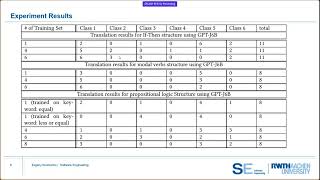
Neural Language Models and Few-Shot Learning for Systematic Requirements Processing in Model-Driven Software Engineering
Explore neural language models and few-shot learning for efficient processing of automotive engineering requirements in model-driven software engineering.