
Introduction to Deep Learning
Deep Learning is subset of machine learning focused on extracting patterns from data using neural networks and use those patterns to inform the learning tasks.
Style Transfer Augmentations for Computational Pathology - Rikiya Yamashita
Innovative style transfer augmentation technique for improving machine learning model generalization in computational pathology, enhancing robustness to domain shifts and achieving state-of-the-art performance in classification tasks.
Domain Adaptation with Invariant Representation Learning - What Transformations to Learn?
Explore domain adaptation in machine learning, focusing on invariant representation learning and its challenges. Learn about novel techniques for optimal feature mapping across domains.
Divide and Conquer - Concept-based Models for Efficient Transfer Learning
Exploring concept-based interpretable AI models for efficient transfer learning in healthcare, focusing on generalizability and minimal data requirements for domain adaptation in medical imaging.
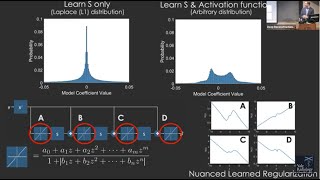
Improved Ultrasound Image Formation - Domain Adaptation With No Data
Explore advanced techniques for enhancing ultrasound imaging through domain adaptation, focusing on methods that require no additional data input.
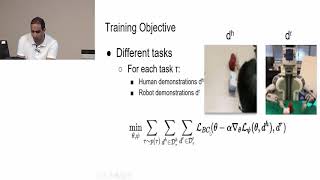
One-Shot Imitation from Observing Humans via Domain-Adaptive Meta-Learning
Learn domain-adaptive meta-learning for one-shot imitation, enabling robots to quickly learn new tasks by observing human demonstrations and adapting across domains.
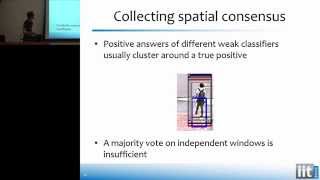
Statistical and Spatial Consensus Collection for Detector Adaption
Explore detector adaptation techniques for improved pedestrian detection across domains, focusing on statistical and spatial consensus methods to enhance accuracy and generalization.

Geo-localization Framework for Real-world Scenarios - Defense Presentation
Explore advanced geo-localization techniques using vision transformers and novel loss functions for improved accuracy in real-world scenarios, with a focus on bridging domain gaps.
Enhance Cost Efficiency in Domain Adaptation with PruneMe
Optimize LLMs through layer pruning, enabling cost-effective domain adaptation and model merging for improved performance in specific applications.
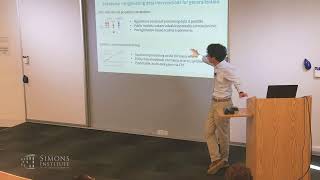
Controlling Distribution Shifts in Language Models: A Data-Centric Approach
Explore data-centric approaches to control distribution shifts in language models, focusing on algorithmic filtering and domain-specific data synthesis for improved generalization.
What is Your Data Worth? Equitable Data Valuation in Machine Learning
Explore equitable data valuation in machine learning, focusing on Data Shapley Value and its applications in healthcare, face recognition, and NLP.
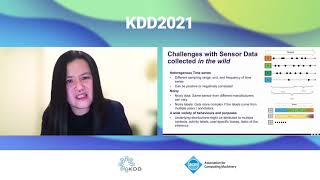
Learning Transferable Human Behavior Representations From Sensor Data - Flora Salim
Explore techniques for learning transferable human behavior representations from sensor data, including challenges, preprocessing, and applications in various domains.
Domain-Specific AI Models - Creating Customized BERT and SBERT Models for Business Applications
Discover how to effectively train and fine-tune BERT and SBERT models for specialized domains, focusing on medical and biochemical terminology, with practical solutions for business applications.
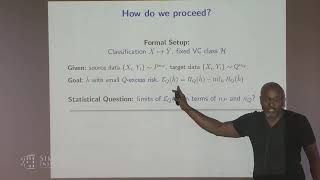
Measures of Relatedness in Domain Adaptation and Related Problems
Explore unstructured distribution shifts, discrepancy measures, and adaptation techniques in domain adaptation and transfer learning settings.
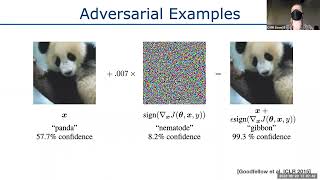
Responsible Computer Vision - Model Failures and Solutions
Explore visual recognition challenges, dataset biases, and domain adaptation techniques to improve model performance and address fairness issues in computer vision systems.
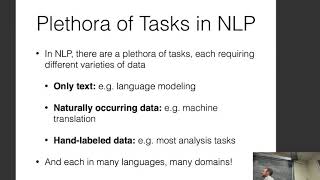
Neural Nets for NLP 2017 - Multilingual and Multitask Learning
Explore multitask, domain adaptation, and multilingual learning in neural networks for NLP. Gain insights into feature extraction, data augmentation, and cross-lingual techniques for improved language processing.
Sentiment Analysis - Key Milestones, Challenges and New Directions
Explore key milestones, challenges, and new directions in sentiment analysis, covering topics from polarity detection to multimodal analysis and sentiment reasoning.

Machine Learning-Based Design of Proteins and Small Molecules
Explore machine learning techniques for designing proteins and small molecules, covering directed evolution, model-based optimization, and challenges in deep learning applications.
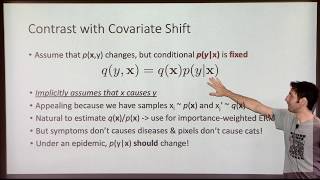
Robust Deep Learning Under Distribution Shift
Explore deep learning challenges under distribution shift, covering adversarial attacks, label shift detection, and domain adaptation techniques for robust model performance in real-world scenarios.
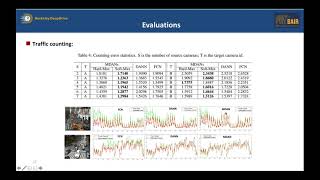
Learning with Limited Labels - ODSC West 2020
Explore advanced techniques for machine learning with limited labeled data, including domain adaptation, few-shot learning, and self-supervised learning to enhance model performance across diverse domains and novel categories.
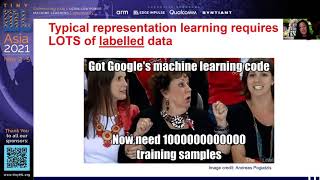
Learning Compact Representation with Less Labeled Data from Sensors
Exploring data-efficient learning techniques for compact representations in sensor-based human behavior modeling, focusing on domain adaptation and pretraining approaches for minimal labeled data scenarios.