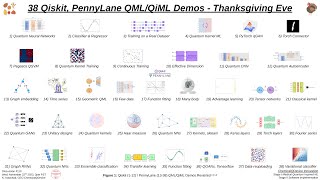
Qiskit, PennyLane QML, and QiML Demos - Thanksgiving Eve
Explore Qiskit and PennyLane QML/QiML demos to improve runtimes, losses, and accuracies. Learn quantum computational building blocks and differentiable programming for medical R&D applications.
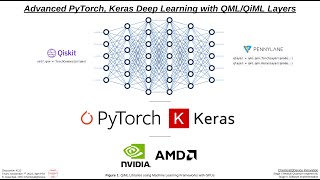
Advanced PyTorch and TensorFlow Deep Learning with QML and QiML Layers
Incorporate quantum algorithms into machine learning frameworks using PyTorch and Keras. Learn benchmarking, strategic layer insertion, and explore potential applications with quantum layers.
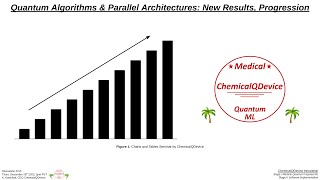
Quantum Algorithms and Parallel Architectures - New Results and Summary
Explore new findings in quantum algorithms and parallel architectures, comparing methods and machine learning parameters for advanced computational approaches.
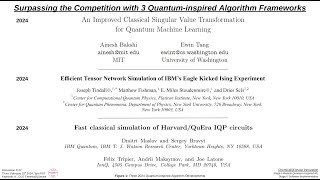
Surpassing the Competition with 3 Quantum-Inspired Algorithm Frameworks
Explore cutting-edge quantum-inspired algorithms for machine learning, including dequantized algorithms, tensor networks, and quantum algorithms. Gain insights into their strengths, weaknesses, and potential applications.
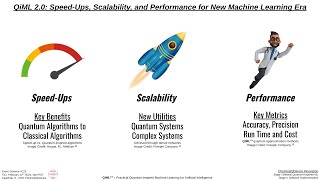
QiML 2.0: Speed-Ups, Scalability, and Performance for New Machine Learning Era
Explore quantum-inspired machine learning advancements, including dequantized algorithms, tensor network approximations, and scalability improvements for healthcare applications and complex systems.
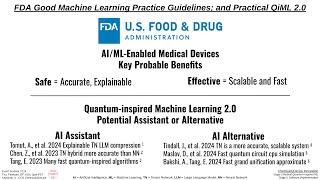
FDA Good Machine Learning Practice Guidelines and Practical Quantum-inspired Machine Learning 2.0
Explore FDA guidelines for AI/ML in medical devices and quantum-inspired machine learning approaches. Gain insights into safe, effective implementations and recent approvals for medical analysis.
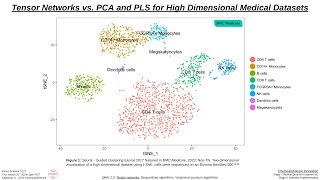
Tensor Networks vs. PCA and PLS for High Dimensional Medical Datasets
Explore dimensionality reduction techniques for high-dimensional medical data. Compare tensor networks with PCA and PLS, gaining insights on their applications and effectiveness in handling complex datasets.
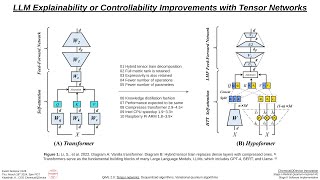
LLM Explainability and Controllability Improvements with Tensor Networks
Explore how Tensor Networks enhance explainability and controllability of Large Language Models, focusing on transformer self-attention and multi-layer perceptron layer modifications.
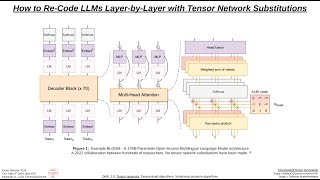
How to Re-Code LLMs Layer by Layer with Tensor Network Substitutions
Explore strategies for recoding Large Language Models using tensor network substitutions to enhance explainability, compression, and performance on smaller devices.
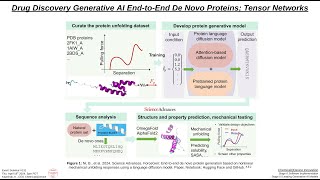
Drug Discovery Generative AI: End-to-End De Novo Proteins and Tensor Networks
Explore advanced protein design using generative AI, focusing on a novel diffusion model for creating proteins with specific mechanical properties. Learn about model architecture and potential tensor network enhancements.
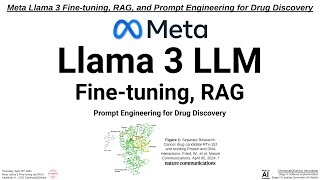
Meta Llama 3 Fine-Tuning, RAG, and Prompt Engineering for Drug Discovery
Explore advanced techniques to enhance Llama 3's performance in drug discovery using fine-tuning, RAG, and prompt engineering. Gain insights into improving domain-specific AI responses for pharmaceutical research.
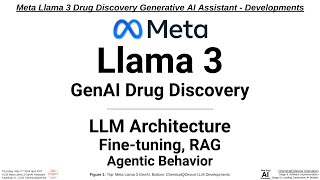
Meta Llama 3 for Drug Discovery - Generative AI Assistant Developments
Explore advanced techniques for modifying Meta Llama 3 for drug discovery, including fine-tuning, RAG implementation, and agentic behavior enhancement for improved accuracy and capabilities.
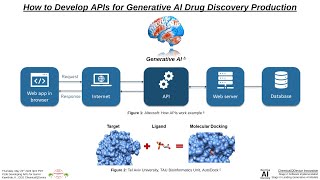
How to Develop APIs for Generative AI Drug Discovery Production
Explore platforms for creating APIs from Large Language Models to enhance drug discovery workflows. Learn to increase efficiency, reduce errors, and lower costs through synchronization and automation.
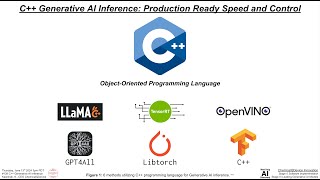
C++ Generative AI Inference - Production Ready Speed and Control
Optimize C++ for generative AI inference, enhancing speed and control. Explore techniques to boost performance and gain precise command over AI model execution in production environments.
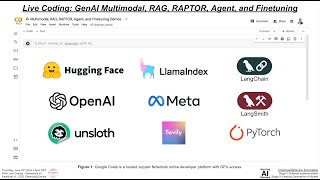
GenAI Multimodal, RAG, RAPTOR, Agent, and Finetuning - Live Coding Demonstration
Explore cutting-edge GenAI techniques through live demos of RAG, RAPTOR, Agent, and Finetuning. Witness multimodal capabilities and gain hands-on experience with advanced AI models and tools.
Live Python Demos - Generative Artificial Intelligence
Explore local hosting of generative AI models, comparing LLMs and LMMs for image processing, code generation, and multimodal tasks using various platforms and tools.
Prompt Tuning Explained
Explore prompt tuning techniques for optimizing pre-trained language models. Learn about soft prompts, gradient descent, and improving performance on downstream tasks while maintaining model efficiency.

Torch.fx Explained - Accelerating ML Code with PyTorch
Explore PyTorch's torch.fx toolkit for accelerating ML code through symbolic tracing, program manipulation, and optimization of neural network modules.
Llama 2 Explained - Safety and Ethical Considerations - Part 3
Explore Llama V2's safety features in this concluding session. Gain insights into Meta AI's latest language model iteration and its focus on secure AI development.
Segment Anything Model (SAM) Explained
Explore SAM, a versatile image segmentation model by Meta AI. Learn about its multitask capabilities, zero-shot transferability, and applications across various scenes and objects.

Deep Dive: Formatting and Best Coding Practices in Python - Tutorial 21
Master Python coding best practices for clean, efficient, and maintainable machine learning solutions using Ivy. Learn essential principles for variables, functions, classes, and conventions.