Reasons Why Social Networks Make Us Vulnerable to Misinformation
Explore how cognitive, social, and algorithmic biases in social networks make us susceptible to misinformation, and learn about efforts to counter online opinion manipulation.
Intelligent Systems
Explore diverse perspectives on intelligence, from individual to collective, natural to artificial. Delve into cultural transmission, machine learning, empathy for AI, and the ethical implications of evolving technological systems.
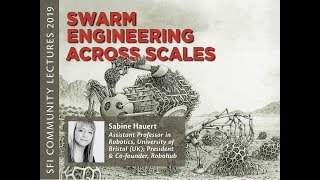
Swarm Engineering Across Scales
Explore swarm intelligence in nature and AI, from bird flocks to nanoparticles. Learn how collective behaviors emerge and their applications in robotics, communication, and medicine.
A Framework for Machine Learning of Model Error in Dynamical Systems
Explore a framework for machine learning to model error in dynamical systems, focusing on linear oscillators, partial information, and hybrid modeling techniques.
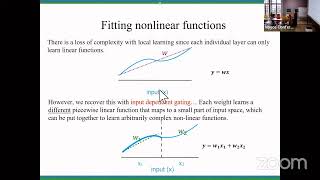
Training Machines to Learn the Way Humans Do - An Alternative to Backpropagation
Explore an alternative to backpropagation in machine learning, focusing on biologically-inspired local learning methods and their applications in neural networks and the cerebellum.
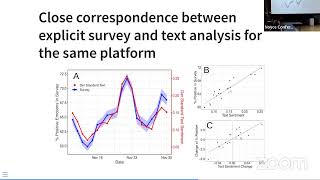
Validating Daily Social Media Macroscopes of Emotions
Explore how social media sentiment analysis can accurately measure daily emotional dynamics of online communities, validated through surveys and applied to COVID-19 impact studies.
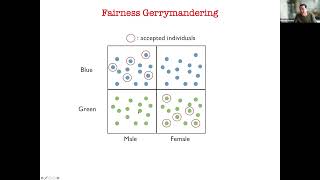
Can Algorithms Bend the Arc Toward Justice?
Explore algorithmic fairness, intersectionality, and the challenges of balancing accuracy with equity in machine learning and public safety applications.
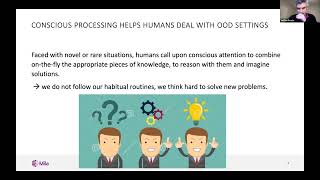
Yoshua Bengio- System 2 GFlowNets- Induction Biases Towards Machines that Understand and Think
Explore Yoshua Bengio's insights on System 2 GFlowNets, examining induction biases for AI that understands and thinks. Delve into deep learning, cognitive theories, and innovative approaches to machine intelligence.
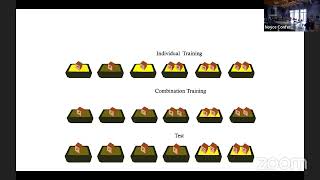
Imitation vs Innovation: Large Language and Image Models as Cultural Technologies
Explore the impact of large language and image models as cultural technologies, examining the balance between imitation and innovation in AI development.
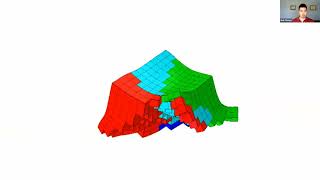
Using Computation to Drive the Self-Assembly of Complex Structures
Explore computational approaches for driving self-assembly of complex structures, unlocking new possibilities in materials science and nanotechnology.
Embodiment Without Situatedness - An Embodied Perspective on Neural Architecture Search
Explore embodied perspectives on neural architecture search with Nick Cheney, examining the intersection of neurorobotics and complex systems in AI development and intelligence research.
Are Foundation Models Castles in the Air?
Explore the trustworthiness and effectiveness of foundation models in AI with Stanford professor Percy Liang, examining their potential and limitations for human-computer interaction and continuous learning.
Learning About Possibilities Through Scientific Models
Exploring how scientists use models to study possibilities, examining epistemic and alethic possibilities, and discussing implications for model construction, assessment, and interpretation in scientific research.
The Laws of Life, Time and Chance
Explore the intersection of physics and biology, uncovering mathematical frameworks for understanding life, time, and probability. Discover how chance governs cellular behavior and impacts complex biological phenomena.
Information and Model Misspecification - Classical Statistics vs. Info-Metrics
Explore info-metrics framework for handling model misspecification, contrasting classical methods with innovative approaches using entropy and empirical likelihood in power law distributions.

Harnessing Chaos and Predicting the Unpredictable with Artificial Intelligence
Explore how Reservoir Computing and AI can predict chaotic systems like weather and brain dynamics, pushing beyond traditional forecasting limits and combining knowledge-free and knowledge-based approaches.

Forecasting Natural Disasters in Complex Earth Systems - SFI Lecture
Explore forecasting natural disasters using satellite data, nonlinear dynamics, and numerical simulations. Learn about ensemble forecasting and pattern methods for predicting extreme events.
Practice Makes Perfect - Learning from Massive Data
Explore how computers learn from massive data to perform tasks like spelling correction and translation, rivaling human capabilities through example-based learning.
The Most Human Human - What Artificial Intelligence Teaches Us About Being Alive
Explore the intriguing intersection of AI and human nature, examining what our interactions with machines reveal about our own humanity and consciousness.
The Accidental Universe: The World You Thought You Knew
Explore the intersection of science, philosophy, and spirituality as Alan Lightman delves into profound questions about our universe, existence, and the nature of reality.
Physics-Inspired Algorithms and Phase Transitions in Community Detection - 2014 Symposium
Explore physics-inspired algorithms for community detection, including phase transitions, statistical inference, and belief propagation. Learn about innovative approaches to clustering and network analysis.