Fundamentals of Artificial Intelligence
Comprehensive exploration of AI concepts, from problem-solving and search algorithms to knowledge representation, reasoning, planning, decision-making, and various machine learning techniques.
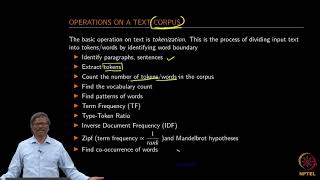
Applied Natural Language Processing
Explore natural language processing techniques, from corpus operations to advanced neural networks, for applications in machine translation, topic modeling, and conversation systems.
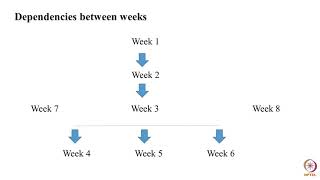
Machine Learning
The course places machine learning in its context within AI and gives an introduction to the most important core techniques such as decision tree-based inductive learning, inductive logic programming, reinforcement learning and deep learning through deci…
Natural Language Processing
Accelerated introduction to NLP, covering machine learning basics, text preprocessing, vectorization, and advanced neural network architectures like RNNs, LSTMs, and Transformers.
Computer Vision
Explore machine learning and computer vision fundamentals, advanced neural network architectures, and applications in object detection and semantic segmentation.

NVIDIA Jetson Xavier NX Machine Learning Tutorials
Comprehensive tutorials on NVIDIA Jetson Xavier NX, covering setup, camera integration, object tracking, and face recognition. Ideal for beginners and advanced users in machine learning and computer vision.
Sidney Redner on Statistics and Everyday Life
Explore everyday phenomena through statistical analysis, revealing hidden patterns in parking, elevators, and sports. Learn how complex systems research uncovers universal principles in daily life.
David Wolpert on the No Free Lunch Theorems and Why They Undermine the Scientific Method
Explore the No Free Lunch Theorems and their implications for science, intelligence, and modeling. Gain insights into the relationship between mathematics and physics, and the limitations of universal problem-solving strategies.
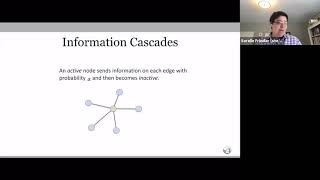
Fairness in Networks - Information Access, Disadvantage, and Clustering
Explore fairness in social networks, examining information access, disadvantage, and clustering. Learn about interventions for equal access and the implications of network-based information flow.
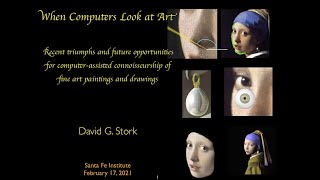
When Computers Look at Art
Explore how AI and computer vision revolutionize art analysis, offering new insights into paintings' style, meaning, and historical context while addressing challenges in image understanding.

Modeling Computer Networks from Chips to the Internet
Explore network modeling strategies for the Internet, from chip-level communication to global-scale simulations, examining scaling laws, biological concepts, and socio-economic factors shaping its future.
Artificial Intelligence: A Guide for Thinking Humans
Explore AI's achievements, failures, and ethical implications with researcher Melanie Mitchell. Gain insights into machine learning, self-driving cars, and the challenges of imbuing computers with human-like qualities.

Rational Ignorance - Optimal Learning from Complex Mechanistic Models
Explore optimal Bayesian learning from complex models, challenging traditional approaches and proposing a new method to maximize expected information while avoiding bias in multiparameter systems.
Tina Eliassi-Rad on Democracies as Complex Systems
Exploring democracy as a complex system, examining its challenges and potential solutions through the lens of complexity science and machine learning.
Good Explanations & Diseases of Epistemology
Exploring the nature of explanations, epistemology, and societal knowledge processing. Balancing understanding and prediction in science, and adapting to rapid changes in a complex world.
Lauren Klein on Data Feminism - Tracing Linguistic Innovation
Exploring linguistic innovation and cultural change through data analysis, challenging traditional narratives of individual genius and highlighting collaborative processes in idea creation and dissemination.
Mathematical and Computational Foundations for Enabling Predictive Digital Twins at Scale
Explore mathematical foundations for scalable digital twins, focusing on probabilistic graphical models and physics-based reduced-order models in scientific and engineering applications.
How Does Size Shape Our Understanding of and Search for Life? Alien Crash Site with Chris Kempes
Explore how size influences our understanding of life, from microscopic to cosmic scales, and its implications for the search for extraterrestrial life with mathematical biologist Chris Kempes.
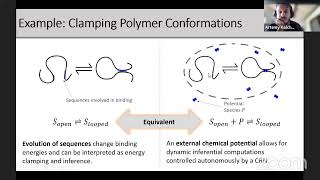
Detailed Balanced Chemical Reaction Networks as Generalized Boltzmann Machines
Explore the intersection of chemical reaction networks and machine learning, focusing on detailed balanced systems and their relation to generalized Boltzmann machines.
Demonology - Intelligence in Physics & Biology
Explore the historical role of intelligence in physics and biology, from Laplace's demon to modern information theory, and its implications for understanding natural phenomena.
Programming the Internet - C4 Public Lecture
Explore the evolution of programming for internet-scale applications, addressing challenges in distributed computing, concurrency, and scalability through innovative methodologies and infrastructure changes.