Incorporating Sample Efficient Monitoring into Learned Autonomy
Explore sample-efficient warning systems for robotics, detecting unsafe situations and distribution shifts with statistical guarantees. Learn about real-time frameworks and faster detection methods.
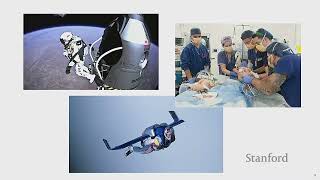
Stanford Seminar - Democratizing Robot Learning
Exploring advancements in human-robot interaction, focusing on learning from human decision-makers, explainable AI, and coordinated control of human-robot teams for real-world applications.
Stanford Seminar - Get in Touch: Tactile Perception for Human-Robot Systems
Explore advancements in tactile perception for robots, including sensor technologies, haptic perception, and applications in human-robot interaction and manipulation of deformable objects.
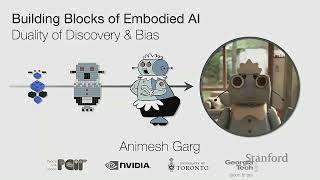
Towards Generalizable Autonomy - Duality of Discovery & Bias
Exploring generalization in embodied AI, focusing on interactive learning, representational biases, and causal inference for robotics and decision-making in complex environments.
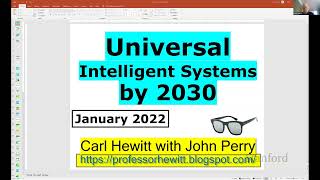
Stanford Seminar - Universal Intelligent Systems by 2030 - Carl Hewitt and John Perry
Explore the future of Universal Intelligent Systems, encompassing all manufactured devices and sensed activities. Learn about information integration, security, and the challenges of developing these systems by 2030.
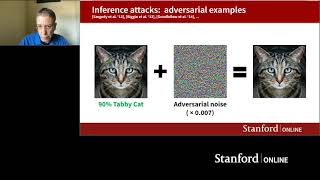
Hacking AI - Security & Privacy of Machine Learning Models
Explore adversarial machine learning with Prof. Dan Boneh, examining security challenges in AI models, defenses against attacks, and the balance between accuracy and privacy in ML systems.
Stanford Seminar - Computing with High-Dimensional Vectors
Explore high-dimensional vector computing as a complement to traditional methods, bridging symbolic AI and neural nets. Learn about its operations, applications, and potential in machine learning and nanotechnology.
Multiscale Dataflow Computing - Competitive Advantage at the Exascale Frontier
Explore multiscale dataflow computing for high-performance, energy-efficient systems. Learn about Maxeler's innovative approach, ecosystem, and applications in various industries.

Interactive Autonomy - A Human-Centered Approach for Safe Interactions
Explore interactive autonomy for safe human-robot collaboration, focusing on algorithms that influence human behavior and efficient active learning methods to model human preferences.
Stanford Seminar - Capturing Human Behavior and Language for Interactive Systems
Exploring how to enhance human-machine interaction through data-driven models that interpret human behavior and language, with applications in policy, bias detection, and community-shaping interfaces.
Exploring the Implications of Machine Learning for Cognitive Disabilities
Exploring machine learning's potential to enhance cognitive disability support through natural language processing, emotion detection, and autonomous systems for improved understanding and interaction.
Information Theory of Deep Learning - Naftali Tishby
Explores the connection between deep learning and information theory, offering new insights into neural network design, generalization, and optimization through an information bottleneck framework.
Scoring News Articles to Fight Misinformation
Explore an AI-driven approach to automatically score news articles, enhancing journalistic quality and combating misinformation through innovative pricing and content curation strategies.
Deep Learning - Adversarial Attacks and GANs - Lecture 4
Explore adversarial attacks and Generative Adversarial Networks (GANs) in deep learning. Learn from Stanford experts about these advanced techniques and their applications in AI.

Deep Learning Intuition - Lecture 2
Explore deep learning intuition with Stanford experts, covering logistic regression, face verification, neural architectures, and advanced applications in computer vision and image processing.

Deep Learning - Class Introduction and Logistics - Lecture 1
Comprehensive introduction to deep learning, covering key concepts, tools, and applications. Explores course goals, structure, and practical assignments for hands-on experience in AI and machine learning.
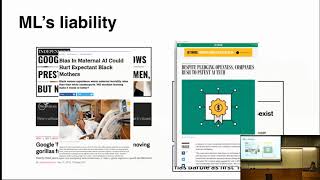
Extending the Theory of ML for Human-Centric Applications
Exploring ML challenges in real-world applications, focusing on data manipulation, multi-objective optimization, and robustness in dynamic environments with human-centric considerations.

Stanford Seminar - Virtual Human Agent for Smart City
Virtual human agents for smart cities: AI-powered assistants enhancing urban living through blockchain, machine learning, and community-driven development. Explore innovative approaches to energy, transportation, and resource management.
The Case for Learned Index Structures
Exploring learned index structures as alternatives to traditional database indexes, offering potential improvements in speed and memory efficiency for data retrieval and management.
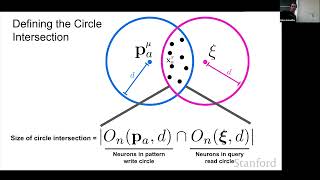
Stanford Seminar - Transformers United: Neuroscience-Inspired Artificial Intelligence
Explore neuroscience-inspired AI with insights on attention mechanisms and sparse distributed memory, bridging the gap between transformers and brain function in this Stanford seminar.
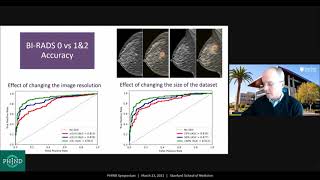
Imaging for Early Detection in the Era of Artificial Intelligence
Explore AI's impact on early disease detection through medical imaging, focusing on chest radiographs, coronary disease, and breast cancer, with insights from Stanford's Dr. Langlotz.