Tossing in the Dark: Practical Bit-Flipping on Gray-box Deep Neural Networks for Runtime Trojan Injection
Explore practical bit-flipping techniques for runtime Trojan injection in deep neural networks, focusing on gray-box scenarios and innovative approaches to bypass memory protection systems.
Yes, One-Bit-Flip Matters! Universal DNN Model Inference Depletion with Runtime Code Fault Injection
Explore FrameFlip, a groundbreaking attack method that depletes DNN model inference through single-bit fault injections, demonstrating universal effectiveness across major machine learning frameworks.
PhishDecloaker: Detecting CAPTCHA-cloaked Phishing Websites via Hybrid Vision-based Interactive Models
Discover how PhishDecloaker uses AI and computer vision to detect CAPTCHA-protected phishing websites, improving detection rates from 0% to 74.25% and enhancing cybersecurity defenses.
Measuring Structural Limitations of Deepfake Media Datasets - A Systematic Review
Explore structural limitations in deepfake media datasets, examining metrics, generation techniques, and class distributions to understand their impact on detection systems and research reproducibility.
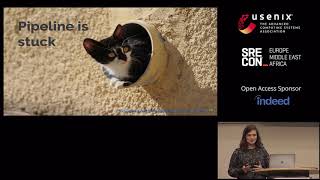
Care and Feeding of Data Processing Pipelines
Discover essential strategies for managing data processing pipelines, from preventing failures and monitoring data correctness to implementing canary deployments and auto-scaling mechanisms for robust system reliability.
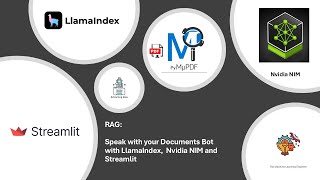
Building a Conversational PDF Bot with LlamaIndex, Nvidia NIM, and Streamlit
Master building a conversational PDF bot using Streamlit, LlamaIndex, and Nvidia NIM to create interactive document-based chat applications with advanced RAG capabilities.
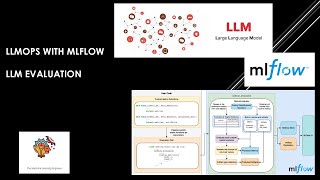
Evaluating LLM Responses with MLflow
Master MLflow's evaluation features to assess and analyze Large Language Model responses, enhancing your ability to measure and improve AI model performance.
Python and Generative AI Projects for Beginners - Building Applications and Machine Learning Systems
Master Python programming while building practical GenAI projects, from basic word games to advanced applications like face recognition, chatbots, and recommendation systems. Includes hands-on data analysis and visualization.

Learning Equivariant Non-Local Electron Density Functionals
Delve into advanced machine learning approaches for improving density functional theory through equivariant graph neural networks, focusing on non-local exchange-correlation functionals and molecular energy predictions.
Can LLMs Keep a Secret? - Privacy and Security in Large Language Models
Explore the critical aspects of privacy and security in Large Language Models through an in-depth analysis of their ability to protect sensitive information.
Scaling Intelligence the Human Way
Explore groundbreaking insights into human-inspired AI development and intelligence scaling through MIT researcher Josh Tenenbaum's analysis of naturalistic approaches to artificial intelligence.
Connecting the Dots: Biology at Scale in the Age of AI - Session 1
Explore cutting-edge AI applications in biological prediction models, featuring expert discussions on bridging computational and biological approaches to advance scientific discovery.
Taming Regression Using APL - From Basic Linear Models to Advanced Applications
Master statistical regression techniques using APL through practical examples, from basic linear models to advanced non-linear and logistic regression, with hands-on demonstrations using TamStat software.
Recurrence Plots and Cross Recurrence Plots for Data Science Visualization and Analysis
Explore advanced visualization techniques using recurrence plots to uncover hidden patterns and trends in complex time series data through interactive analysis methods.
Dated Data: Tracing Knowledge Cutoffs in Large Language Models
Explore the complexities of knowledge cutoff dates in Large Language Models, examining how training data timestamps affect model accuracy and investigating temporal misalignments in data collection.
Application Security and AI: Tools, Frameworks, and Implementation Techniques
Explore the intersection of AppSec and AI through practical tools, frameworks, and prompt engineering techniques for enhanced security implementation.

OWASP Top 10 Security Risks for LLMs - Code Examples and Mitigation Strategies
Explore real-world security risks and vulnerabilities in AI systems through entertaining code examples, focusing on OWASP Top 10 AI/ML threats and practical defense strategies.

Hacking AI - Exploring OWASP ML and LLM Top 10 Security Threats
Explore critical security threats in machine learning and large language models through OWASP's ML Top 10 and LLM Top 10 frameworks for enhanced AI security awareness.
AI Supply Chain Security - Inventing Backward and Forward
Explore emerging AI supply chain security threats and defensive strategies, focusing on CI/CD pipelines and creative approaches to protect AI-enabled features in modern software systems.
AI Impact on Cybersecurity Jobs - Understanding Risks and Opportunities
Explore the future of cybersecurity careers in the AI era, understanding which roles face disruption, which will evolve, and how to adapt and thrive in an AI-augmented security landscape.
How AI-Powered Tools Affect Application Security Practices and Benefits
Explore how AI-powered tools are transforming application security practices, maximizing development efficiency, and accelerating product delivery timelines.