
Lie Groups and Quantization - Lecture 17
Delve into advanced mathematical concepts of Lie groups and their applications in quantization theory through rigorous theoretical exploration and practical examples.
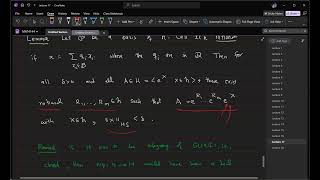
Lie Groups and Quantization - Lecture 18
Delve into advanced mathematical concepts of Lie groups and their applications in quantization theory through rigorous exploration of fundamental principles and theorems.

Quantitative Approach for Measuring Student Engagement in E-learning Platforms
Discover a data-driven approach to measuring student engagement in e-learning platforms, exploring behavioral patterns, trajectory analysis, and intervention strategies for K12 math education.

How to Benefit from Uncertainty: An Introduction to Paraconsistent Bayesian Update
Explore how paraconsistent and paracomplete logics enhance Bayesian reasoning, offering new approaches to handle contradictory evidence and uncertainty in scientific and AI applications.

Using AI for Secure Code Creation - Enhancing Software Security
Discover how AI revolutionizes secure code development through automated vulnerability detection, machine learning-driven security monitoring, and enhanced code analysis techniques for robust application security.
Inference on Streaming Data at Scale Using Numaflow
Discover how Numaflow enables scalable ML inference on streaming data, simplifying event processing and integration with messaging systems like Kafka and Pulsar in Kubernetes environments.

Attack, Defense and Danger in the Age of AI
Explore the dual nature of AI in cybersecurity, from attack vectors and defense mechanisms to risk management strategies, with practical demonstrations and countermeasure techniques.
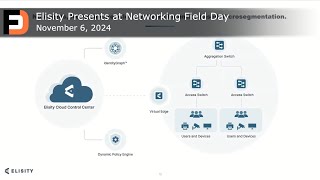
Optimizing Microsegmentation Architecture with Identity-Based Security
Discover how Elisity's cloud-native microsegmentation architecture enables identity-based security controls, leveraging machine learning and dynamic policy enforcement for zero-trust implementation in critical environments.
Scattered Forest Search: A New Algorithm for Code Generation with LLMs
Explore the innovative Scattered Forest Search algorithm for optimizing code generation with LLMs, covering implementation techniques, theoretical foundations, and benchmark performance.

Model Stealing for Low-Rank Language Models Through Reverse Engineering
Discover groundbreaking mathematical techniques for reverse-engineering language models through conditional queries and barycentric spanners, exploring MIT's innovative approach to model extraction.
INSIGHT: Attacking Industry-Adopted Learning Resilient Logic Locking Techniques Using Explainable Graph Neural Network
Discover how INSIGHT, an explainable Graph Neural Network attack method, breaks through learning resilient logic locking techniques used in hardware security and IP protection.

Gradients Look Alike: Sensitivity is Often Overestimated in DP-SGD
Explore how DP-SGD provides stronger privacy guarantees for similar datapoints in deep learning, revealing why common benchmarks leak less information than previously estimated.
6Sense: Internet-Wide IPv6 Scanning and Security Applications
Discover groundbreaking IPv6 scanning technology that uses reinforcement learning to efficiently discover and analyze millions of IPv6 hosts, enabling comprehensive Internet security research and vulnerability detection.

Can I Hear Your Face? Pervasive Attack on Voice Authentication Systems with a Single Face Image
Explore how Foice deepfake technology generates synthetic voices from single facial images to breach voice authentication systems, demonstrating vulnerabilities in major security platforms.
AttackGNN: Red-Teaming GNNs in Hardware Security Using Reinforcement Learning
Discover how reinforcement learning can generate adversarial examples to challenge GNN-based hardware security systems, demonstrating vulnerabilities in IP piracy detection and Trojan identification methods.
Instruction Backdoor Attacks Against Customized Large Language Models
Explore groundbreaking research on instruction backdoor attacks targeting customized LLMs, examining vulnerabilities in GPT applications and proposing effective defense strategies against security threats.
Formalizing and Benchmarking Prompt Injection Attacks and Defenses
Explore a systematic framework for understanding and evaluating prompt injection attacks on LLM applications, including analysis of 5 attack types and 10 defense mechanisms across multiple models.
GuideEnricher: Protecting the Anonymity of Ethereum Mixing Service Users with Deep Reinforcement Learning
Explore how deep reinforcement learning enhances anonymity protection in Ethereum mixing services through automated pattern detection and guidebook enrichment for safer transactions.
FAMOS: Robust Privacy-Preserving Authentication on Payment Apps via Federated Multi-Modal Contrastive Learning
Discover how FAMOS framework enhances mobile payment security through federated multi-modal contrastive learning, offering robust user authentication while protecting privacy and handling background noise.

VulSim: Leveraging Similarity of Multi-Dimensional Neighbor Embeddings for Vulnerability Detection
Explore advanced vulnerability detection techniques using multi-dimensional neighbor embeddings and deep learning models to enhance software security through improved pattern recognition and data analysis.

Differentially Private Diffusion Probabilistic Models for Image Synthesis
Explore how dp-promise leverages diffusion model noise to achieve differential privacy in image synthesis while maintaining high image quality and protecting sensitive training data.