MedAI - Training Medical Image Segmentation Models with Less Labeled Data - Sarah Hooper
Innovative semi-supervised method for training medical image segmentation models using minimal labeled data, achieving comparable accuracy to fully supervised approaches while significantly reducing labeling requirements.
Observational Supervision for Medical Image Classification
Exploring gaze data as a novel supervision source for training deep learning models in medical image classification, focusing on chest X-rays and brain MRI scans for improved efficiency and accuracy.
Multimodal Medical Research of Vision and Language - Jean-Benoit Delbrouck
Explore multimodal medical research combining vision and language, focusing on innovative tasks like Medical Visual Question Answering and Radiology Report Generation using advanced AI architectures and pre-training techniques.
Self-Training - Weak Supervision Using Untrained Neural Nets for MR Reconstruction - Beliz Gunel
Exploring untrained neural networks for MR reconstruction, comparing self-training and weak supervision methods to improve performance with limited data while addressing slow inference times.
Mandoline - Model Evaluation under Distribution Shift
Explores a novel framework for evaluating machine learning models under distribution shifts, using slice-based reweighting to improve performance estimation on target distributions.
Against Ethical Robots with Ron Chrisley
Explore AI ethics challenges, avoiding complacency and inflation while balancing reactive systems and robotic obligations in this thought-provoking seminar by Ron Chrisley.

Vision, Touch & Sound for Robustness & Generalizability in Robotic Manipulation
Exploración de representaciones de datos perceptuales para mejorar el aprendizaje y desempeño de robots en manipulación, combinando visión, tacto y sonido para mayor robustez y generalización.

How Can You Trust Machine Learning?
Explore the pillars of trust in machine learning: clarity, competence, and alignment. Learn about processes and techniques to develop more effective and trustworthy AI systems.
Data-Efficient AI for Accelerating MRI Acquisition
Explore physics-guided AI techniques for accelerating MRI acquisition, including unsupervised and semi-supervised approaches. Learn about a new 1.5TB dataset for evaluating MRI reconstructions with clinically-relevant metrics.
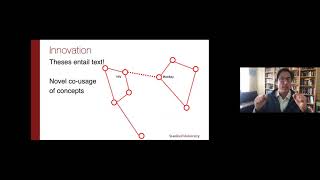
Daniel McFarland: The Diversity-Innovation Paradox in Science
Explore how diversity impacts scientific innovation and career outcomes, revealing a paradox where underrepresented groups contribute novel ideas but face devaluation and discounting in academia.

Joint Learning Over Visual and Geometric Data
Explore joint learning approaches in visual and geometric domains to reduce supervision load, leveraging data correlations and self-supervision for improved performance and efficiency.
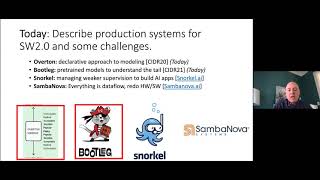
How Machine Learning is Changing Software
Explore how machine learning is revolutionizing software development, from weak supervision to self-supervised systems, with insights from Stanford's Chris Re on emerging challenges and industry applications.
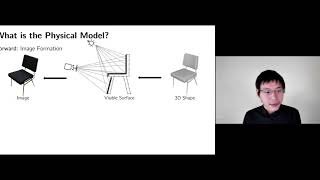
Learning to See the Physical World
Explore physical scene understanding through AI, combining computer graphics, physics, and language with deep learning to create versatile machines that see, reason, and interact with the world.
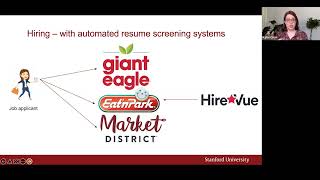
Picking on the Same Person - Does Algorithmic Monoculture Homogenize Outcomes?
Explore algorithmic monoculture's impact on decision outcomes, examining data sharing effects, ethical implications, and potential risks to fairness and individual autonomy.
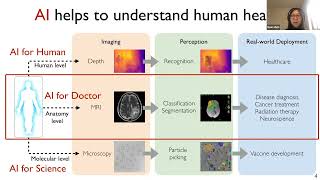
Time Before Birth: A Look at Developing Human Brain
Explore the developing human brain before birth through advanced imaging techniques and machine learning models, offering insights into fetal neurodevelopment and potential clinical applications.

AI and Robotics: Current Challenges and Future Directions
Explore AI and robotics with Chelsea Finn and Andrew Ng, discussing career paths, current capabilities, challenges, and future prospects in the field. Gain insights into robotics research and learn how to enter this exciting domain.
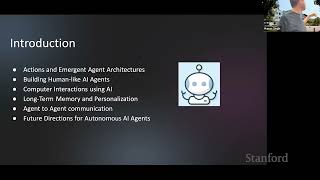
Beyond LLMs - Agents, Emergent Abilities, Intermediate-Guided Reasoning, and BabyLM - Stanford CS25
Exploración de sistemas de IA autónomos, habilidades emergentes de LLMs, razonamiento guiado intermedio y modelos de lenguaje eficientes. Discusión sobre avances técnicos e implicaciones éticas en IA.
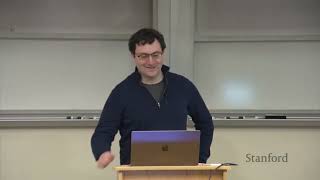
Stanford Seminar - Human-AI Interaction Under Societal Disagreement
Explores Jury Learning, an interactive AI architecture enabling developers to consider diverse perspectives in machine learning, addressing societal disagreements in AI decision-making processes.

Building Safe and Reliable Autonomous Systems
Explore techniques for developing safe, trustworthy AI systems in critical sectors, focusing on reliability and robustness using advanced machine learning methods.
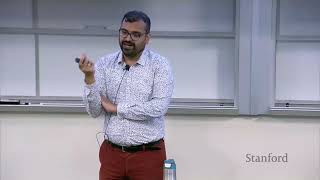
Stanford Seminar - Intelligence Augmentation Through the Lens of Interactive Data Visualization
Explore interactive data visualization's role in human-machine partnerships, bridging mental models with machine learning, and addressing epistemological challenges in the era of generative AI.

Robots in Dynamic Tasks - Learning, Risk, and Safety
Explore advanced robotics in dynamic environments, covering autonomous drones, aerial manipulators, and risk-aware planning. Learn about machine learning applications, nonlinear control, and adaptive strategies for complex robotic tasks.