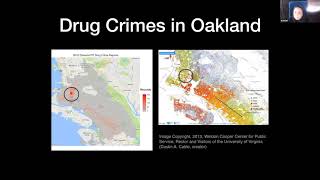
Fairness, Accountability, and Transparency in Predictive Models for Criminal Justice
Explore fairness, accountability, and transparency in predictive modeling for criminal justice, with examples highlighting their importance in real-world applications.

Artificial Intelligence: What We Still Don't Know - Melanie Mitchell
Explore AI's challenges, limitations, and future potential with computer scientist Melanie Mitchell. Delve into fundamental questions about intelligence, cognition, and the intersection of technology and human understanding.

An Example Application of Artificial Neural Networks in Archaeology
Exploring artificial neural networks in archaeology to predict site occupation dates from ceramic assemblages, enabling finer-grained demographic reconstructions and deeper insights into human experiences in the past.
Evolutionary Conundrums - Cooperation and Traversing Fitness Landscapes
Explore evolutionary biology: cooperation via social norms, fitness landscapes in rapidly evolving populations, and optimal antibiotic use against pathogens using Markov Decision Processes.

Text-Based Timeline Analysis and New Instruments for the Science of Stories
Exploring Twitter data as a telescope for observing collective human thought, revealing insights into sentiment, narrative power, and social dynamics through innovative text analysis techniques.
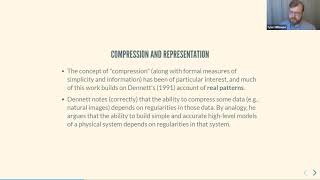
Patterns and Parsimony - High-Level Representations in Scientific Modeling
Explore the role of compression in developing effective high-level representations for scientific modeling, and discover why good representations require more than simplicity alone.
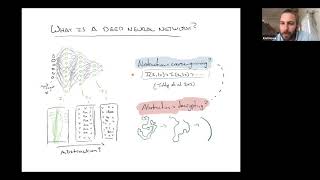
Swimming Without a Lifeguard in the Ocean of Ideas - Abstraction and Unsupervised Deep Learning
Explore unsupervised deep learning techniques for discovering hierarchical latent feature spaces, improving interpretability and performance in downstream tasks, and bridging neural and symbolic learning systems.

Conceptual Abstraction and Analogy in Natural and Artificial Intelligence
Explore the limitations of AI in conceptual abstraction and analogy-making, examining recent research and discussing implications for real-world applications and AI brittleness.

Epistemic Uncertainty - The AI Problem Understanding Gap and Structured Societal Context Knowledge
Exploring the AI Problem Understanding Gap and the need for structured societal context knowledge to develop safe, robust AI systems in high-stakes domains like healthcare.
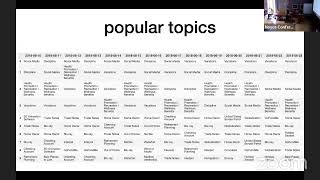
Scaling of Information Costs in Firms
Explore the scaling dynamics of information costs within organizations, examining how firms manage and process data as they grow and evolve in size and complexity.
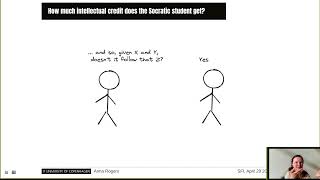
Writing Assistance or Plagiarism - How Language Models Are Changing Our View of Knowledge
Explore how language models are reshaping our understanding of knowledge, writing assistance, and plagiarism with insights from Anna Rogers in this thought-provoking discussion.
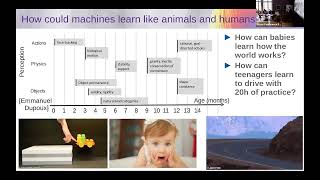
Towards Machines That Can Understand, Reason, and Plan
Explore AI's future with Yann LeCun as he discusses advancements in machine understanding, reasoning, and planning, offering insights into the potential of artificial intelligence.

Scaling AI the Human Way - Building Machines That Understand the World
Explore innovative approaches to AI development, focusing on human-like understanding and reasoning to create more intelligent and adaptable machines for real-world applications.
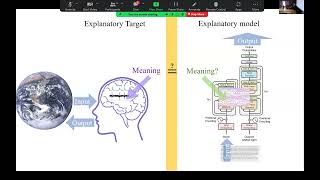
Do AI Systems Model Meaning and Understanding?
Explore the philosophical question of whether AI systems truly model meaning and understanding, delving into the nature of intelligence and consciousness in artificial systems.
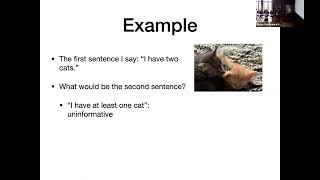
Language Models Could Learn Semantics - No Matter How You Define It
Explore how language models can acquire semantic understanding through form, entailment, and Gricean principles, with insights on practical limitations and future possibilities.
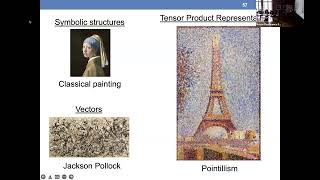
Bridging the Divide Between Vectors and Symbols in Language Processing
Explore the intersection of vectors and symbols in language processing, focusing on innovative approaches to bridge computational and cognitive models of meaning.

Imitation Versus Innovation - What Children Can Do That Large Language Models Can't
Explore the unique cognitive abilities of children in comparison to AI language models, focusing on imitation and innovation in learning and problem-solving processes.
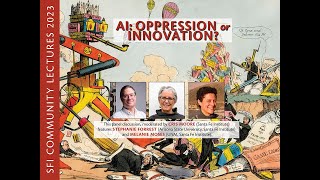
AI and Society: Oppression or Innovation?
Experts discuss AI's impact on society, exploring its potential to amplify biases or drive innovation in health, housing, justice, and more. Insights on governing AI and building a hopeful future with emerging technologies.
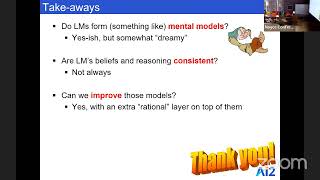
What Do Our Machines Dream Of? Understanding Language Models and Their Reasoning Capabilities
Explore the fascinating world of AI language models, their capabilities, limitations, and potential for reasoning through experiments and demonstrations.

Balance, Criticality, and Antifragility in Complex Systems
Explore complex systems thinking and its philosophical implications with Carlos Gershenson. Delve into balance, criticality, antifragility, and the intersections between Eastern and Western philosophical traditions and modern scientific concepts.
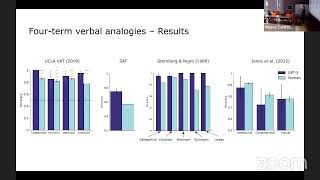
Emergent Analogical Reasoning in Large Language Models
Explore the fascinating emergence of analogical reasoning in large language models, uncovering insights into AI's cognitive capabilities and potential future developments.