
Reward-Guided Tree Search for Enhanced LLM Reasoning
Discover how reward-guided tree search enhances LLM reasoning capabilities through policy models, reward evaluation, and Monte Carlo algorithms for complex mathematical problem-solving.
AI Snake Oil: Understanding the Limitations and Potential of Predictive and Generative AI
Delve into a critical analysis of AI's dual nature - examining the ethical concerns of predictive algorithms while exploring the transformative potential of generative AI for knowledge work and society.
scPRINT - Pre-training on 50 Million Cells for Robust Gene Network Predictions
Discover how scPRINT, a large cell model pre-trained on 50M+ cells, revolutionizes gene network inference while offering powerful capabilities in denoising, batch correction, and cell prediction.
Introduction to AI - Understanding Core Technologies and Implementation Best Practices
Gain insights into AI fundamentals, from NLP and machine learning to ethical considerations, while exploring real-world applications, security practices, and implementation strategies.
The Frontiers of Modeling Atoms with AI
Explore cutting-edge AI applications in atomic modeling, focusing on drug discovery and climate change solutions, with insights into machine learning potentials and renewable fuel synthesis catalysts.
Is AI Sexist? Examining Gender Bias in Large Language Models
Explore how gender bias manifests in AI systems, particularly in Large Language Models, and learn practical steps to identify, understand, and address these biases in technology development.
From Retrieval to Real-Time Action: RAG, ReAct, and Flow Orchestrator in Building Smarter AI Bots
Explore cutting-edge AI techniques like RAG and ReAct, and learn how Microsoft's Flow Orchestrator enables dynamic, context-aware AI applications through a practical coding interviewer bot demonstration.
Advanced Retrieval Augmented Generation (RAG) Techniques
Master advanced RAG implementation techniques, focusing on chunking strategies, embedding model selection, and metadata structuring for building more effective and business-valuable AI applications.
Simplifying Generative AI App Development - Standardization Matters
Explore best practices and open standards for generative AI development, focusing on LLM-based applications and RAG techniques while examining reference architectures and community initiatives.
LangChain Legends: Building LLM-Powered Applications
Master LangChain's framework for building powerful LLM applications through hands-on exploration of prompt templates, chains, agents, and memory, culminating in creating a practical RAG application.
Training and Serving LLMs on Kubernetes: A Beginner's Guide
Master the fundamentals of deploying and managing Large Language Models on Kubernetes, covering essential concepts from basic architecture to practical implementation strategies for training and serving.
A Deep Dive into Vector Search Technology and Tools
Explore vector search technology through practical demonstrations of ClickHouse, OpenSearch, and PGVector, learning how AI models convert text to vectors for enhanced contextual search capabilities.
Applying Open Source Methods to Building and Training Large Language Models
Discover how to contribute domain knowledge to open source AI models through innovative workflows, enabling incremental improvements without full model retraining or forking. Learn practical approaches to collaborative AI development.

EfficientML.AI - Introduction to Efficient Machine Learning
Master efficient machine learning techniques and optimization strategies for deploying ML models in resource-constrained environments, focusing on practical implementation and performance tuning.

Multimodal AI: Understanding Large Language Models with Vision and Audio Capabilities
Explore three key approaches to expanding Language Models beyond text, enabling them to process visual and auditory information, with practical demonstrations using LLaMA 3.2.
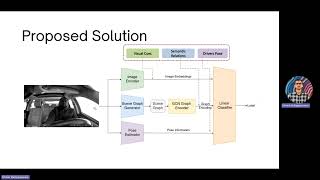
Towards Infusing Auxiliary Knowledge for Distracted Driver Detection
Discover how auxiliary knowledge and scene graphs enhance distracted driver detection systems, improving accuracy by 13.64% through innovative integration of visual cues and driver pose information.
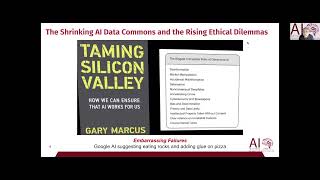
Custom, Targeted, and Neurosymbolic AI Models for Healthcare Applications
Explore the critical role of specialized AI models in healthcare, focusing on neurosymbolic approaches and compact solutions for improved medical applications and outcomes.
Fine-tuning AI Models for Healthcare Policy Analysis with AWS and Snorkel Flow
Master AWS and Snorkel Flow integration to enhance AI models through structured fine-tuning workflows, focusing on improving accuracy in analyzing health insurance policy documents and generating reliable responses.

The Elusive Role of High Dimensions in Modern Optimization and Generalization
Delve into the fascinating role of high-dimensionality in deep learning optimization, exploring how modern neural networks challenge traditional theoretical constraints and achieve unprecedented success.
Collective Behavior from Surprise Minimization
Explore how cognitive principles and probabilistic decision-making drive collective behavior in animal groups, offering new perspectives on emergent patterns in biological and engineered systems.
Green Light SONATA - Training Traffic Controllers Using Collective Intelligence
Discover how AI-powered traffic control systems use musical improvisation principles to optimize vehicle movement, featuring innovative approaches to collective intelligence and neural network training.