Building Resilience for Large-Scale AI Training: GPU Management, Failure Detection, and Beyond
Dive into GPU management strategies for large-scale AI training, covering failure detection, observability tools, and fault-tolerant distributed training principles to optimize performance and reduce costs.
Optimizing Load Balancing and Autoscaling for Large Language Model (LLM) Inference on Kubernetes
Discover practical techniques for optimizing LLM inference deployments on Kubernetes, focusing on load balancing, autoscaling, and efficient GPU resource utilization using KServe and Knative.
Production AI at Scale: Cloudera's Journey in Building a Robust Inference Platform
Discover how Cloudera built a secure, scalable AI inference platform using Kubernetes and open-source projects, exploring architecture, performance optimization, and security implementation for production environments.

Architecting the Future of AI: From Cloud-Native Orchestration to Advanced LLMOps
Dive into cloud-native AI architecture, exploring Kubernetes orchestration, Ray distributed computing, and vLLM for efficient large language model deployment and management.
AI and ML: The Critical Operational Side of Running Applications in Kubernetes
Discover how to effectively manage AI and ML operations using service mesh, focusing on GPU workloads, multitenancy, and scaling in Kubernetes environments for reliable and observable ML applications.

Tame MTTR with Real-Time Anomaly Detection in Cloud-Native Systems
Master real-time anomaly detection techniques for Kubernetes clusters using statistical and ML algorithms to reduce MTTR, improve monitoring, and maintain optimal application performance.
TLS and MTLS - Introduction to Modern Security
Discover the fundamentals of TLS and mTLS security protocols, their real-world applications, and implementation strategies for zero-trust environments using practical examples from Linkerd.

Cloud Native Storage: The CNCF Storage TAG Projects and Technology Landscape
Discover the CNCF Storage TAG ecosystem, including project reviews, whitepapers on performance, disaster recovery, and database patterns, plus guidance for implementing cloud native storage solutions.
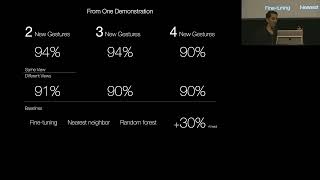
Vision-Based Hand Gesture Customization from a Single Demonstration
Discover how to create customized hand gesture controls through vision-based technology using single demonstration methods for advanced user interface development.
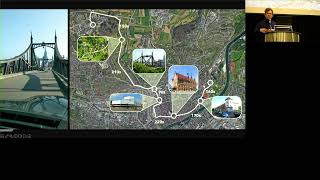
Story-Driven: Exploring the Impact of Real-time Context Information on Automated Storytelling
Explore how real-time contextual information influences and enhances automated storytelling systems through cutting-edge research and practical applications.
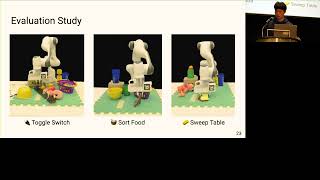
EVE - Enabling Anyone to Train Robots Using Augmented Reality
Discover how augmented reality revolutionizes robot training, making it accessible and intuitive for users of all skill levels through innovative AR interfaces.
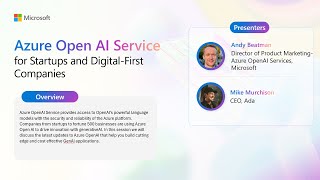
Azure OpenAI Service for Startups and Digital-First Companies - OD839
Discover how to leverage Azure OpenAI's language models to build innovative and cost-effective generative AI applications with enterprise-grade security and reliability on the Azure platform.

Azure AI Foundry: Unlocking the AI Revolution - Session 103
Discover how Azure AI Foundry enables AI integration across applications and business solutions, revolutionizing development capabilities and unlocking new technological possibilities.
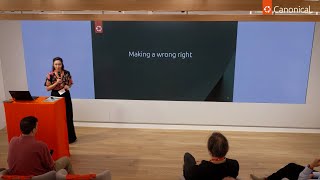
Confidential AI with Ubuntu on Azure - Securing Machine Learning Workloads
Discover how to protect AI workloads using Ubuntu confidential VMs on Azure, featuring AMD EPYC processors and NVIDIA H100 GPUs for enhanced data privacy and security in cloud-based machine learning.
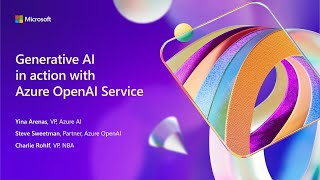
Azure OpenAI - Latest Innovations for AI-Powered Business Value
Discover Azure OpenAI Service's latest capabilities through live demonstrations, real-world applications, and insights from industry leaders including NBA's technical product expert.
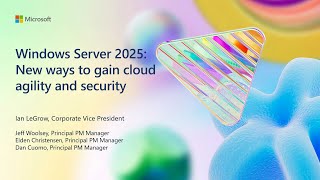
Windows Server 2025 - New Ways to Gain Cloud Agility and Security - Session 238
Discover groundbreaking features in Windows Server 2025, from enhanced security and Azure Arc integration to GPU partitioning for AI/ML workloads, helping organizations scale efficiently and optimize operations.
Lie Groups and Quantization - Lecture 21
Delve into advanced mathematical concepts exploring Lie groups and their applications in quantization theory through rigorous theoretical frameworks and practical examples.
How to Install LLaMA 3.2 AI Model on Your Computer - Step-by-Step Guide
Master the step-by-step process of installing and configuring LLaMA 3.2 AI model locally for private data analysis and coding tasks on your personal computer.
Fine-tuning Azure OpenAI Service Models for Custom AI Applications
Master the techniques for fine-tuning Azure OpenAI models through hands-on guidance, best practices, and optimization strategies to enhance AI performance for custom applications and specific use cases.

Delivering RAG at Scale with Azure AI Search - BRK104
Discover how AT&T built and implemented a large-scale RAG knowledge management platform using Azure AI Search, enabling hundreds of GenAI applications with quality measurement and diverse use cases.

Breaking Down Language Barriers with AI Translation - Session 107
Discover how to implement real-time AI translation capabilities across text, speech, and images in your applications, with deployment options for both cloud and edge devices.