Building AI Agents with Integrail - From Email Drafting to ArXiv Scraping
Master practical AI agent development with Integrail through hands-on demonstrations, including email drafting, job post parsing, and arxiv paper summarization, with expert guidance and platform insights.
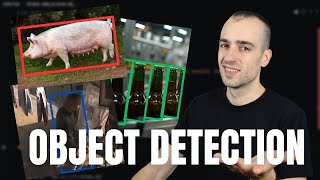
Object Detection with Python - A Beginner's Guide to Computer Vision
Learn to build an AI-powered object detection system using Python, OpenCV, and YOLO, covering essential tools, dataset preparation, and model training techniques.
Fine-tuning Llama 3.2 for Mental Health Sentiment Analysis Using TorchTune
Master fine-tuning techniques for Llama 3.2 using torchtune, focusing on sentiment analysis for mental health data with practical implementation steps on a single GPU.
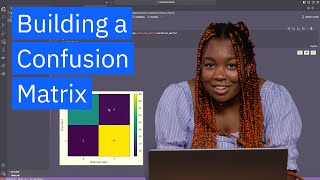
Mastering Confusion Matrix in Machine Learning - From Confusion to Clarity
Master the confusion matrix to evaluate and enhance machine learning model performance through accuracy, precision, and recall metrics for better classification results.
Introduction to Retrieval Augmented Generation (RAG) - From Fundamentals to Implementation
Dive into RAG fundamentals and learn to implement AI-powered chatbots using vector databases, combining retrieval and generative models for enhanced information processing capabilities.
Different Approaches in Detection of Machine-Generated Texts
Explore various methods and challenges in detecting AI-generated content, including solution demonstrations and performance analysis of different detection approaches.
Deploying Generative AI Applications - Building Code Assistants, Image Search, and Robotics Solutions
Discover practical implementations of LLMs through hands-on demonstrations of image search applications, coding assistance tools, and vision-language action models for robotics integration.
Consistent Diffusion Meets Tweedie - Training Exact Ambient Diffusion Models with Noisy Data
Explore groundbreaking techniques for training diffusion models with corrupted data, using Tweedie's formula to generate high-quality samples while reducing memorization and privacy concerns.
GAN, Video, and Point Cloud Processing in Machine Learning - Lecture 17
Dive into advanced machine learning concepts covering GANs, video processing, and point cloud analysis with MIT's Prof. Song Han, exploring cutting-edge techniques for efficient ML implementation.
GAN, Video, and Point Cloud Processing in Machine Learning - Lecture 17
Explore advanced machine learning concepts including GANs, video processing, and point cloud analysis through MIT's comprehensive examination of efficient ML implementations.
AI and Pervasive Sensing in ICU Patient Monitoring - The Future of Critical Care
Discover how AI and pervasive sensing technologies transform ICU patient monitoring, offering real-time assessment and automated data collection to revolutionize critical care delivery and improve patient outcomes.
Defending AI on Kubernetes - A Red Team Security Playbook
Explore offensive security strategies and defense mechanisms for AI systems on Kubernetes, focusing on vulnerability assessment and protective measures from an attacker's viewpoint.
Design Patterns for Running AI/ML and Big Data Workloads on Kubernetes
Explore essential design patterns and solutions for deploying AI/ML and big data workloads on Kubernetes, addressing challenges in container management, data handling, and system optimization.
Leveraging Data Output for Architectural Optimization in Cloud Native Systems
Discover how to optimize cloud-native architectures using observability, OpenTelemetry, and AI/ML to streamline complex distributed systems and make data-driven design decisions.
AI in Kubernetes - Getting Started with Machine Learning Pipeline Development
Discover how Kubernetes supports AI development with features like autoscaling, GPU management, and ML pipeline orchestration using Flyte for efficient model deployment and serving.
Optimizing AI and ML with Platform Engineering - A Case Study in Cloud Operations
Discover how platform engineering transforms AI and ML operations through cloud-native tools, focusing on efficiency, automation, and practical strategies to avoid over-engineering complexities.

High-Dimensional Convexity: Testing, Learning, and Complexity
Explore the fascinating parallels between high-dimensional convex sets and monotone Boolean functions, examining algorithmic structures and mathematical complexities in Gaussian space.
Information-Directed Sampling for AI Agent Alignment - From Theory to Practice
Explore Stanford's groundbreaking Information-Directed Sampling approach for aligning AI agents with human values, focusing on optimal decision-making and continuous learning in dynamic environments.
Fourier-Enhanced Fine-Tuning Vision Language Models Using PEFT-VFPT
Discover how Visual Fourier Prompt Tuning revolutionizes vision model fine-tuning by integrating Fast Fourier Transform, enhancing adaptability and accuracy while using minimal trainable parameters.
Faster Inference Using Output Predictions with OpenAI and vLLM
Master advanced inference techniques for faster AI model outputs using OpenAI predictions and vLLM speculative decoding, with practical demonstrations and cost optimization strategies.
Leveraging Kubernetes for Scalable and Cost-Effective ML Serving on AWS
Discover how to optimize ML infrastructure using Kubernetes on AWS, focusing on scalability, reliability, and cost-effectiveness through real-world implementation strategies and solutions.