Distributed Cache Empowers AI/ML Workloads on Kubernetes Cluster
Discover how to optimize AI/ML workloads on Kubernetes using distributed cache systems, achieving high-performance data access with 50+ GB/s throughput and sub-2ms latency for large-scale GPU clusters.
Best Practices for Deploying LLM Inference, RAG and Fine-Tuning Pipelines on Kubernetes
Master best practices for deploying and managing LLM inference pipelines on Kubernetes, covering optimization techniques, security measures, and efficient pipeline management using tools like KServe.

Managing and Distributing AI Models Using OCI Standards and Harbor
Discover how to effectively manage and distribute AI models using OCI standards and Harbor, covering model structures, security, replication, and acceleration mechanisms for enterprise deployment.

Unlocking the Future of GPU Scheduling in Kubernetes with Reinforcement Learning
Explore advanced GPU scheduling in Kubernetes through reinforcement learning, focusing on optimizing multi-GPU setups, reducing resource fragmentation, and improving utilization for large-scale ML projects.
Load-Aware GPU Fractioning for LLM Inference on Kubernetes
Discover how to optimize GPU utilization for LLM inference on Kubernetes through load-aware fractioning, using MIG slices to improve resource efficiency while maintaining performance standards.

Unlocking the Potential of Large Models in Production - Best Practices and Solutions
Discover practical solutions for deploying and scaling LLMs in production using cloud-native technologies, focusing on KServe implementation, optimization techniques, and operational best practices.
Democratizing AI Model Training on Kubernetes with Kubeflow TrainJob and JobSet
Discover how to streamline AI model training on Kubernetes using Kubeflow TrainJob API and JobSet, enabling efficient distributed training and LLM fine-tuning with simplified Python workflows.
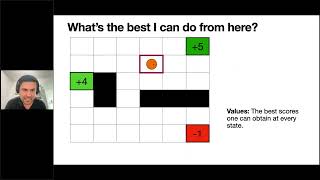
Reinforcement Learning with Human Feedback - Understanding LLM Fine-tuning with PPO and DPO
Dive into the fundamentals of Reinforcement Learning with Human Feedback (RLHF) and discover how PPO and DPO techniques enhance large language models for improved text generation.
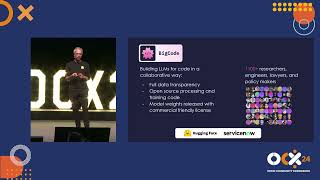
Building Open Large Language Models for Code
Explore the landscape of LLMs for code through BigCode project insights, focusing on open-source development and responsible AI implementation for programming applications.
Knowledge-Adapted Fine-Tuning for Medical Vision Language Models
Explore how Knowledge-Adapted Fine-Tuning (KnowAda) improves vision-language models in medical AI, reducing hallucinations while maintaining accurate image descriptions and diagnostic capabilities.

Challenges, Considerations, and Best Practices in Prompt Engineering
Discover essential prompt engineering techniques, challenges, and best practices through real-world examples, advanced strategies, and practical validation methods for crafting effective AI prompts.

Inside Multimodal Models - Understanding Technology and Applications
Dive into the mechanics and applications of multimodal AI models, exploring key technologies like CLIP, DALL-E, and GPT-4 through practical demonstrations and real-world use cases.
Leveraging Machine Learning to Create a Reliable Anti-Fraud System
Discover how to build effective ML-based anti-fraud systems, exploring implementation challenges, ensemble models, and operational workflows for mobile gaming and fintech applications.

Prompt Engineering Simplified - A Guide to Best Practices and Advanced Techniques
Master essential prompt engineering concepts, from basic principles to advanced techniques, including system messages, model-specific approaches, and meta prompting strategies.

Can LLMs Understand the Linux Kernel?
Explore the capabilities of Large Language Models in understanding and analyzing complex Linux kernel codebases, with insights into their potential and limitations.
AI-Driven Assessments for Continuous Learning
Discover how AI-driven assessments revolutionize learning through personalized paths, real-time adaptation, and gamification techniques for enhanced educational outcomes and continuous improvement.
Streamlining Property Search Across Multiple Platforms Using AI and Machine Learning
Discover how machine learning and AI revolutionize real estate search by integrating multiple platforms, enhancing property discovery, and streamlining the house-hunting process through advanced metasearch capabilities.

Practical Strategies for Implementing Domain-Specific LLMs
Dive into practical strategies for implementing domain-specific large language models, covering RAG architecture, evaluation metrics, data preprocessing, and query optimization techniques.

Prompt Engineering: Art, Science, or Career Path?
Dive into prompt engineering fundamentals, from tokenization and model selection to advanced techniques, tools, and future trends in AI interaction and development.
End-to-End Chatbot Web App Development with Azure AI and PromptFlow
Master the process of building and deploying a custom chatbot using Azure AI services, from initial setup to web integration, with practical guidance on PromptFlow, data indexing, and deployment steps.
Optimizing Retail Forecasting Through AI Models
Discover how prompt engineering and AI revolutionize retail forecasting, from essential techniques to practical implementations and future trends in predictive analytics.