Best Practices for Deploying MLOps Solutions in Enterprise
Explore best practices for deploying MLOps solutions in enterprise environments. Learn from industry experts about common pitfalls, avoidance strategies, and early adoption techniques for model lifecycle management.
Intro to MLOps: Build, Deploy, and Retrain a Model in Production
Build, deploy, and retrain a production ML model using open-source tools. Learn robust MLOps pipeline techniques for quick model deployment and continuous improvement.
Building an ML Platform from Scratch
Develop a customizable ML platform using open-source tools. Learn to integrate Cookiecutter, DVC, MLFlow, KFServing, and more for a flexible solution tailored to your organization's needs.
Automatic ML Model Containerization: Best Practices and Tools
Explore best practices for containerizing ML models for production inference. Learn about secure, multi-tenant image builds, avoiding lock-in, and tools like chassis.ml and Open Model Interface for seamless integration.
A Zero Downtime Setup for Models: How and Why
Discover techniques for achieving zero-downtime model updates and handling failures in production environments. Learn a robust setup to ensure continuous availability and reliability of deployed models.
Using Reproducible Experiments to Create Better Machine Learning Models
Enhance ML model efficiency through reproducible experiments. Learn to track hyperparameter, code, and data changes using DVC for grid and random search tuning methods.
Continuously Improving Large Scale Recommenders with MLOps Tools and Practices
Leverage MLOps tools and practices to operationalize and continuously improve recommendation systems at scale using NVIDIA Merlin and Kubeflow on Google Kubernetes Engine.
Running ML Inference Services in Shared Hosting Environments
Optimize ML inference in shared hosting: Learn to boost latency, throughput, and resource utilization through queue management and OpenMP tuning.
Machine Learning for Entertainment - Challenges and Opportunities
Explore challenges and solutions in ML for streaming services, including personalization, content understanding, and ads targeting. Learn about balancing metrics, feedback loops, and algorithmic fairness.

A Gentle Introduction to Sparsity with a Concrete Example
Explore sparsification techniques for ML models, including popular methods and a concrete example to understand their benefits.
Scaling ML Embedding Models to Serve a Billion Queries
Learn to scale ML embedding models for visual search, exploring eBay's architecture, workflows, and solutions to handle billions of queries efficiently.
Taking MLOps 0-60: How to Version Control, Unify Data and Manage Code Lifecycles
Explore MLOps fundamentals, focusing on version control, data unification, and code lifecycle management for reliable and adaptable machine learning systems.
Supercharging MLOps with the Petuum Platform
Explore innovations in Composable, Automatic, and Scalable ML (CASL) and their role in transforming MLOps into a repeatable assembly-line process using the Petuum Platform.
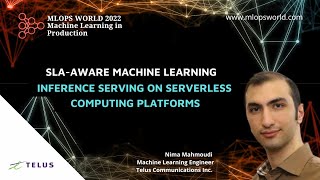
SLA-Aware Machine Learning Inference Serving on Serverless Computing Platforms
Explore adaptive batching for efficient ML inference serving on serverless platforms. Learn to optimize costs and ensure SLA compliance using MLProxy for improved performance.
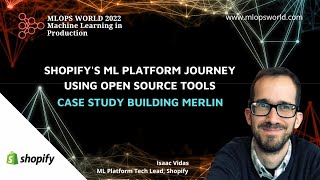
Shopify's Machine Learning Platform Journey: Building Merlin with Open Source Tools
Explore Shopify's journey in building Merlin, an open-source ML platform. Gain insights into the architecture, technologies, and tools used to scale machine learning work effectively.
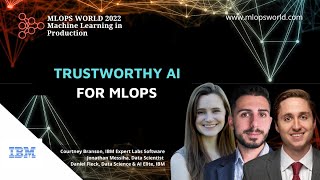
Trustworthy AI for MLOps
Explore strategies for implementing trustworthy AI in MLOps, addressing operational challenges, and fostering transparency to turn AI into a business advantage.
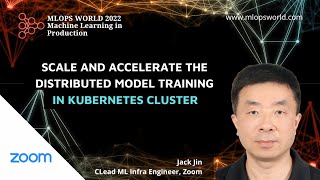
Scale and Accelerate Distributed Model Training in Kubernetes Clusters
Orchestrate and accelerate distributed deep learning workloads across multiple GPUs and nodes using Kubernetes, Kubeflow PytorchJob, RDMA, RoCE, and SRIOV for near-linear performance scaling.
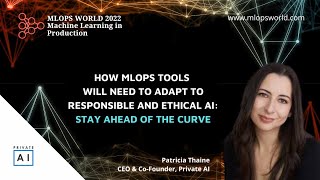
How MLOps Tools Will Need to Adapt to Responsible and Ethical AI - Stay Ahead of the Curve
Explore ethical AI guardrails for MLOps platforms, focusing on GDPR compliance, data privacy, and future regulatory requirements. Learn to implement responsible AI practices in machine learning operations.
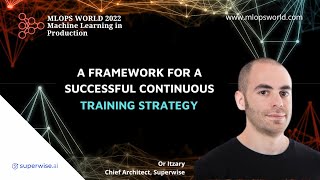
A Framework for a Successful Continuous Training Strategy in MLOps
Develop a robust continuous training strategy for ML models in dynamic data environments, addressing concept drift and optimizing retraining approaches.
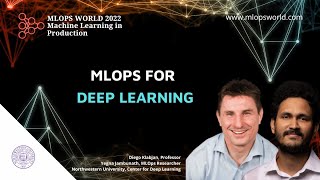
MLOps for Deep Learning: Drift Detection and Efficient Retraining in Model Serving
Explore advanced MLOps techniques for deep learning, including drift detection, efficient retraining, and continuous deployment. Enhance model reliability and performance in production environments.
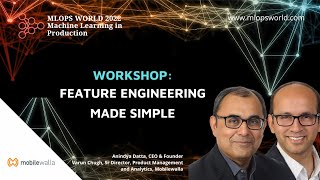
Feature Engineering Made Simple
Master feature engineering techniques to streamline your machine learning workflow. Explore systematic approaches using Anovos, an open-source library for efficient data processing and model building.