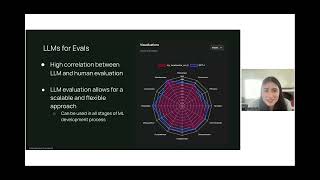
Beyond the Model Zoo - Optimizing Foundation Models for Your Application
Optimize foundation models for specific applications, exploring techniques beyond pre-trained models to enhance performance and efficiency in machine learning projects.
Defining Open-Source AI: Challenges and Opportunities in the Evolving Landscape
Explore the complexities of defining Open-Source AI, balancing innovation with core open-source principles in the evolving AI landscape. Engage in shaping a definition that reflects technological progress.
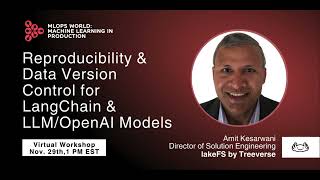
Reproducibility and Data Version Control for LangChain and LLM/OpenAI Models
Explore reproducibility and data version control for LangChain and LLM/OpenAI models using lakeFS. Learn to manage large datasets efficiently and achieve reproducibility in LLM applications.
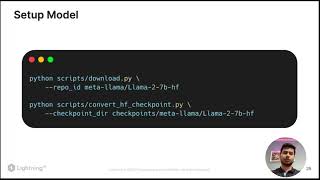
Finetuning a Large Language Model on a Custom Dataset
Discover parameter-efficient finetuning techniques and optimizations for large language models using custom datasets, enhancing model performance at scale.
Deploying Generative AI Models - Best Practices and Interactive Example
Explore best practices for deploying generative AI models at scale, with an interactive example using UbiOps for serverless and cloud-agnostic implementation.

Learn Your Codebase: Fine-tuning CodeLlama with Flyte to Learn Flyte
Discover how to fine-tune LLMs on specific codebases using Flyte, an open-source orchestration platform. Explore multi-node, multi-gpu distributed training for efficient model adaptation with limited resources.
Dynatrace for AI Observability: Monitoring OpenAI, TensorFlow, and Other AI APIs
Gain insights into AI model behavior, performance, and costs using Dynatrace. Monitor OpenAI and TensorFlow APIs, optimize performance, and understand AI observability through practical demonstrations.
How to Design and Build Resilient Machine Learning Systems
Explore strategies for building resilient ML systems that gracefully handle real-world challenges. Learn to detect, mitigate, and overcome production-specific risks across various domains.
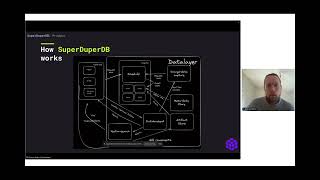
Bringing AI to Existing Databases Without Complex MLOps
Integrate AI seamlessly with existing databases, bypassing complex MLOps processes. Learn efficient techniques for enhancing data infrastructure with artificial intelligence.
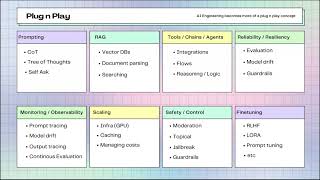
What Does it Mean to be an AI Engineer in the World of Generative AI
Explore the evolving role of AI Engineers in the era of Generative AI, covering technical aspects and business strategies for both engineers and decision-makers.
Deep Learning Models for Genomes and Beyond
Explore deep learning models for genomic analysis and their applications beyond, presented by Olga Troyanskaya in this Broad Institute colloquium on AI in biomedicine.
Multimodal Protein Language Models for Deciphering Protein Function
Explore multimodal protein language models integrating sequences, structures, and textual descriptions to bridge structural and functional understanding of proteins for biomedical research.
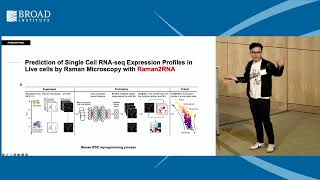
Decoding Cell Fates through Single Cell Genomics, Imaging, and Machine Learning
Explore decoding cell fates using single-cell genomics, imaging, and machine learning techniques in this cutting-edge symposium presentation by Dr. Jian Shu.
Alpha Missense: Proteome-Wide Missense Variant Effect Prediction
Explore Alpha Missense, an AI model predicting missense variant pathogenicity. Learn how it combines structural context and evolutionary conservation to achieve state-of-the-art results in genetic benchmarks.

Assisted and Augmented: AI and the Cardiovascular Clinician
Explore AI's role in cardiovascular medicine, from EHRs to wearables. Learn how AI enhances diagnostics, therapeutics, and patient outcomes through real-world evidence and innovative care solutions.
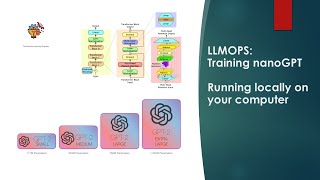
LLMOPS: Training a Small LLM (GPT-2) - Machine Learning and Data Science
Explore training a small LLM (GPT2) locally, understanding challenges and limitations of LLM development for individuals and small teams.
The Mathematics of Scaling Laws and Model Collapse in AI
Explore the mathematics behind AI scaling laws and model collapse, focusing on the shift from linear to flattened performance relationships in large language models.
The Price of Implicit Bias in Robust Machine Learning
Explore the impact of implicit bias on robust machine learning, examining challenges in neural network performance and generalization gaps in worst-case scenarios.
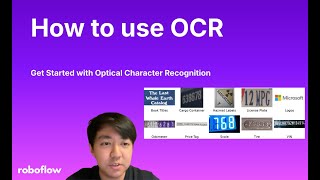
How to Use OCR: Getting Started with Optical Character Recognition
Explore OCR models, benchmark performance, and follow a step-by-step guide to implement Optical Character Recognition in your projects.
ParadeDB - Postgres for Search and Analytics
Explore ParadeDB's integration of search and analytics capabilities into PostgreSQL, enhancing database functionality for modern applications.
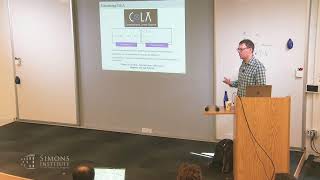
Re-thinking Transformers: Searching for Efficient Linear Layers over a Continuous Space
Explore efficient alternatives to dense linear layers in neural networks, examining structured matrices and their compute-optimal scaling laws for improved performance in large language models.