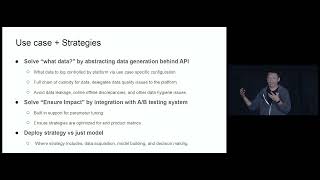
ML Platform Beyond Kaggle Paradigm - Policy-Centric Approach for End-to-End Automation
Explore a policy-centric approach to ML platforms, extending beyond model-centric views to enhance engineering productivity and directly improve business metrics.
Retrieval Augmented Generation with LangChain: ChatGPT for Your Data - Part 2
Explore Retrieval Augmented Generation using LangChain. Learn to build and optimize question-answering systems with vector stores, embedding models, and LLMs for private data applications.
Spend Less Time Troubleshooting ML Production Issues
Learn strategies to quickly identify and resolve ML production issues, reducing troubleshooting time and improving model performance for stakeholders.
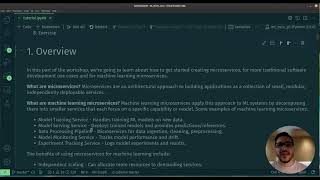
Introduction to Building ML Microservices - A Hands-On Approach with Music Industry Examples
Build ML microservices using MLServer and Seldon Core. Learn to create inference graphs for A/B testing, shadow deployment, and model monitoring with music industry examples.
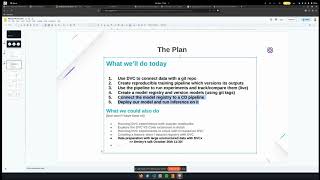
Applying GitOps Principles in End-to-End MLOps Projects - Interactive Workshop
Implement GitOps principles in MLOps using DVC to create an end-to-end pipeline centered around a git repository as the single source of truth.
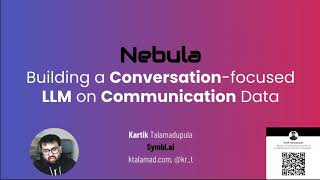
Building a Conversation-Focused LLM on Communication Data
Explore the challenges and opportunities of building Nebula, a conversation-focused LLM trained on communication data, addressing privacy concerns and ML Ops pipelines.
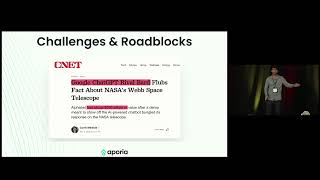
Overcoming the Challenges of Building GenAI Apps
Explore challenges and solutions for deploying successful generative AI products, accelerating time-to-market and driving impact.
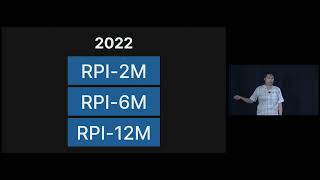
Creating the World's Premier Biological Foundation Model
Explore Recursion's groundbreaking biological foundation model, revolutionizing drug discovery through advanced infrastructure, data management, and large-scale training techniques.

Engineering an LLM Application: Chat with MLOps World
Develop a chatbot using MLOps World content, exploring techniques to transform it from concept to production-ready application.
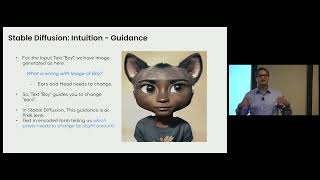
Dreambooth - Stable Diffusion for Custom Images
Explore stable diffusion techniques for creating custom images using Dreambooth. Learn color manipulation, texture enhancement, and image blending to transform ordinary photos into extraordinary art.

Retrieval Augmented Generation with LangChain: ChatGPT for Your Data - Part 1
Explore Retrieval Augmented Generation using LangChain to build a question-answering system with private data, leveraging vector stores, embedding models, and LLMs.
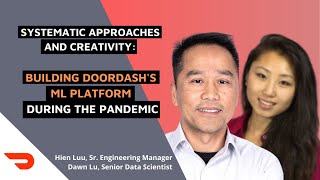
Systematic Approaches and Creativity - Building DoorDash's ML Platform During the Pandemic
Explore DoorDash's ML platform development journey, focusing on collaboration, guardrails, principled approaches, and architecture powering billions of daily predictions for diverse use cases.
Closing the Production Gap with MLOps
Explore MLOps strategies to accelerate deployment, monitor models, ensure governance, and manage the model lifecycle, including automated retraining and challenger models in production.
The Rapid Evolution of the Canonical Stack for Machine Learning
Explore the evolution of AI/ML tech stacks and the emergence of a canonical stack for machine learning, democratizing AI for companies of all sizes.
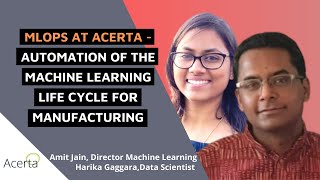
MLOps at Acerta - Automating the Machine Learning Lifecycle for Manufacturing
Automate the machine learning lifecycle for manufacturing, enhancing efficiency, scalability, and reproducibility. Learn to build a robust MLOps platform for production-grade systems.
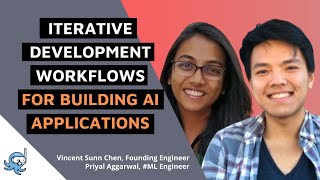
Iterative Development Workflows for Building AI Applications
Explore iterative development workflows for AI applications using Snorkel framework. Learn guided error analysis, quality improvement techniques, and collaboration with domain experts.
MLOps with PyCaret - Practical Demo for Data Science Workflows
Supercharge your data science team's productivity with PyCaret, an open-source ML library for efficient model preparation and deployment in Python.

Shopping Recommendations at Pinterest
Explore Pinterest's shopping recommendation systems, including engagement-based and embedding-based candidate generation, indexing methods, and deep neural network ranking models.
Machine Learning Tools: Skyline and RL-Scope for Performance Optimization
Explore Skyline and RL-Scope, two innovative tools for optimizing machine learning performance. Learn about interactive profiling, visualization, and debugging for PyTorch networks and cross-stack profiling for deep reinforcement learning.
Creating Machine Learning Retraining Pipelines with Kubeflow and Kubernetes
Develop ML retraining pipelines using Kubernetes and Kubeflow. Master advanced techniques for efficient model updates and deployment in production environments.
How to Iterate and Productionize Machine Learning Models with Speed
Explore strategies to overcome deployment challenges and accelerate the productionization of machine learning models for faster impact.