Neural Network Programming - Deep Learning with PyTorch
Learn to build and train neural networks using PyTorch, covering tensor operations, CNN architecture, data preparation, training loops, and performance optimization techniques for deep learning projects.
Python Libraries for Machine Learning
Explore essential Python libraries for machine learning, including SciPy, NumPy, Pandas, Matplotlib, Seaborn, and Scikit-learn. Gain practical skills for data manipulation, analysis, and visualization.

Deep Learning for Computer Vision
The automatic analysis and understanding of images and videos, a field called Computer Vision, occupies significant importance in applications including security, healthcare, entertainment, mobility, etc.
Federated Learning - Machine Learning on Decentralized Data
Explore federated learning for privacy-preserving machine learning on decentralized data. Learn about its implementation in Google products and simulation using TensorFlow Federated.

How Convolutional Neural Networks Work
Explore the inner workings of Convolutional Neural Networks, from basic concepts to advanced techniques, in this comprehensive guided tour of deep learning architecture.
Connected Logistics: Highway to Logistics 4.0
Explore Oracle's integrated logistics solutions featuring IoT monitoring, ML, and digital assistants for consistent, on-time deliveries and enhanced supply chain management.
Learning Machine Learning Efficiently
Discover an efficient approach to learning machine learning, exploring the landscape, optimal paths, and practical strategies for mastering this complex field.
Custom Audio PyTorch Dataset with Torchaudio
Learn to create a custom audio dataset using PyTorch and torchaudio, focusing on the UrbanSound8K dataset. Explore basic I/O functions in torchaudio and implement essential dataset class methods.

Deep Learning for Sequences in Quantitative Finance
Overview of deep learning sequence methods in quantitative finance, covering feature extraction, return forecasting, portfolio allocation, and trading execution. Explores applications and challenges in the investment process.

ETA Prediction with Graph Neural Networks in Google Maps - Paper Explained
Explore Graph Neural Networks for ETA prediction in Google Maps, covering graph formation, features, GNN architecture, loss functions, baselines, inference, and experimental results.
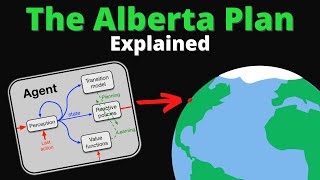
Steps to AGI
Explore DeepMind Alberta's plan for achieving AGI through reinforcement learning, continual learning, and meta-learning in complex environments, with a focus on key steps and core concepts.
LLaMA- Open and Efficient Foundation Language Models - Paper Explained
Detailed explanation of Meta's LLaMA language models, covering training data, architecture, implementation, and performance. Explores how smaller models can outperform larger ones with optimized training.
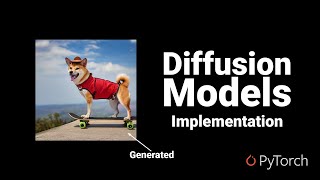
Diffusion Models - PyTorch Implementation
Learn to implement and train diffusion models in PyTorch, covering unconditional and conditional versions, classifier-free guidance, and exponential moving average. Gain hands-on experience with state-of-the-art generative AI techniques.
Machine Learning + Neural Networks Live Sessions - SVM
Explore Support Vector Machines (SVM) in machine learning and neural networks, focusing on their applications and implementation techniques.
What is Natural Language Processing - NLP Full Course
Comprehensive introduction to Natural Language Processing, covering key concepts, techniques, and applications using Python, with hands-on projects in sentiment analysis and chatbot development.

Quantum Topological Data Analysis - Part 1
Explore quantum persistent homology algorithms for pattern recognition in data, leveraging quantum computing's potential to enhance traditional Topological Data Analysis methods and improve efficiency.

Automatic Number Plate Recognition Using Tensorflow and EasyOCR - Python
Learn to build a real-time Automatic Number Plate Recognition system using Python, TensorFlow, and EasyOCR. Covers plate detection, OCR application, and result saving for practical implementation.

Tensorflow Object Detection with Python - Full Course with 3 Projects
Comprehensive guide to Tensorflow Object Detection: from setup to advanced projects. Learn to build, train, and deploy models for gesture, defect, and sentiment detection using Python, JavaScript, and Raspberry Pi.
Build a Deep Face Detection Model With Python and Tensorflow - Full Course
Comprehensive guide to building a face detection model using TensorFlow and Python, covering data collection, augmentation, model creation, training, and real-time testing for practical implementation.

Engineering the Future of Medicine - The Turing Lectures
Explore cutting-edge machine learning applications in biomedical data interpretation, from cellular analysis to surgical skill assessment, with renowned engineer René Vidal.

Creating a Machine Learning GUI App with Taipy and TensorFlow
Build a stylish GUI for image classification using Taipy and TensorFlow. Learn to process images, create neural networks, and design user-friendly interfaces for machine learning applications.