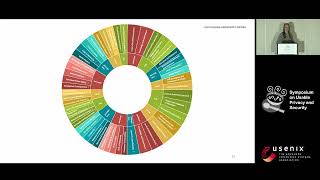
Beyond Fear and Frustration - Towards a Holistic Understanding of Emotions in Cybersecurity
Explore groundbreaking research on the emotional dimensions of cybersecurity, examining how diverse emotions impact security behaviors and organizational outcomes through qualitative studies and interviews.
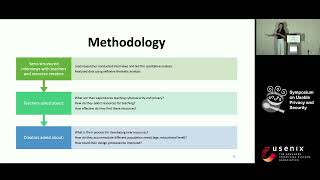
Comparing Teacher and Creator Perspectives on Cybersecurity and Privacy Educational Design
Discover insights into how middle school teachers and resource creators approach cybersecurity education, exploring the gaps between design considerations and classroom implementation needs.
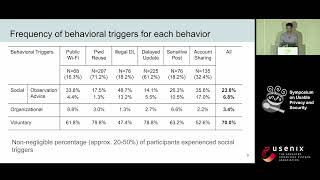
Negative Effects of Social Triggers on User Security and Privacy Behaviors
Explore how social influences can negatively impact security and privacy decisions, revealing patterns of risky behavior transmission and proposing methods to mitigate these social effects on digital safety.
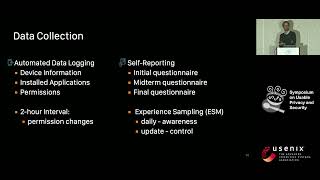
Understanding Users' Awareness and Control of Privacy Permissions on Android Smartphones
Explore groundbreaking research on Android users' privacy permission awareness and control behaviors, revealing key patterns in how people manage app permissions and protect personal data.
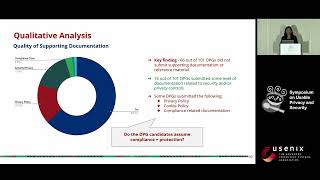
Privacy Requirements and Realities of Digital Public Goods
Explore the effectiveness of privacy standards in Digital Public Goods (DPGs), examining current evaluation methods and real-world implementation challenges in government service delivery systems.

Comparing Malware Evasion Theory with Practice - Results from Expert Analyst Interviews
Explore the gaps between academic research and real-world practices in malware analysis through expert interviews, revealing key challenges and opportunities for improving evasion countermeasures.
Digital Nudges for Access Reviews - Guiding Deciders to Revoke Excessive Authorizations
Explore how digital nudges can improve access review processes, enhance security, and guide decision-makers in managing organizational authorizations more effectively while reducing workload.

Privacy Communication Patterns for Domestic Robots
Explore privacy communication strategies for domestic robots, focusing on trust-building patterns and user preferences for managing sensor data collection and connectivity in home environments.
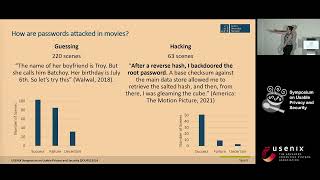
Password Depiction in Movies - A Subtitle-Based Analysis of Security Practices
Explore how Hollywood's portrayal of passwords and hacking in movies shapes public perception of cybersecurity through analysis of 97,709 films spanning six decades.
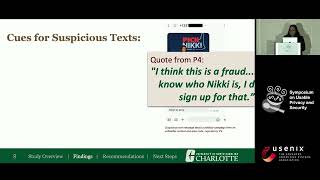
What Drives SMiShing Susceptibility? A Study of Mobile Phone Users' Text Message Authentication
Discover key findings from research on SMS phishing susceptibility, exploring how mobile users identify suspicious messages and what makes legitimate texts appear genuine.
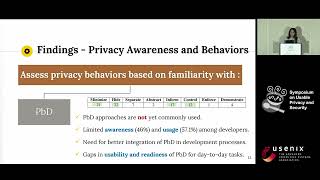
Evaluating Privacy Perceptions, Experience, and Behavior of Software Development Teams
Explore privacy perceptions and practices across software development teams through a comprehensive study of 362 participants, revealing key insights into privacy knowledge gaps and compliance challenges.

A Survey of Cybersecurity Professionals' Perceptions and Experiences of Safety and Belonging in the Community
Explore key findings on diversity challenges in cybersecurity, examining professionals' experiences of belonging, safety, and harassment across demographic groups, with recommendations for community improvement.
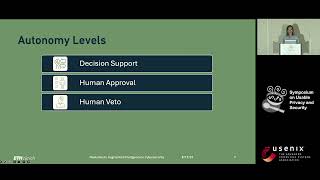
Navigating Autonomy - Security Experts' Perspectives on Augmented Intelligence in Cybersecurity
Explore security experts' insights on AI integration in cybersecurity, examining trust factors, autonomy levels, and human-AI collaboration frameworks for optimal threat response.
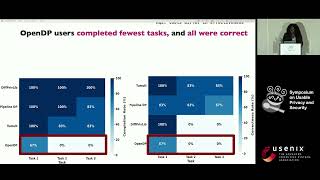
Evaluating the Usability of Differential Privacy Tools with Data Practitioners
Explore the usability evaluation of four Python-based differential privacy tools through a comprehensive study of 24 data practitioners, revealing key insights for improving implementation and adoption.
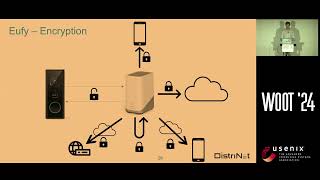
Reverse Engineering the Eufy Ecosystem: A Deep Dive into Security Vulnerabilities and Proprietary Protocols
Delve into critical security vulnerabilities discovered in Eufy's IoT ecosystem through reverse engineering, revealing privacy risks and exploring countermeasures for smart home devices.

Security Analysis of Shimano Di2 Wireless Gear Shifting in Bicycles
Uncover critical security vulnerabilities in Shimano Di2 wireless bicycle gear-shifting systems, including replay attacks, targeted jamming, and information leakage through ANT+ communication protocols.
The Power of Words: Generating PowerShell Attacks from Natural Language
Explore how AI and Neural Machine Translation can automatically generate offensive PowerShell code from natural language, with insights into dataset creation and model performance evaluation.
Introduction to Procedural Debugging through Binary Libification
Discover techniques for transforming ELF binaries into shared libraries and analyze memory corruption vulnerabilities through procedural debugging methods and direct function calls.
Breaking Into an O-RAN 5G Indoor Base Station - Security Analysis and Vulnerabilities
Uncover critical security vulnerabilities in O-RAN 5G indoor base stations through detailed analysis of hardware, software, and services, revealing remote code execution risks and standard deviations.
Attacking with Something That Does Not Exist: Proof of Non-Existence Can Exhaust DNS Resolver CPU
Explore how NSEC3 proof of non-existence in DNSSEC can be exploited to exhaust DNS resolver CPU resources, with detailed attack implementation and performance analysis.

Basilisk: Remote Code Execution by Laser Excitation of P-N Junctions Without Insider Assistance
Discover how laser-based attacks can manipulate P-N junctions to achieve remote code execution and system interference, exploring practical demonstrations and potential countermeasures for hardware security.