Machine Learning for Malware Detection
Learn to classify malware samples using PE headers, explore datasets, and implement a gradient boosting classifier for effective malware detection.
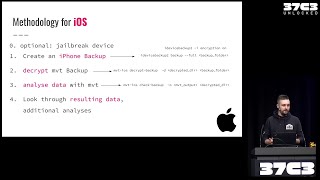
Introduction to Smartphone Malware Forensics
Überblick über Techniken und Open-Source-Tools zur Erkennung von Malware auf iOS- und Android-Smartphones, mit Fokus auf Stalkerware und Staatstrojaner. Praktische Einführung in einvernehmliche Smartphone-Forensik.
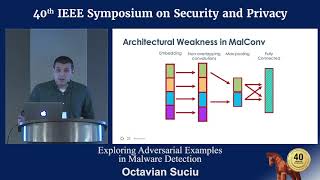
Exploring Adversarial Examples in Malware Detection
Explore adversarial examples in malware detection using CNNs, examining attack strategies, their effectiveness, and implications for model robustness in cybersecurity applications.
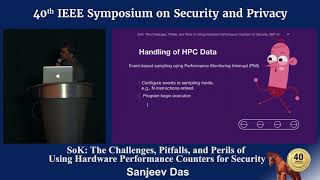
SoK: The Challenges, Pitfalls, and Perils of Using Hardware Performance Counters for Security
Explores challenges and pitfalls of using Hardware Performance Counters for security applications, highlighting measurement imprecisions and incorrect assumptions that can undermine protection efforts.
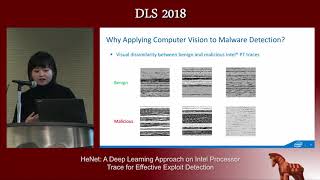
HeNet- A Deep Learning Approach on Intel Processor Trace for Effective Exploit Detection
Explore a deep learning approach using Intel Processor Trace for effective exploit detection. Learn about HeNet's hierarchical ensemble neural network for classifying hardware-generated control flow traces in malware detection.
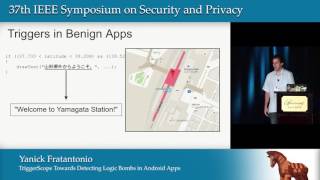
TriggerScope - Towards Detecting Logic Bombs in Android Applications
Explore techniques for detecting logic bombs in Android apps using symbolic execution and path predicate analysis. Learn about TriggerScope, a tool for identifying time-, location-, and SMS-related triggers in mobile applications.
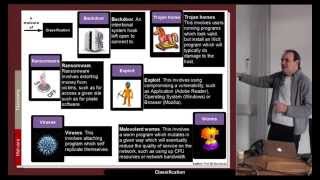
Malware Creation and Detection - Lecture 2 April 2015
Explore malware types, analysis methods, and detection techniques in this comprehensive lecture on cybersecurity threats and defenses.
Malware Detection: Propagation, Types, and Analysis Techniques
Learn techniques for identifying and analyzing malware, including propagation methods, backdoor types, static analysis, and hands-on demonstrations using MSS Venom and Calc.
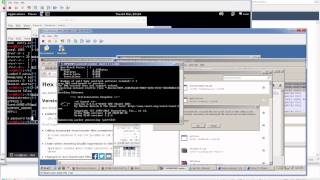
Malware Detection and Firmware Analysis Lab
Explore malware detection techniques and firmware analysis methods, including file comparison, key capture, and firmware extraction.
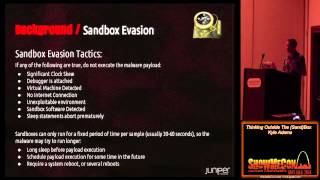
Thinking Outside the Sandbox - Malware Analysis and Evasion Tactics
Explore malware analysis techniques, distribution evasion tactics, and sandbox evasion strategies in this comprehensive cybersecurity talk by Kyle Adams.
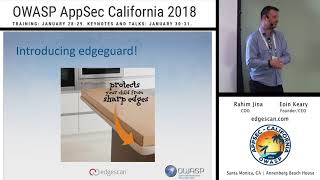
Edgeguard: Client-side DOM Security Framework for Detecting Malicious Content - APPSEC Cali 2018
Introducing Edgeguard: an open framework for detecting malicious content in browsers that steals sensitive user data. Learn about this zero-footprint library's approach to enhancing client-side DOM security.
Stop the Looters: Method to Detect Digital Skimming Attacks
Discover a method to detect and prevent digital skimming attacks on websites, protecting sensitive customer data from theft by malicious actors like Magecart.
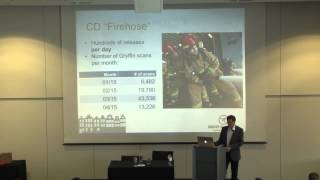
Finding Bad Needles on a Worldwide Scale - Application Security
Explore techniques for identifying and locating malicious elements across global networks, enhancing cybersecurity practices and threat detection capabilities.
Monitoring Web Sites for Malware Injection with Web Detector
Explore WebDetector, a tool for monitoring websites and detecting malware injections. Learn about its components, heuristics, and effectiveness in identifying harmful elements on web pages.
Fighting Next-Generation Adversaries with Shared Threat Intelligence
Exploring advanced threat intelligence sharing techniques to combat sophisticated cyber adversaries and prevent breaches through collaborative, anonymized data exchange.
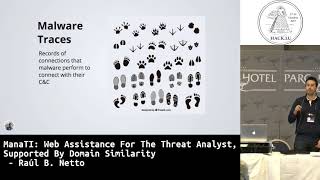
ManaTI: Web Assistance for Threat Analysis with Domain Similarity
Explore web-based threat analysis with ManaTI. Learn to use WHOIS similarity for domain classification, improving efficiency and accuracy in detecting network security threats.
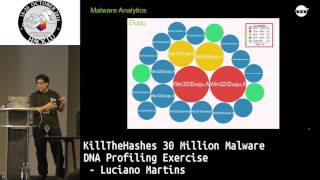
KillTheHashes - 30 Million Malware DNA Profiling Exercise - Hack.lu 2016
Explore malware profiling techniques and tools for identifying unique digital fingerprints, enabling early detection and categorization of new threats through characteristic family analysis.

Let Me YARA That For You
Explore advanced YARA rule creation techniques for malware detection and analysis, enhancing your cybersecurity skills and threat hunting capabilities.
Fileless Attack - Detecting the Undetectable
Explore fileless attacks in Linux containers, their detection using eBPF tools like Falco, Tracee, and Tetragon, and learn to identify unexpected activities in cloud-native environments.
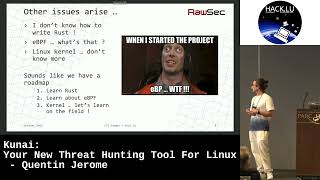
Kunai - A New Threat Hunting Tool for Linux
Discover Kunai, an innovative threat hunting tool for Linux systems. Learn its features, capabilities, and how it enhances cybersecurity through advanced detection techniques.
Emerging Threats in Cybersecurity: Post-Motown Analysis - BSides Detroit 2016
Explore emerging cyber threats, detection challenges, and innovative attack techniques. Learn about Angler exploit kit, ransomware trends, and data exfiltration methods in this cybersecurity deep dive.