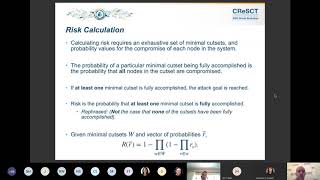
Modeling and Assessment of IoT Supply Chain Security Risks
Explore IoT supply chain security risks through modeling and assessment techniques, focusing on system models, practical examples, and effective risk mitigation strategies.

Birds of a Feather - Sharing Cybersecurity Research Artifacts to Accelerate Progress
Unveiling SEARCCH: A collaborative hub for sharing cybersecurity research artifacts, fostering reproducibility, and accelerating progress through community-driven feedback and development.
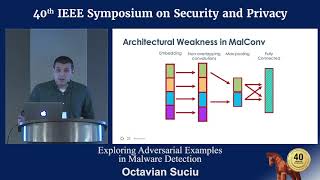
Exploring Adversarial Examples in Malware Detection
Explore adversarial examples in malware detection using CNNs, examining attack strategies, their effectiveness, and implications for model robustness in cybersecurity applications.

WannaCry Ransomware - How it Attacks and How to Protect Your Business
Comprehensive analysis of WannaCry ransomware: attack methods, global impact, and essential protection strategies for businesses. Experts provide latest insights and critical actions.

Threat Review Webinar - The Shamoon 2.0 – A New Wave of Wiper Attacks
Explore Shamoon 2.0, a sophisticated wiper attack targeting Middle East organizations. Learn about its evolution, ransomware capabilities, and potential origins from Kaspersky's senior security researcher.
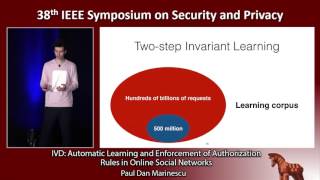
Automatic Learning and Enforcement of Authorization Rules in Online Social Networks
Automatic learning and enforcement system for detecting and preventing authorization bugs in online social networks, enhancing security without compromising performance.

XHOUND - Quantifying the Fingerprintability of Browser Extensions
Quantifying browser extension fingerprintability and its impact on user privacy. Explores detection methods, analyzes popular extensions, and discusses implications for online tracking and user identification.
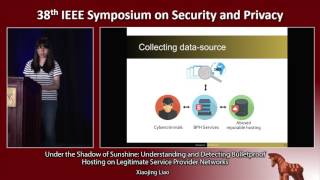
Under the Shadow of Sunshine - Understanding and Detecting Bulletproof Hosting
Explore techniques for detecting bulletproof hosting services that exploit legitimate providers, using novel features and machine learning to identify malicious sub-allocated network blocks.
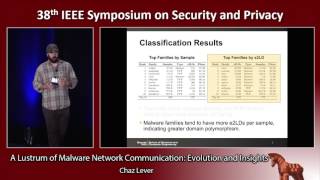
A Lustrum of Malware Network Communication: Evolution and Insights
Explore the evolution of malware network communication over five years, examining trends, insights, and implications for cybersecurity through analysis of 26.8 million samples.
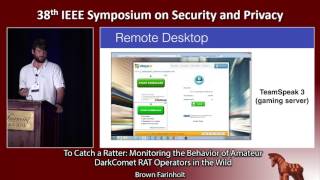
To Catch a Ratter - Monitoring the Behavior of Amateur DarkComet RAT Operators in the Wild
Exploring amateur DarkComet RAT operators' behavior through honeypot experiments, revealing common attack patterns and potential defense strategies against Remote Access Trojans.
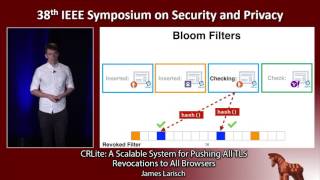
CRLite - A Scalable System for Pushing All TLS Revocations to All Browsers
Explore a scalable system for efficient TLS certificate revocation checking in browsers, reducing latency and enhancing privacy while maintaining low bandwidth costs.
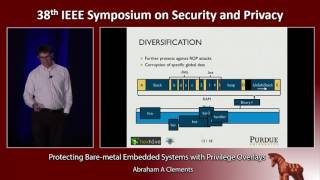
Protecting Bare-metal Embedded Systems with Privilege Overlays
Innovative technique for securing bare-metal embedded systems using privilege overlaying, code integrity, and randomization to prevent attacks while minimizing performance impact.

An Experimental Security Analysis of an Industrial Robot Controller
Experimental security analysis of industrial robot controllers, revealing vulnerabilities and potential attacks that can compromise precision, control logic, and safety in automated manufacturing environments.
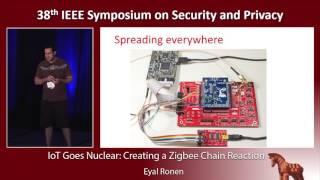
IoT Goes Nuclear - Creating a Zigbee Chain Reaction
Explore the potential for IoT devices to spread malware rapidly in urban environments, using smart lamps as an example. Learn about vulnerabilities in ZigBee protocol and firmware security.

Exploiting Network Printers
Comprehensive analysis of network printer vulnerabilities, exploring attack vectors and introducing PRET toolkit for security evaluation. Reveals novel insights on Internet-based attacks and cross-site printing techniques.
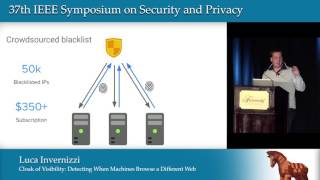
Cloak of Visibility - Detecting When Machines Browse a Different Web
Explores sophisticated web cloaking techniques used by malicious actors to evade security crawlers, and presents an anti-cloaking system for detecting split-view content with high accuracy.
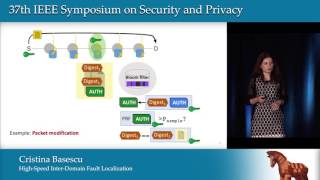
High-Speed Inter-domain Fault Localization
Secure data-plane fault localization protocol for inter-domain settings, enabling precise localization of malicious network links with high performance and low overhead.
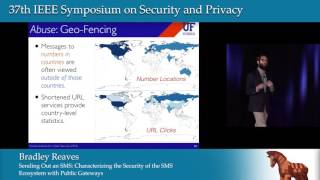
Sending Out an SMS - Characterizing the Security of the SMS Ecosystem with Public Gateways
Explore SMS ecosystem security, analyzing public gateways' vulnerabilities, sensitive data transmission, and misuse for account fraud evasion. Gain insights on improving SMS-based authentication and combating abuse.

I Think They're Trying to Tell Me Something - Advice Sources and Selection for Digital Security
Explores how users select digital security advice, revealing the impact of source trustworthiness, relatable narratives, and reasons for rejecting advice. Offers insights for developing more effective security interventions.
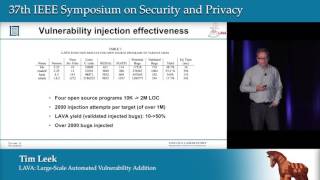
LAVA - Large-Scale Automated Vulnerability Addition
Explore LAVA, an automated technique for injecting realistic vulnerabilities into source code, enabling rigorous evaluation of vulnerability discovery tools and providing high-quality targets for tool developers.
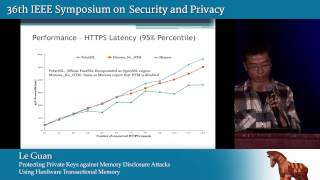
Protecting Private Keys Against Memory Disclosure Attacks Using Hardware Transactional Memory
Explore hardware transactional memory for protecting cryptographic keys against memory disclosure attacks, enhancing security in both software and physical threat scenarios.