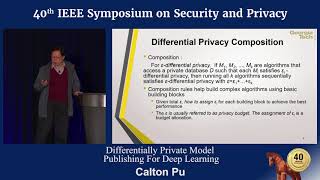
Differentially Private Model Publishing for Deep Learning
Explore techniques for publishing deep learning models with differential privacy, optimizing privacy loss and model accuracy through concentrated differential privacy and dynamic budget allocation.
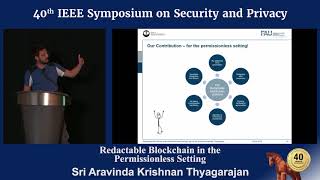
Redactable Blockchain in the Permissionless Setting
Explore innovative blockchain redaction techniques for permissionless systems, addressing data privacy concerns while maintaining security and public verifiability without additional trust assumptions.
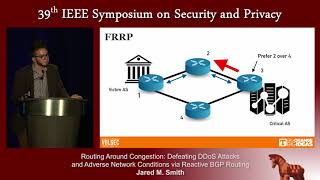
Routing Around Congestion - Defeating DDoS Attacks and Adverse Network Conditions via Reactive BGP Routing
Explore reactive BGP routing as a novel approach to mitigate DDoS attacks and network congestion, focusing on traffic isolation and path control without requiring Internet redesign or external cooperation.
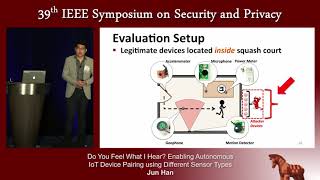
Enabling Autonomous IoT Device Pairing Using Different Sensor Types
Explore autonomous IoT device pairing using different sensor types, focusing on event timing for cross-modal context-based pairing in smart homes. Learn about Perceptio's protocol and its effectiveness.
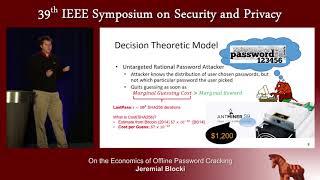
On the Economics of Offline Password Cracking
Explores the economics of offline password cracking, analyzing major breaches and demonstrating inadequacies in current key-stretching methods. Advocates for memory-hard functions to enhance password security.
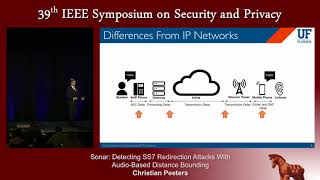
Sonar- Detecting SS7 Redirection Attacks With Audio-Based Distance Bounding
Detect SS7 redirection attacks in phone networks using audio-based distance bounding. Learn about Sonar, a system that measures call audio round-trip times to identify and prevent illicit call interceptions.
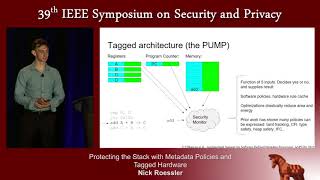
Protecting the Stack with Metadata Policies and Tagged Hardware
Explore innovative metadata-tag based stack-protection security policies for tagged architectures, focusing on efficient cacheability and performance in unsafe languages like C.
On Enforcing the Digital Immunity of a Large Humanitarian Organization
Explore digital immunity challenges faced by humanitarian organizations, focusing on ICRC's unique operational, technical, legal, and managerial aspects in data handling and security.
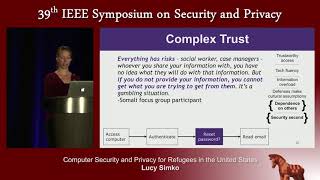
Computer Security and Privacy for Refugees in the United States
Explores computer security challenges faced by US refugees, highlighting reliance on technology, cultural barriers, and the need for tailored security practices to protect this vulnerable population.

To Boldly Go - What Makes an APT Research Successful
Insights from Kaspersky's GReAT director on cybersecurity research: career paths, successful APT investigations, naming conventions, discoveries, job highlights, overcoming challenges, and advice for newcomers.
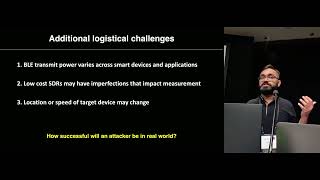
Evaluating Physical-Layer BLE Location Tracking Attacks on Mobile Devices
Explore physical-layer BLE location tracking attacks on mobile devices, examining privacy risks, hardware imperfections, and real-world tracking experiments.
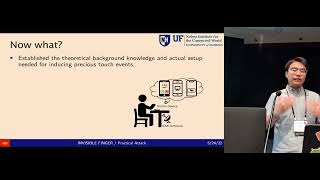
Invisible Finger - Practical Electromagnetic Interference Attack on Touchscreen Electronic Devices
Explore electromagnetic interference attacks on touchscreens, including precise touch events, phone locators, and various attack scenarios for enhanced device security awareness.
Phishing in Organizations: Findings from a Large-Scale and Long-Term Study
Explore findings from an extensive, long-term study on organizational phishing, covering vulnerability patterns, training effectiveness, and reporting mechanisms.
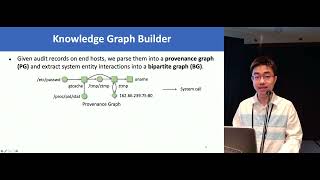
ShadeWatcher: Recommendation-Guided Cyber Threat Analysis Using System Audit Records
Explore recommendation-guided cyber threat analysis using system audit records, enhancing detection effectiveness and efficiency through innovative connectivity modeling and learning techniques.
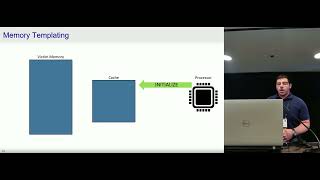
SpecHammer: Combining Spectre and Rowhammer for New Speculative Attacks
Explore innovative security vulnerabilities combining Spectre and Rowhammer, uncovering new speculative attack techniques and their potential impacts on modern computing systems.
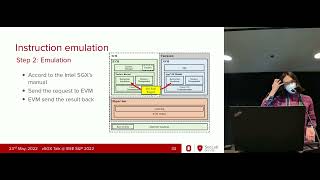
vSGX: Virtualizing SGX Enclaves on AMD SEV
Explore virtualizing Intel SGX enclaves on AMD SEV, addressing vendor lock-in and enabling software-defined trusted execution environments. Learn design goals, challenges, and performance implications.
SEVerity - Code Injection Attacks against Encrypted Virtual Machines
Explore code injection attacks on encrypted VMs, focusing on SEVerity technique. Learn about vulnerabilities, remapping strategies, and SMP implications for enhanced cybersecurity understanding.
Evaluation of the Executional Power in Windows Using Return Oriented Programming
Explore Windows vulnerabilities through Return Oriented Programming, evaluating execution power and discussing implications for system security in this IEEE workshop presentation.
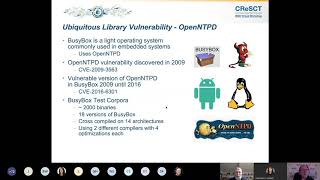
Identifying Ubiquitous Third Party Libraries in Compiled Executables Using Annotated and Translated
Explore techniques for identifying third-party libraries in compiled executables, focusing on firmware indicator translation and machine learning approaches for enhanced security analysis.
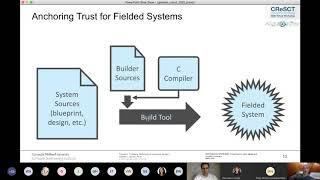
Toward a Trustable, Self-Hosting Computer System
Explore the concept of a self-hosting computer system, focusing on hardware security, trust issues, and the potential for a more secure computing environment.

EM Fingerprints - Identifying Unauthorized Hardware Substitutions in the Supply Chain Jungle
Explore electromagnetic fingerprinting techniques to detect unauthorized hardware substitutions in supply chains, enhancing security against sophisticated attacks.