
Unleashing Mayhem on Binary Code
Explore automated exploit generation for binary programs using hybrid symbolic execution and index-based memory modeling. Learn techniques to find and demonstrate exploitable vulnerabilities efficiently.
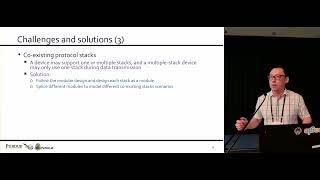
Formal Model-Driven Discovery of Bluetooth Protocol Design Vulnerabilities
Explore formal modeling techniques to uncover design vulnerabilities in Bluetooth protocols, focusing on key sharing, modular design, and coexistence issues.
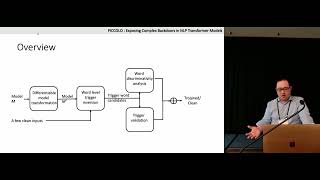
PICCOLO - Exposing Complex Backdoors in NLP Transformer Models
Uncover complex backdoors in NLP transformer models using PICCOLO, addressing challenges in trigger inversion and proposing innovative solutions for enhanced model security.
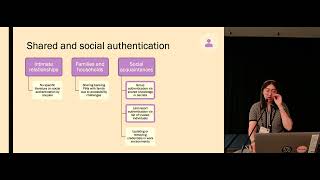
SoK- Social Cybersecurity
Explore social cybersecurity concepts, from shared resource access to social authentication, self-presentation management, and future directions in this comprehensive overview.
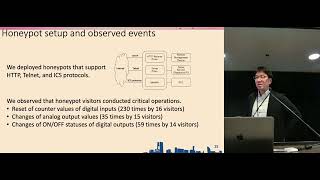
Exposed Infrastructures - Discovery, Attacks and Remediation of Insecure ICS Remote Management Devices
Explore vulnerabilities in ICS remote management devices, including discovery methods, attack patterns, and effective remediation strategies for enhancing industrial control system security.
Scraping Sticky Leftovers - App User Information Left on Servers After Account Deletion
Explore techniques for identifying and analyzing user data remnants on servers post-account deletion, addressing privacy concerns and data retention practices in mobile applications.

Analyzing Ground-Truth Data of Mobile Gambling Scam
Explore mobile gambling scam tactics, data analysis, and infrastructure, uncovering social engineering tricks, app delivery methods, and payment channels used by cybercriminals.
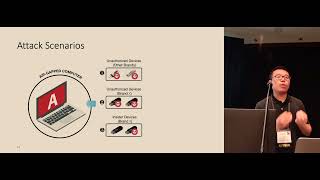
Time-Print: Authenticating USB Flash Drives with Novel Timing Fingerprints
Learn to authenticate USB flash drives using innovative timing fingerprints, exploring latency-based testing, device identification, and practical applications in cybersecurity.
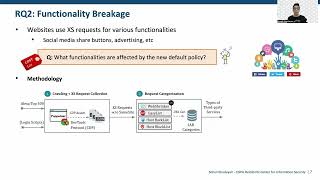
The State of the SameSite: Studying the Usage, Effectiveness, and Adequacy of SameSite Cookies
Explore SameSite cookies' usage, effectiveness, and adequacy in web security. Analyze adoption, functionality issues, CSRF threats, policy downgrades, and browser inconsistencies.
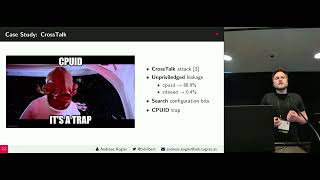
Finding and Exploiting CPU Features Using MSR Templating
Explore CPU vulnerabilities through MSR templating, uncovering hidden features and potential security risks in modern processors. Learn techniques for identifying and exploiting undocumented CPU capabilities.
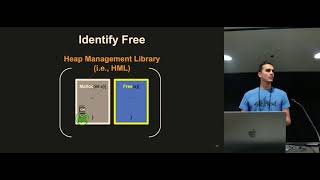
Heapster- Analyzing the Security of Dynamic Allocators for Monolithic Firmware Images
Explore Heapster's innovative approach to analyzing dynamic allocators in monolithic firmware, enhancing security through advanced identification and evaluation techniques.
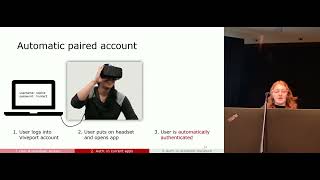
Authentication in Augmented and Virtual Reality
Explores authentication challenges and solutions in AR/VR, analyzing existing methods and proposing innovative approaches for secure user verification in immersive environments.
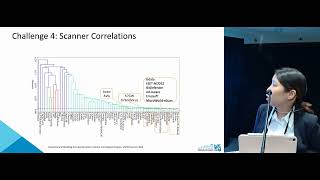
SIRAJ - A Unified Framework for Aggregation of Malicious Entity Detectors
Unified framework for aggregating malicious entity detectors, addressing varying scanner accuracy, label flips, and correlations through self-supervised learning and pretext tasks for improved threat detection.
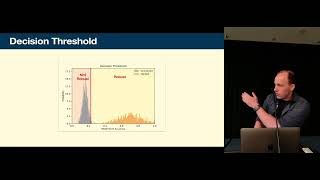
How Robust Is Image Classification Deep Neural Network Watermarking?
Explore the robustness of watermarking techniques for image classification neural networks, analyzing various schemes and attacks to provide guidelines for effective protection of intellectual property.
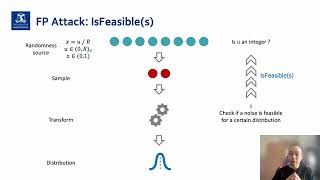
Are We There Yet? Timing and Floating-Point Attacks on Differential Privacy Systems
Explore timing and floating-point vulnerabilities in differential privacy systems, uncovering potential privacy leaks and discussing mitigation strategies for enhanced data protection.
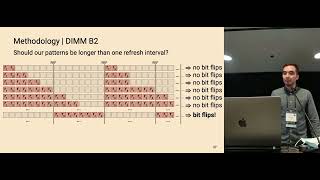
Blacksmith- Compromising Target Row Refresh by Rowhammering in the Frequency Domain
Explore frequency-domain Rowhammer attacks bypassing Target Row Refresh, with insights on mitigations, experiments, and scalable solutions for compromising DRAM security.
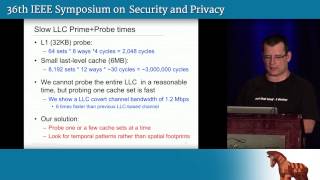
Last-Level Cache Side-Channel Attacks Are Practical
Explore practical last-level cache side-channel attacks, their implementation, and impact on security across cores and VMs, with a focus on GnuPG vulnerabilities.
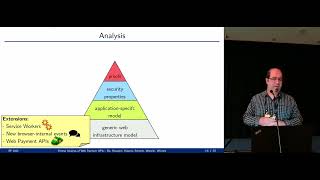
A Formal Security Analysis of the W3C Web Payment APIs - Attacks and Verification
Explore formal security analysis of W3C Web Payment APIs, including potential attacks and verification methods. Learn about browser models and gain insights into API security.
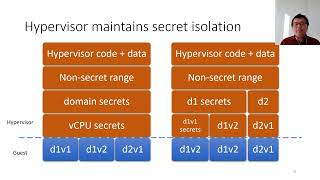
A Secret-Free Hypervisor - Rethinking Isolation in the Age of Speculative Vulnerabilities
Explore innovative approaches to hypervisor isolation, focusing on secret-free design to mitigate speculative vulnerabilities and enhance system security.

A Low-Cost Attack Against the HCaptcha System
Explore a low-cost attack method targeting the hCaptcha system, analyzing its effectiveness, accuracy, and potential countermeasures in this IEEE workshop presentation.

DP-Sniper - Black-Box Discovery of Differential Privacy Violations Using Classifiers
Explore a novel approach to detect differential privacy violations using classifiers, enhancing data protection and privacy in machine learning systems.