Dynamic Defense - Context-Based Access Control and Zero Trust
Explore modern access control through zero trust principles, context-based security, and AI-driven threat detection for enhanced cybersecurity implementation and risk management.

Zero Trust Principles for AI Security and Protection
Explore the critical intersection of Zero Trust principles and AI security, learning strategies to protect autonomous systems and safeguard data integrity in AI environments.
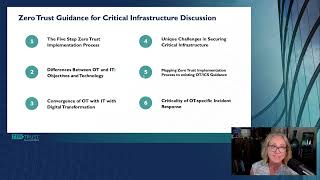
Zero Trust Guidance for Critical Infrastructure
Gain insights into implementing Zero Trust security frameworks for critical infrastructure through expert guidance on modern protection strategies and implementation approaches.

Leveraging Cognitive Biases to Accelerate Zero Trust Adoption
Discover how cognitive biases impact security decisions and learn practical strategies to overcome them while implementing Zero Trust principles for better organizational security.

Building a Browser Rendering Engine in Rust - The Servo Project
Explore the evolution of Servo, a web rendering engine built in Rust, and discover how its memory safety and concurrent design are revolutionizing browser technology and web standards implementation.

A Practical Introduction to Data Science and the Law
Explore essential legal considerations for data science projects, from data sourcing and model deployment to privacy, IP rights, and emerging AI regulations.
Building Resilient Environments - Incorporating Security and Compliance into Database Monitoring
Discover essential strategies for database security and compliance monitoring, from vulnerability detection to access control implementation and audit processes for maintaining industry standards.
Enhancing Security with Istio - Realtime JWT Access Revocation
Discover how to implement real-time JWT token revocation in Istio systems through an event-based architecture, enabling enhanced security controls and immediate access management across multiple clusters.
eBPF for Creating Least Privileged Policies - Implementing Security Through Kernel Monitoring
Discover how eBPF enables least privileged policies through kernel code injection, monitoring system calls, and process execution to enhance security against CVEs with minimal application overhead.

Securing Outgoing Traffic: Building a Powerful Internet Egress Gateway for Reliable Connectivity
Master the implementation of secure Internet Egress gateways using Istio and Envoy, focusing on fine-grained access policies, multi-tenant architecture, and robust traffic monitoring for enhanced network security.
Your Cheat Code for API Authorization - From OpenAPI to Fine-Grained Access Control
Discover how to implement fine-grained API authorization using Topaz, an open-source service compatible with Open Policy Agent and Google Zanzibar ReBAC model, to manage complex microservices security effectively.
Enabling OpenTofu for the Enterprise - Building an Infrastructure as Code Platform
Discover how to scale OpenTofu across enterprise teams, implement security and compliance measures, and create a developer-centric ecosystem for Infrastructure as Code while ensuring seamless migration from Terraform.
Writing Memory with eBPF - Implementing W3C Trace Context Propagation
Explore advanced eBPF memory writing techniques for W3C trace context propagation, examining available APIs, security implications, and practical solutions for protocol stack implementation.
Reinventing Seccomp with eBPF and KRSI for Enhanced Kernel Security
Explore how eBPF and KRSI can enhance Linux kernel security beyond traditional Seccomp capabilities, with practical demonstrations for implementing advanced syscall filtering in containerized environments.

Building Zero Trust with Envoy - Implementing Enterprise-Grade ZTNA Proxy
Discover how to build enterprise-grade Zero Trust Network Access using Envoy, covering implementation challenges, architecture decisions, and scaling strategies for handling multiple data centers and high-bandwidth connections.
Decentralized Federated Machine Learning: Empowering Edge Devices with Kubernetes
Discover how to implement Federated Machine Learning with Kubernetes for privacy-preserving model training across edge devices, enabling efficient image classification and scaled computations.

Secure Your Systems Using Policy-as-Code
Discover how policy-as-code bridges the gap between development and security teams, improving developer experience while maintaining robust system security. Learn implementation best practices and overcome common challenges.

7 Common Cyber Attacks and How to Prevent Them
Explore seven major cyber attack methods and learn effective defense strategies for authentication systems, from credential stuffing to injection attacks and real-world prevention techniques.

Building Multi-tenant Applications with Vercel and Auth0
Learn how to implement multi-tenant authentication in B2B applications using Auth0's sample app and deploy seamlessly with Vercel's integration for secure, scalable user management.

Introduction to AI - Understanding Core Technologies and Implementation Best Practices
Gain insights into AI fundamentals, from NLP and machine learning to ethical considerations, while exploring real-world applications, security practices, and implementation strategies.
Credential Management Strategies and Obstacles During Password Manager Setup
Explore user behaviors and challenges in password manager adoption, focusing on setup strategies, security implications, and recommendations for improving credential management systems.