
Cryptocurrency Engineering and Design - Spring 2018
Explore Bitcoin and cryptocurrency design, focusing on cryptography, game theory, and network architecture. Gain insights into blockchain technology, mining, transactions, and advanced concepts like Lightning Network.

MIT Computational Biology - Genomes, Networks, Evolution, Health - Fall 2018
Comprehensive exploration of computational biology, covering genomics, networks, evolution, and health applications through advanced algorithms, data analysis, and cutting-edge research topics.
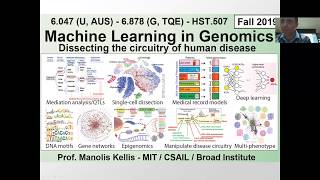
Machine Learning in Genomics - Fall 2019
Comprehensive exploration of computational biology techniques, from dynamic programming to deep learning, applied to genomics, epigenomics, and systems biology. Covers cutting-edge topics like single-cell genomics and genome engineering.
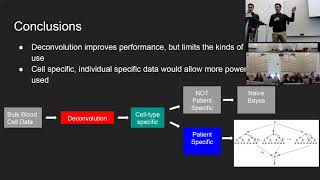
MIT CompBio Course Projects Fall 2019
Explore cutting-edge computational biology projects at MIT, covering topics like epigenetics, protein structures, gene expression, machine learning in cancer research, and more.
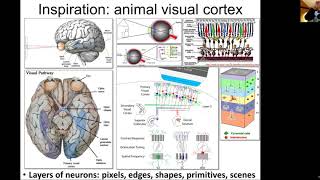
MIT Deep Learning in Life Sciences Spring 2020
Explore deep learning applications in genomics, from neural networks to single-cell analysis. Gain insights into regulatory genomics, epigenomics, and genetics through advanced computational techniques.
The Task Specification Problem
Exploring challenges in AI task specification, focusing on aligning human communication with machine understanding to improve robustness, transfer, and feature learning in AI systems.
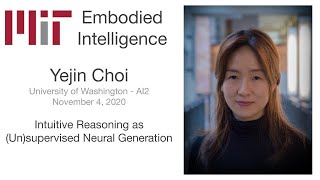
Intuitive Reasoning as Unsupervised Neural Generation
Explore intuitive reasoning in AI through neural generation, covering topics like common sense, language models, and multimodal information with researcher Yejin Choi.
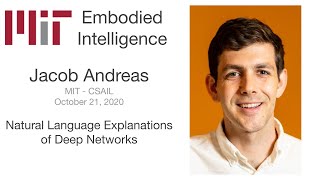
Jacob Andreas - Natural Language Explanations of Deep Networks
Explore strategies for generating natural language explanations of deep networks, covering medical diagnosis, multiagent communication, and neuron descriptions in AI systems.
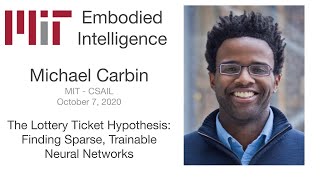
The Lottery Ticket Hypothesis - Michael Carbin
Explore the Lottery Ticket Hypothesis for efficient neural networks. Learn about pruning techniques, sparse architectures, and potential improvements in machine learning methods.
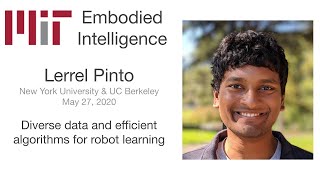
Diverse Data and Efficient Algorithms for Robot Learning
Explore diverse data collection and efficient algorithms for robot learning, focusing on large-scale approaches and reinforcement learning for deformable object manipulation.
MIT EI Seminar - Phillip Isola - Emergent Intelligence- Getting More Out of Agents Than You Bake In
Explore emergent intelligence in AI through unsupervised learning, generative modeling, and self-assembling agents. Discover surprising outcomes beyond explicit programming in representation, video generation, and creature development.
Building Embodied Autonomous Agents
Explore modular agents for visual navigation, 3D semantic mapping, and embodied instruction following. Learn about self-supervised learning, semantic search policies, and state-of-the-art performance in challenging environments.
Large Language Models - Will They Keep Getting Bigger?
Explore the future of large language models, discussing scaling challenges, sparse mixtures of experts, improved prompting techniques, and new forms of supervision for enhanced NLP performance.
Data Augmentation for Image-Based Reinforcement Learning
Explores data augmentation techniques for image-based reinforcement learning, presenting a model-free algorithm and a self-supervised framework for visual continuous control tasks, achieving state-of-the-art results.
EI Seminar - Recent Papers in Embodied Intelligence
Explore cutting-edge research in embodied intelligence, covering topics like experiment design, neuro-symbolic models, robot design, speech recognition, and social perception.
Recent Papers in Embodied Intelligence I
Explore cutting-edge research in embodied intelligence, covering topics like robot training, task planning, neural networks, and machine learning for various AI applications.
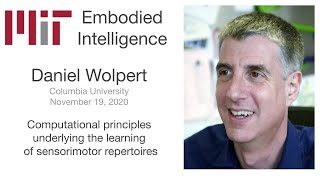
Computational Principles Underlying the Learning of Sensorimotor Repertoires
Explore computational principles of motor learning, focusing on context's role in memory activation and how statistical learning shapes object representations.

Mathematics of Big Data and Machine Learning, IAP 2020
Explore artificial intelligence and machine learning with a focus on data handling challenges, covering topics from associative arrays to bio sequence cross-correlation and Kronecker graphs.
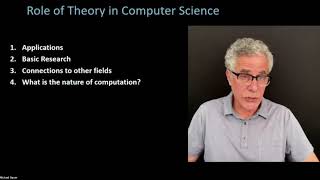
Theory of Computation, Fall 2020
Explore computability and complexity theory with MIT's in-depth course. Covers automata, Turing machines, undecidability, NP-completeness, and advanced topics in computational theory.
Introduction to EECS I
Integrated introduction to electrical engineering and computer science, covering software engineering, linear systems, electronic circuits, and decision-making through lectures and recitations.

Missing Semester IAP 2020
Comprehensive series on essential computing skills, covering shell scripting, vim, data wrangling, version control, debugging, metaprogramming, and security for enhanced productivity.