
Combining Historical and Philosophical Approaches to Understand the Concept of Information in Animal Behavior
Exploring how biologists use "information" in animal studies, examining experimental practices, historical context, and debates to clarify its meaning and implications for comparing animal and machine behavior.
Semantic Information and the Physics of Meaning
Exploring the physics of meaning, this talk delves into semantic information, examining how systems process and organize information, and the fundamental constraints on energy required for information processing.

Organization of Engineering Systems and Human Resources Management
Explore organizational structures, systems thinking, and human resource management in engineering contexts. Learn about efficiency, team development, motivation, and industrial relations.
Towards Physical AI - Bridging the Gap Between Artificial and Natural Intelligence
Explore the future of AI and robotics, comparing artificial agents to natural intelligence and discussing potential paradigm shifts for more adaptive and efficient systems.
Can Robots Help Us Understand Who We Are? - Exploring Human Nature Through Robotics
Explore the intersection of robotics and human identity with Professor Nanayakkara's thought-provoking inaugural lecture on the potential of robots to illuminate our understanding of ourselves.
Studies on Strong Intuitive Reasoning in Human Experts
Explore strong anticipatory control in human experts through normative theory and experimental studies on large-scale planning in London, examining higher-order reasoning and intuitive decision-making.
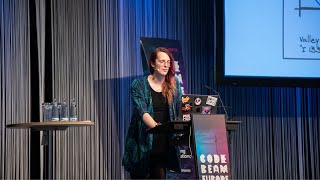
Anarcho-transhumanist Biohacking with Nerves - The Tamagotchi in my Hands
Explore anarcho-transhumanist biohacking through a unique lens: embedding Clippy on a chip in the body, challenging centralized data control and reimagining virtual assistants.
Calm Technology: Design for the Next 50 Billion Things
Explore calm technology design principles for the future of human-computer interaction, focusing on minimizing interruptions and enhancing ambient awareness in our increasingly connected world.
A Lost Croatian AI Program from the 1950s - Early Machine Translation Development
Discover the fascinating history of Croatian AI pioneers and their groundbreaking 1950s machine translation system, exploring parallels with modern transformer models like BERT and GPT.
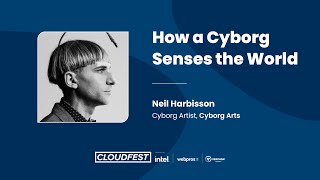
How a Cyborg Senses the World
Experience the fascinating journey of human-machine integration as Neil Harbisson, the world's first cyborg artist, shares insights on sensing colors through sound and expanding human perception.

Operational Glitches
Explore technical images as phenomena, tracing computing machines' origins as control instruments and examining their cybernetic future in this thought-provoking performance lecture.

Christian Heck: o͈̮p̢ęr̕a͠t̶̨i͟oǹ͓̜a̵l̷ glit̶̨ć̶̛he͝s
Essayistische Performance über technische Bilder, Rechenmaschinen als Kontrollinstrumente und kybernetische Zukunftsvisionen. Fehler als kreatives Potenzial in der Technologie.
Mensch - Kunst - Maschine
Erforschung der Schnittstelle zwischen KI und Kunst: Potenziale, Herausforderungen und philosophische Fragen zur Kreativität, Intentionalität und dem Wesen der Kunst im Kontext künstlicher Intelligenz.
iPhone Surgery for the Practically Paranoid
Explore iPhone component removal to enhance privacy, balancing functionality loss. Learn about device resilience, sensor impacts, and practical steps for those seeking stronger data collection protection.
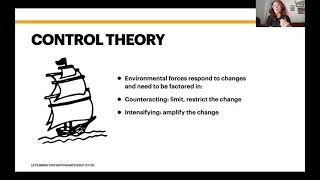
Let's Bring System Dynamics Back to CS
Explore System Dynamics for modeling feedback loops in distributed systems. Learn its history, tools, and applications to prevent outages and improve software architecture design.
So You Want to Be a Cyber Threat Analyst Eh
Learn about cybernetics, threat analysis, and defense strategies. Explore certifications, tools, and business models while gaining insights into risk assessment and mitigation techniques.
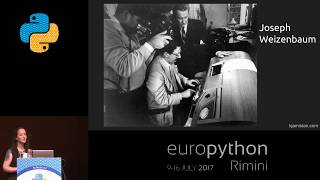
If Ethics is Not None
Explore the history of ethics in computing, from early computers in warfare to modern AI and privacy issues, emphasizing the role of technologists in shaping a responsible future.
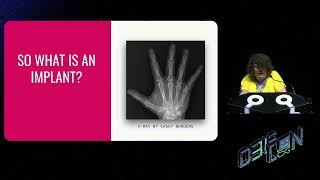
Designing RFID Implants - From Concept to Under-Skin Implementation
Explore the fascinating journey of creating custom RFID implants, from understanding basic concepts to designing functional credentials that work with existing security systems.
Mastering the Maze: Navigating Complexity in Distributed Systems
Explore distributed systems complexities, challenges, and strategies. Learn about architecture, consistency, availability, and SRE principles for navigating complex systems effectively.
Observing Objects - Revisiting Second-Order Cybernetics
Explore the philosophical intersection of object-oriented and process-oriented ontologies through Glanville's Theory of Objects, examining how observation shapes our understanding of objects and observers.
From Absolute Theories to Creative Experiences - The Many Faces of Interdisciplinarity
Explore how interdisciplinarity transcends problem-solving to offer a holistic understanding of human life, knowledge creation, and complex phenomena like global warming and social inequality.