
Molecular Dynamics Simulation with GROMACS - Installation and Beginner Tutorial
Step-by-step guide to install GROMACS and run a beginner-level molecular dynamics simulation of a protein in water, covering both Windows and Linux platforms.
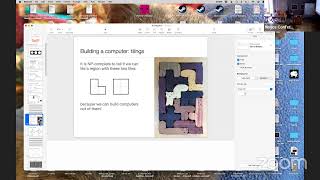
The Dynamics of Computation and the Computational Power of Dynamics
Explore the intersection of computation and dynamics, examining computational models, physical systems, and mathematical concepts to understand the nature of computation and its manifestation in various forms.
Numerical Solution of Differential Equations - Oxford Mathematics 3rd Year Student Lecture
Explore numerical methods for solving differential equations in scientific applications, focusing on Euler's method and its applications in cosmological simulations.
Why I Use Julia for Quantum Computing
Explore the intersection of quantum computing and Julia programming in this 58-minute keynote address from JuliaCon 2024. Delve into various hardware platforms and quantum algorithms, presented in a manner accessible to classical computing experts. Exami…
Fast, Elegant, Set-oriented Numerical Analysis Using GAIO.jl
Explore GAIO.jl for fast, elegant set-oriented numerical analysis in Julia. Learn to compute attractors, leverage multiple dispatch, and utilize GPU acceleration for enhanced performance.
Introducing DMRjulia v1.0 - Tensor Network Computations in Julia
Explore DMRjulia v1.0, a tensor network library for quantum systems modeling. Learn design principles, hardware optimization, and cutting-edge research applications in this comprehensive introduction.
Best Practices in HPC and HTC Environments
Discover best practices for optimizing performance in High Performance and High Throughput Computing environments.
Gradients for Everyone: A Quick Guide to Autodiff in Julia
Explore automatic differentiation in Julia, comparing approaches with Python frameworks and learning to make code differentiable for various backends. Gain insights into forward and reverse modes, custom rules, and performance optimization.
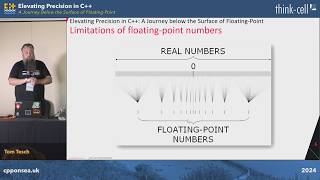
Elevating Precision in C++ - A Journey Below the Surface of Floating-Point
Dive into the intricacies of floating-point arithmetic in C++. Uncover inner workings, explore limitations, and learn strategies to extend precision while considering trade-offs for enhanced programming finesse.

Machine Learning with Python - Tutorial for Beginners
Comprehensive Python-based machine learning tutorial covering data manipulation, visualization, statistics, and reinforcement learning, with practical examples and a smart taxi case study.

Python for Data Science - Data Science with Python - Python for Data Analysis
Data science with python starts focuses on an introduction to Python and Python IDEs, followed by looking at data structures in Python. Then we look at object-oriented programming.

Python Tutorial for Beginners - Learn Python
This video teaches Python and its key functions and concepts with a variety of demonstrations and examples to help you get started on the right foot.
SciPy in Python - Scientific Python Tutorial
Comprehensive tutorial on SciPy library for scientific computing in Python, covering installation, sub-packages, clusters, constants, FFTPack, interpolation, linear algebra, and image processing.
Foundation of Scientific Computing
Explore the fundamentals of scientific computing through a comprehensive series of lectures, covering essential concepts and techniques for computational problem-solving in scientific research.
NumPy Tutorial
Comprehensive guide to NumPy: from array creation and manipulation to advanced mathematical operations, file handling, and specialized functions for data science and scientific computing.

NumPy in Python Tutorial
Learn essential NumPy concepts for Python, including array creation, manipulation, and operations. Master multi-dimensional arrays, reshaping, and slicing techniques for efficient data handling.
Practical Computing for Scientists
Learn scientific computing essentials: BASH, Python, and SQL. Develop programming and data wrangling skills for UNIX/LINUX environments. Practical exercises and quizzes included.
Julia for High-Performance Computing - JuliaCon 2022
Explore Julia's capabilities for high-performance computing through expert talks on scalability, GPU support, MPI integration, and real-world applications in scientific and engineering domains.
Changing Physics Education with Julia
Revolutionizing physics education by integrating Julia programming, focusing on nonlinear dynamics. Demonstrates how coding enhances understanding, introduces interactive applications, and discusses benefits of real-world exercises.
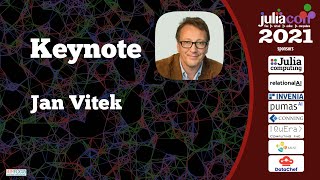
Julia: Great Language or the Greatest Language - Keynote by Jan Vitek
Keynote explores Julia's design, implementation, and performance, covering subtyping algorithms, type stability, and JIT compilation. Insights into language evolution and scientific programming revolution.
Agents.jl and the Next Chapter in Agent-Based Modelling
Explore Agents.jl for complex system modeling: learn its philosophy, simplicity, performance, interactivity, and integration with Julia ecosystem. Discover the future of agent-based modeling.