
Economic Crises and Recovery Strategies - The Malcolm Wiener Lecture by Jean-Claude Trichet
Jean-Claude Trichet analyzes economic recessions, focusing on Europe, and discusses unconventional strategies to address crises. He emphasizes the complexity of global economic patterns and the potential for stronger economies post-crisis.

Modeling Mortgage Prepayments and Valuing Mortgages
Explore mortgage prepayment modeling and valuation, including refinancing complexities, forecasting methods, and risk management strategies for investors and banks.
Maria del-Rio Chanona on Modeling Labor Markets & Tech Unemployment
Exploring labor market dynamics and technological unemployment through network analysis and agent-based modeling. Insights on job security, skill transferability, and adapting to automation in the evolving workforce.
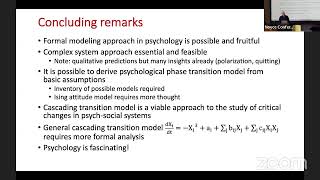
Cascading Transitions in the Behavioral and Social Sciences
Explore cascading transitions in psycho-social systems, focusing on opinion change, learning, and addiction. Discover how these multilevel processes work and their potential impacts on society.
Reasons Why Social Networks Make Us Vulnerable to Misinformation
Explore how cognitive, social, and algorithmic biases in social networks make us susceptible to misinformation, and learn about efforts to counter online opinion manipulation.
Engineering Crypto-Economies Through the Lens of Complex Systems
Explore cryptoeconomics through complex systems, covering agent-based modeling, game theory, and optimization. Includes live demo of DAO simulation based on Ising model in statistical mechanics.
Modeling Energy & Environmental Behavior from Individual to Aggregate Levels
Explore decision-making processes in energy and climate change, from individual psychology to global models, emphasizing non-rational choices and social dynamics that can lead to rapid behavioral shifts.
Modeling the Distributional Epidemic-Economic Effects of the Covid-19 Pandemic
Explore a data-driven Agent-Based Model simulating Covid-19's impact on industries, occupations, and income levels, revealing insights for effective and equitable interventions.
Hierarchy and Conflict in Human and Other Societies
Explore how social hierarchies reduce conflict through an agent-based model, examining emergent properties and potential applications in various societal contexts.
Frontiers of Computational Social Science - Agent-Based Modeling and Artificial Societies
Explore agent-based modeling in computational social science, from playground simulations to global epidemic models, with insights on future developments in neuro-cognitive agents and their applications.

A Cooperative Species - Altruism, Parochialism, and War
Explore how war and hostility may have shaped human morality through computer simulations of alternative historical trajectories, challenging our understanding of altruism and cooperation.
Complex Adaptive Systems and the Depopulation of Mesa Verde
Explore how complex adaptive systems reveal factors behind Mesa Verde's depopulation, including resource overuse, high population density, and environmental vulnerabilities in the face of prolonged droughts.
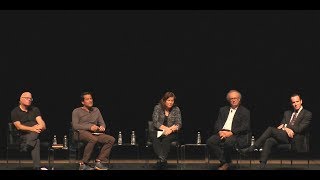
The Complexity of Economics - Exploring Markets as Complex Adaptive Systems
Explore the intersection of complexity science and economics with experts discussing agent-based modeling, behavioral economics, and machine learning to gain insights into real-world economic systems.
Effective Theories for Computational Systems - Lecture 2
Explore effective theories for computational systems, covering aggregation, finite state machines, regular languages, and emergence in complex systems modeling.
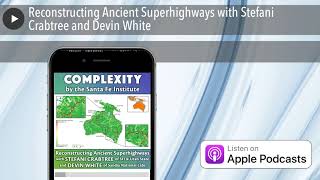
Reconstructing Ancient Superhighways - Modeling Prehistoric Human Migration
Explore how advanced technologies and agent-based modeling revolutionize archaeological research, revealing ancient migration routes and deepening our understanding of human-landscape interactions and prehistoric voyages.

Complex System Research in Psychology
Explore cutting-edge approaches to understanding human behavior and cognition through the lens of complex systems theory and interdisciplinary research methods.
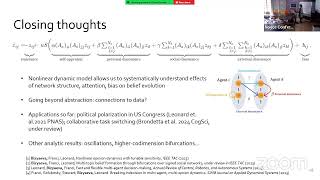
Nonlinear Dynamics of Beliefs over Social Networks
Explore how social networks, internal biases, and belief systems shape group dynamics and decision-making in complex social environments.
How Can We Understand Our Complex Economy?
Explore complex systems approach to economics, blending insights from physical and natural sciences to predict and mitigate economic crises, offering a new perspective on global financial challenges.
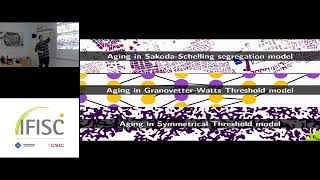
Aging and Memory Effects in Social and Economic Dynamics
Explore aging and memory effects in social and economic dynamics, uncovering complex interdisciplinary insights into human behavior and societal patterns.
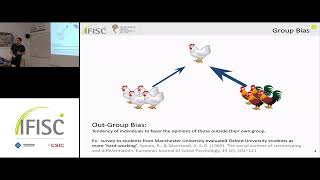
Opinion Dynamics in Social Networks under Bias - A Study Based on the DeGroot Model
Explore opinion dynamics in social networks, analyzing bias effects using the DeGroot model. Gain insights into complex systems and network influence on collective beliefs.
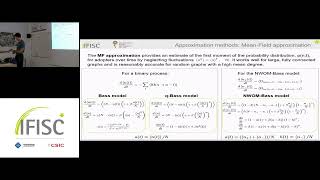
Innovation Diffusion Models
Explore innovation diffusion models and their applications in understanding how new ideas and technologies spread through society.