Going Beyond the Here and Now - Counterfactual Simulation in Human Cognition
Explore how counterfactual simulation shapes human understanding of causality, responsibility, and decision-making in physical and psychological domains through innovative cognitive research.

Solving the Mystery of the H.L. Hunley - Historical Medical Investigation
Uncover the mystery of the H.L. Hunley, the first combat submarine to sink a warship, through modern engineering and medical assessments of blast propagation and physiological effects.

Computational Fluid Dynamics
The course deals with the numerical solution of equations governing fluid flow and would be of interest to engineers and scientists. The course deals with the basic techniques that enable the numerical solution of these equations.

Bounded-Confidence Models of Opinion Dynamics on Networks
Explore opinion dynamics on networks using bounded-confidence models, examining how beliefs spread and evolve within interconnected social systems.
The Effects of Personality, Networks, and Space on Collective Behavior
Explore how environment, interactions, group composition, and genetics shape collective outcomes in complex biological systems through field studies, simulations, and novel analytical methods.
Reverse Engineering Complexity - Dynamics, Architecture, and Robustness in Complex Systems
Explore robustness, tradeoffs, and feedback in complex systems through computational models. Discover applications in earthquakes, wildfires, biomaterials, infectious diseases, and more, emphasizing dynamics, architecture, and adaptation.
Models of Identity Signaling
Explore mathematical models of identity signaling, examining their impact on cooperation, conflict, and social learning in complex human behavior and communication strategies.
Does the Ecology of Somatic Tissue Normally Constrain Cancer Evolution?
Exploring how energy supply to tissues affects cancer evolution, proposing that normal physiological limits on cellular energy may suppress oncogenesis, with implications for cancer risk factors and prevention.
Scaling AI the Human Way - Building Machines That Understand the World
Explore innovative approaches to AI development, focusing on human-like understanding and reasoning to create more intelligent and adaptable machines for real-world applications.
Meaning Through Modeling
Explore how modeling can create meaning and understanding in complex systems, with insights from Zenna Tavares on innovative approaches to scientific inquiry and knowledge representation.
Studying Active Galactic Nuclei through GRMHD and Radiation Transport Models
Explore active galactic nuclei through advanced modeling techniques, including GRMHD and radiation transport, to understand their complex physics and observational characteristics.
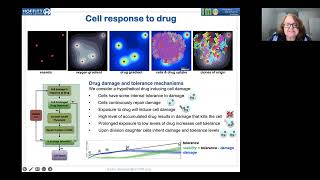
Ecological Niches for the Development of Drug-Induced Resistance
Explore the concept of ecological niches in the context of drug-induced resistance in cancer treatment through this 26-minute lecture by Kasia Rejniak from Moffitt Cancer Center. Delve into the intersection of ecology, evolution, and oncology as part of…
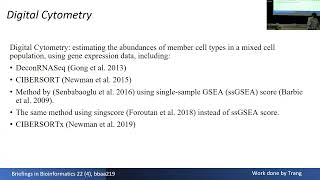
Personalized Cancer Care through Digital Twin Technology: Integrating Patient-Specific Data with Quantitative Systems Pharmacology
Explore a cutting-edge lecture on the integration of digital twin technology with quantitative systems pharmacology for personalized cancer care. Delve into the innovative approach presented by Leili Shahriyari from the University of Massachusetts Amhers…
The Functional Role of Oscillatory Dynamics in Neocortical Circuits: A Computational Perspective
Explore computational perspectives on oscillatory dynamics in neocortical circuits, examining their functional roles and implications for neural processing.
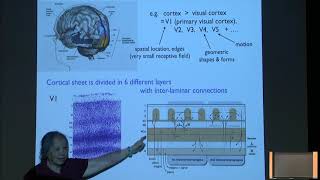
Towards a Mathematical Model of the Brain - Lai-Sang Young
Explore mathematical approaches to modeling brain dynamics, from local neural populations to complex cognitive functions, with insights on synchronization, memory, and visual processing.
Czy rozumiemy Wszechświat?
Odkryj tajemnice Wszechświata, poznając najnowsze obserwacje, modele teoretyczne i wyzwania współczesnej kosmologii. Zgłęb koncepcje ciemnej materii i energii oraz ich wpływ na nasze rozumienie kosmosu.
A Matemática e Física da Bola de Futebol
Explore a matemática e física por trás do movimento da bola de futebol, revelando os princípios científicos que influenciam sua trajetória e comportamento em campo.
Working Memory Influences Reinforcement Learning Computations in Brain and Behavior
Explore how working memory influences reinforcement learning in the brain, examining experimental results, genetic factors, and EEG data to uncover neural mechanisms of learning.

Computational Models of Cognition - Reverse-Engineering Common Sense in the Human Mind and Brain Pt 1
Explore cognitive modeling to reverse-engineer human common sense, examining AI progress, scientific context, and probabilistic programming techniques for capturing learning and constructing models.
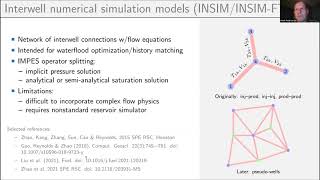
Graph-Based Methods for Reduced-Order Reservoir Simulation
Explore graph-based approaches for reduced-order reservoir simulation, comparing interwell methods like GPSNet with CGNet, which mimics 3D grid connections. Learn about their setup, training, and generalization capabilities.
Digital Twins: How High-Performance Computing Drives Personalized Models
Explore digital twins in engineering, geosciences, and medicine. Learn about high-performance computing's role in creating virtual replicas for predictive maintenance and personalized healthcare decisions.