
Build a 65C02-Based Computer From Scratch
Learn to build a functional 65c02-based computer from the ground up, covering hardware assembly, machine code, assembly language, and essential computer architecture concepts.
16-Bit Virtual Machine in JavaScript
Learn to build a 16-bit virtual machine in JavaScript, covering memory access, stack mechanics, I/O, assembly language, parsing, code generation, and advanced topics like bank switching and interrupts.
This is C++ - Uncompromised Performance, Undefined Behavior, and Move Semantics
Dive into C++'s superpower for uncompromised performance. Explore undefined behavior and move semantics to write better code and understand C++'s evolution, including current controversial issues.
Write Your Own Operating System - Hardware-Communication / Ports
Learn to communicate with hardware through ports in operating system development, covering implementation, testing, and printf functionality.
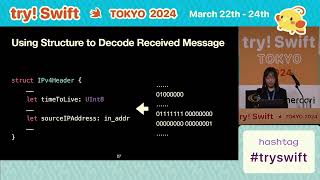
Parallel Socket Communication in Swift
Explore socket communication and parallel processing in Swift, learning POSIX sockets implementation and leveraging Swift's capabilities for complex network applications.
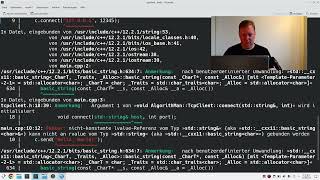
TCP Client Implementation Using glibc Calls
Explore TCP client implementation using glibc calls, delving into low-level networking concepts and practical application in operating system development.
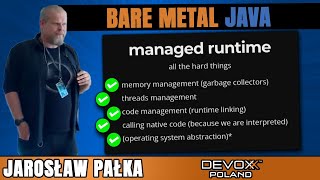
Bare Metal Java
Explore Java's inner workings, from bytecode to JVM internals, enhancing your understanding of performance optimization and low-level programming concepts.
BYOD - Building Your Own Linux Development Board
Create your custom Linux development board, learning low-level electronics and boot processes. Discover cost-effective solutions for tailored features, enhancing your understanding of Linux hardware integration.
What is Rust? - Introduction to Systems Programming and Memory Management
Explore Rust's ownership system, memory management, and safety features. Learn how Rust combines low-level control with high-level expressiveness for efficient systems programming.
Assembly Language Tutorial 2 - Logical Operators, Looping, and Memory Management
Explore logical operators, looping, conditionals, memory storage, and debugging in Assembly Language. Learn new commands and advanced concepts to enhance your low-level programming skills.
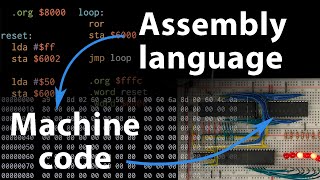
Assembly Language vs. Machine Code - 6502 Part 3
Explore the differences between assembly language and machine code for the 6502 processor, including insights on schematics, datasheets, and programming tools.

Comparing C to Machine Language
Explore the relationship between C programming and compiled machine code through a side-by-side comparison of a simple program.
Learn 8086 Assembly: Addressing Modes - Lesson 2
Explore 8086 assembly addressing modes, including register, memory, and indexed addressing, with hands-on examples and practical applications.
Learn 68000 Assembly: Bit-Level Operations and Swaps - Lesson 5
Explore bit-level operations in 68000 Assembly, covering commands, test patterns, and practical examples for efficient low-level programming.
Learn 68000 Assembly - Loops and Conditions - Lesson 3
Explore 68000 assembly programming with loops, conditions, labels, and subroutines. Practice various addressing modes to enhance your coding skills.
Learn 6502 Assembly - Addressing Modes - Lesson 2
Explore 6502 assembly addressing modes through examples, covering relative, special, absolute, offset, indirect, and more. Enhance your understanding of this CPU's unique memory access methods.
Data Representation in Assembly Programming - Lesson 4
Explore number representations in Assembly programming, covering binary, decimal, and their importance for hardware interaction and documentation comprehension.
eZ80 Assembly - 24-Bit ADL Mode and New Commands - Lesson 1
Explore eZ80's enhanced features: 24-bit ADL mode, expanded address space, and new commands. Learn how ADL affects existing instructions and discover added functionalities.
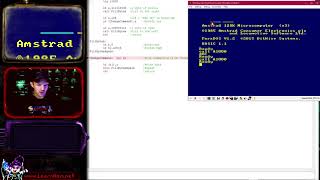
Even More Assembler Terminology - Lesson 7
Explore assembler terminology, including direction pointers, indirection, jumps, subroutines, and logical operations, to enhance your understanding of low-level programming concepts.
From 0 to no_std in Rust - Writing Bare-Metal Applications
Explore bare-metal Rust development using no_std, progressing from user-space applications to raw memory register handling. Learn essential steps for creating Rust applications that run without an operating system.

An Introduction to the Binary Magic of WebAssembly (WASM)
Explore WebAssembly's binary magic through a byte-by-byte walkthrough of .wasm code, demystifying its syntactic building blocks and understanding the power behind this emerging technology.